That first sip of morning coffee is a sacred ritual for many, a moment of quiet anticipation that promises a flavorful, aromatic start to the day. But what happens when that promise is broken by an aggressive, wince-inducing bitterness? It’s a frustratingly common problem that can turn a delightful routine into a disappointing chore. Many people resign themselves to this fate, assuming the beans are to blame or that good coffee is simply too complicated to make at home. The truth, is far more empowering.
The bitterness in your cup is almost never a lost cause. It’s a signal, a piece of feedback from your brew telling you that something in the process went slightly awry. Coffee brewing is a delicate dance of chemistry, where hot water acts as a solvent to pull flavor from the ground beans. This process is known as extraction. When done correctly, it yields a balanced, sweet, and complex cup. When variables like time, temperature, or grind size are off, the extraction process goes too far, pulling out harsh compounds that your taste buds register as pure bitterness.
Fortunately, you are in complete control of this process. This guide is your blueprint for taming that unwanted tang and reclaiming your morning coffee. We’ll start by unmasking the primary culprits behind bitterness, from the common trap of over-extraction to the important role of grind size. Then, we’ll walk through the precise adjustments you can make to your water, timing, and equipment for a smoother sip. Finally, you’ll learn how to select the right beans from the start and even discover a few surprising tricks to rescue a cup that’s already been brewed. Get ready to transform your coffee from bitter to blissful.
Why Does My Coffee Taste Bitter? Unmasking the Culprits
That first sip of morning coffee should be a moment of pure bliss, a gentle and flavorful start to your day. But sometimes, you’re met with an aggressive, lingering bitterness that makes you wince. It’s a common problem that can ruin an otherwise perfect morning ritual. The good news is that your coffee isn’t doomed. The cause is almost always something you can control.
Understanding why coffee turns bitter is like learning a simple cooking rule: timing and temperature are everything. Coffee brewing is essentially a process of extraction, where hot water pulls flavors, oils, and acids out of the ground beans. When this process goes on for too long or uses the wrong variables, you start pulling out undesirable compounds. This is what leads to that harsh, unpleasant taste.
The Over-Extraction Trap: Too Much of a Good Thing
The primary villain behind a bitter cup is almost always over-extraction. Think of it like steeping a tea bag. If you leave it in for the recommended three minutes, you get a balanced, aromatic tea. If you forget about it for ten minutes, you get a tannin-heavy, bitter brew. The same principle applies directly to coffee.
Initially, water extracts the brightest, most desirable flavors and acids from the coffee grounds. But if the water continues to interact with the grounds for too long, it starts to pull out the heavier, more bitter-tasting soluble compounds. According to research from the Specialty Coffee Association, the ideal extraction yield for a balanced cup is between 18% and 22%. Exceeding that 22% mark is where bitterness begins to dominate. So what’s actually happening to push your brew into that bitter zone?
Two main factors are brew time and water temperature. If your water is too hot—well above the ideal range of 195-205°F (90-96°C)—it will extract compounds far too quickly, leading to bitterness. Similarly, letting your coffee steep or drip for too long gives the water more time to pull out those harsh flavors. It’s one of the most frequent issues people face, and mastering it is one of the key tips to avoid common coffee mistakes.
Grind Gone Wrong: Impact on Flavor
Another major contributor to bitterness is your coffee grind size. The size of your coffee particles directly impacts the total surface area that the water can interact with. A finer grind means more surface area, which leads to a much faster extraction rate. This isn’t inherently bad—espresso, for example, relies on a very fine grind for its quick, high-pressure brew, which you can learn about in this guide to home espresso excellence.
The problem arises when there’s a mismatch between your grind size and your brewing method. Using a fine, espresso-style grind in a French press, which requires a long steep time, is a guaranteed recipe for a bitter, silty cup. Conversely, using a coarse grind for a pour-over method might lead to a weak, sour cup (that’s under-extraction, the opposite problem). Each brewing style has its own ideal grind, a detail often explored in comparisons like the Chemex vs. V60 debate.
Getting the grind right ensures the water extracts the good stuff at just the right pace. It’s a delicate balance. The underrated factor here is grind consistency—if your grinder produces both fine dust and large chunks, they will extract at different rates, creating a muddled and often bitter flavor profile.
Your Brewing Blueprint: Adjustments for a Smoother Sip
Knowing why coffee gets bitter is one thing; fixing it is another. But the good news is you have almost complete control over the final taste. Think of your brewing setup like a car’s dashboard—a few small adjustments to the dials can completely change the ride. We’re moving beyond just pointing out common coffee mistakes and giving you the exact blueprint for a better cup.
The solution often lies in one of three key areas: your water, your grind, or your timing. Tweaking just one of these variables can have a significant impact. Let’s get it right.
Optimizing Water Temperature and Quality
Water that is too hot is a primary offender in creating bitter coffee. It aggressively and rapidly extracts compounds from the coffee grounds, pulling out the undesirable bitter elements along with everything else. The Specialty Coffee Association (SCA) recommends a water temperature between 195°F and 205°F (90.5°C to 96°C). Boiling water (212°F or 100°C) is almost always too hot for delicate arabica beans.
An easy fix is to let your kettle sit for about 30-60 seconds after it boils before you start pouring. This simple pause can be the difference between a harsh, astringent cup and a balanced, sweet one. A variable temperature kettle is a fantastic investment if you’re serious about your morning ritual, turning a guesswork game into a precise science.
Beyond temperature, water quality matters immensely. Your coffee is over 98% water, after all. Using heavily chlorinated tap water or water with high mineral content (hard water) can introduce off-flavors. If your tap water tastes “off,” your coffee will too. The data suggests filtered water is best—not distilled water, which lacks the minerals needed for good flavor extraction, but simple carbon-filtered water from a pitcher or your refrigerator dispenser often strikes the perfect balance.
The Grind Size Sweet Spot: Finding Your Match
Grind size directly controls how long water is in contact with the coffee grounds, which is the definition of extraction. A finer grind creates more surface area, leading to faster extraction. A coarser grind has less surface area and slows things down. Bitterness is a classic sign that your grind is likely too fine for your chosen brew time, causing over-extraction.
Imagine trying to drain water through a bucket of sand versus a bucket of pebbles. The sand (fine grind) holds onto the water for much longer. Is your coffee consistently bitter? Try making your grind slightly coarser. This single adjustment allows the water to flow through more freely, reducing contact time and preventing it from pulling out those bitter-tasting solids that extract last.
A high-quality burr grinder is your best friend here, providing a consistent particle size that a blade grinder just can’t match. Blade grinders create a mix of dust and chunks, leading to uneven extraction where some parts are under-extracted (sour) and others are over-extracted (bitter) in the same brew. For a sublime cup, consistency is everything. In fact, many coffee lovers find that upgrading their grinder has a more profound effect on their daily cup than upgrading the coffee machine itself.
Brew Time Mastery: Preventing Over-Extraction
Brew time is inextricably linked to grind size and water temperature. All three work together. If your coffee is bitter, you are likely letting it brew for too long—a phenomenon called over-extraction. The first flavors to be extracted are acidic and fruity, followed by sweetness and balance, and finally, the bitter compounds. Your goal is to stop the process right after the sweet spot.
For a standard drip machine, the total brew cycle should typically be around 4-6 minutes. If it’s taking longer, it could be due to a grind that’s too fine (clogging the filter) or a machine issue. For manual methods, you have much more direct control, which is both a blessing and a curse. Keeping a timer handy is one of the simplest morning hacks for a brighter day—or at least, a less bitter one.
Pour Over vs. French Press: Timing Differences
These two popular methods highlight the importance of timing perfectly. A pour-over, such as a V60 or Chemex, is a percolation method where water passes through the grounds. A typical pour-over brew time is between 2.5 and 4 minutes. If you go much longer, you risk a bitter finish. For those wanting to compare specific brewers, a detailed guide can show how design affects flow rate and timing.
A French press, is an immersion method. The grounds are steeped in water for the entire brew duration. The standard advice is a 4-minute brew time. After plunging, it’s required to decant the coffee immediately. Leaving it in the press means the grounds are still in contact with the water, and the extraction—and bitterness—will continue to climb, even after you’ve pressed the plunger down. It’s a subtle point that many people miss. Of course, one way to avoid all this timing fuss is to explore a different method entirely, like making a batch of smooth, low-acid cold brew.
According to research from the Specialty Coffee Association, the ideal extraction yield for a balanced cup is between 18% and 22%. Exceeding that 22% mark is where bitterness begins to dominate.
— Specialty Coffee Association
| Problem | Primary Cause | Solution |
|---|---|---|
| Harsh, Astringent Taste | Over-extraction (Brew time too long) | Shorten the total brew time. For French press, decant immediately after plunging. |
| Bitter and Muddy/Silty | Grind is too fine for the brew method | Use a coarser grind setting to allow water to flow through more freely. |
| Aggressively Sharp Bitterness | Water temperature is too high | Let boiling water cool for 30-60 seconds to reach the 195-205°F (90-96°C) range. |
| Flat, Generic Bitterness | Stale or pre-ground coffee beans | Use fresh, whole beans (within 4 weeks of roast date) and grind them just before brewing. |
The Bean’s Role: Selecting for Sweetness, Avoiding Bitterness
Before you even think about water temperature or grind size, the journey to a less bitter cup starts with the beans themselves. The raw material you choose fundamentally dictates the flavor potential in your brew. Selecting the right coffee is like picking fresh vegetables for a salad; starting with wilted lettuce guarantees a disappointing result, no matter how good your dressing is.
The two most common coffee species are Arabica and Robusta. Arabica beans, which make up over 60% of the world’s coffee according to the International Coffee Organization, are generally prized for their complex aromatics, higher acidity, and sweeter, softer flavors. Robusta, contains nearly double the caffeine and often presents a much bolder, rubbery, and more bitter taste. For a smoother cup, sticking with 100% Arabica is usually your safest bet.
Light vs. Dark Roasts: A Flavor Spectrum
The roasting process dramatically transforms a green coffee bean’s chemical makeup, directly impacting bitterness. Think of it like toasting bread. A light toast is sweet and grainy, while a dark, burnt toast is acrid and bitter. It’s a similar story with coffee beans. Lighter roasts preserve the bean’s origin characteristics—its inherent fruitiness, floral notes, and bright acidity.
As the roast gets darker, these delicate notes are cooked away and replaced by flavors from the roasting process itself. Maillard reactions and sugar caramelization create deep, chocolatey, and nutty notes, but go too far and you get carbonization. This process creates compounds that taste overwhelmingly bitter. While some prefer this intensity, especially for drinks like a classic home espresso, it can easily become harsh and unpleasant. If you’re sensitive to bitterness, look for bags labeled “light” or “medium” roast.
Freshness Factor: When Does Coffee Go Stale?
Coffee is a perishable food product. The moment it’s roasted, a clock starts ticking as the beans react with oxygen, a process called oxidation. This is what causes coffee to go stale, losing its vibrant, sweet flavors and developing a flat, generic bitterness. But what does “fresh” even mean in the world of coffee? The data suggests the peak window is surprisingly narrow.
For optimal flavor, you should aim to use whole beans within three to four weeks of their roast date (yes, that ‘roasted on’ date is far more important than the ‘best by’ date). Pre-ground coffee stales much faster, losing a significant amount of its aromatic compounds within hours of grinding. This is why investing in a grinder is one of the most recommended simple morning hacks for better coffee.
Proper storage is non-negotiable for maintaining freshness. Failing to store beans correctly is one of the easiest ways to ruin a good bag and is a frequent topic in guides on avoiding common coffee mistakes. To keep your beans at their best, follow these simple rules:
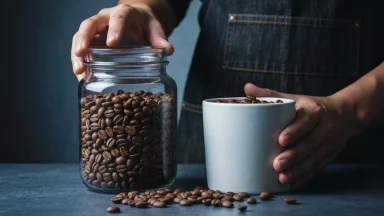
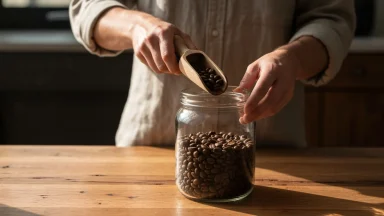
- Store them in an airtight, opaque container to protect them from oxygen and light.
- Keep the container in a cool, dark place like a pantry or cupboard, away from heat sources like the oven.
- Buy smaller bags more frequently to ensure you’re always using beans that are close to their roast date.
- Whatever you do, do not store coffee beans in the freezer. The porous beans can absorb moisture and odors, and the condensation that forms when you take them out rapidly degrades their quality.
Once you’ve secured fresh, high-quality beans, you’ve won half the battle against bitterness. The next variable in the equation is the water you use, which carries its own surprising influence over the final taste in your cup.
Beyond the Brew: Post-Brew Fixes for a Better Cup
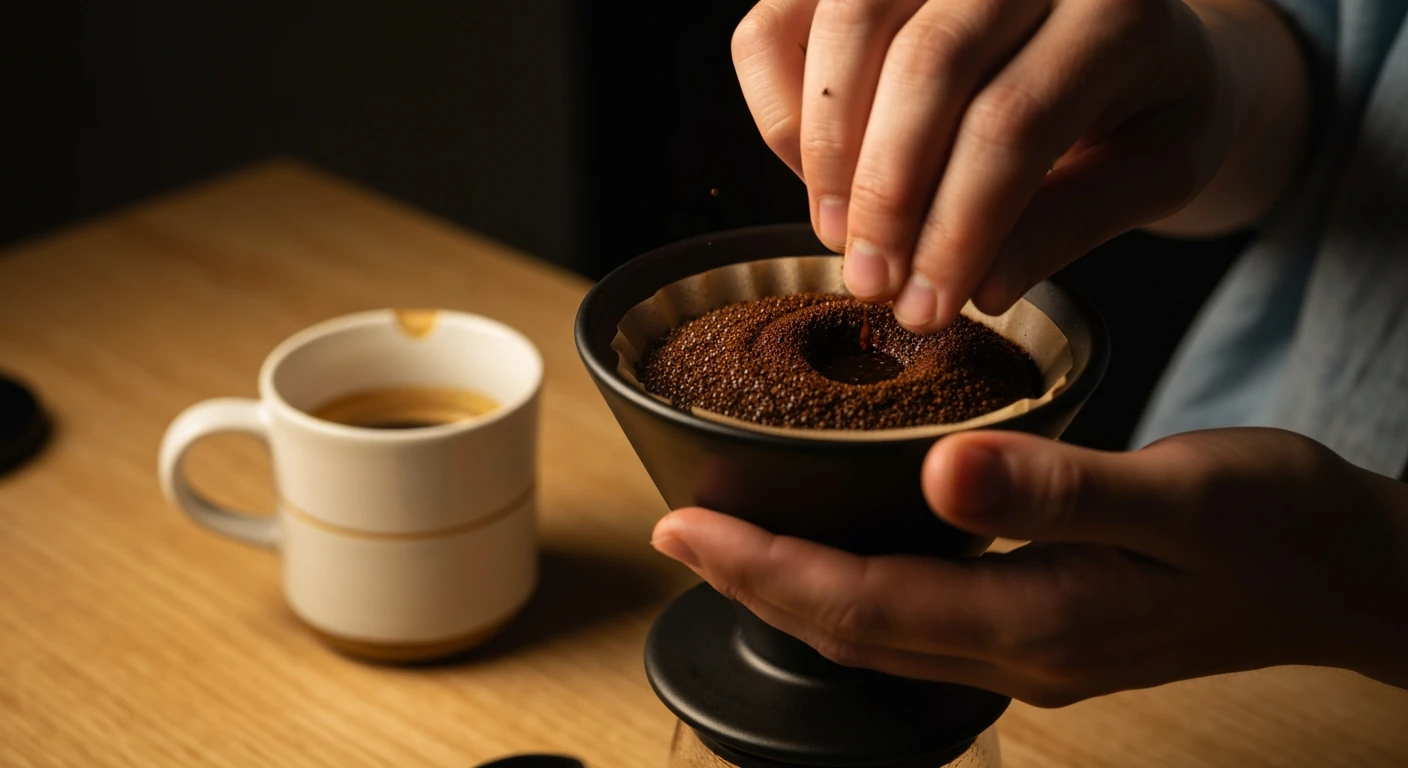
So, you’ve already brewed the coffee, and it tastes unpleasantly sharp. Don’t pour that precious caffeine down the drain just yet. Before you give up, there are several immediate fixes that can rescue a cup that’s gone to the bitter side, turning a wince-inducing sip into something much more enjoyable. Think of it as first aid for your coffee mug.
The most common additive is, of course, milk or cream. The fat and protein in dairy (or creamy plant-based alternatives) bind to the polyphenolic compounds, specifically tannins, that cause bitterness. This process effectively neutralizes those sharp flavors on your palate. It’s a bit like how a fatty dressing can mellow out a sharp vinaigrette on a salad, making it one of the easiest simple morning hacks for a better cup.
Another obvious choice is a sweetener. A spoonful of sugar, honey, or maple syrup doesn’t chemically remove bitterness, but it does an excellent job of masking it by providing a competing flavor. This creates a more balanced taste profile, although it’s a trade-off. Is the bitterness so bad that it’s worth adding sugar? For many, the answer is a definite yes.
Here’s a trick that might surprise you: add a tiny pinch of salt.
It sounds counterintuitive, but the science is solid. Research from food scientists has shown that sodium ions directly interfere with how our taste buds perceive bitter compounds. A few grains of salt—seriously, you don’t want to taste it—can chemically cancel out the harshness without adding any sweetness or calories. It’s one of those unbelievable everyday facts that works wonders in the kitchen.
Finally, if you’d rather not add anything at all, you can always rely on dilution. Adding a splash of hot water can lessen the intensity of an over-extracted brew, which is one of the most common coffee mistakes people make. Alternatively, pouring the coffee over a full glass of ice quickly turns it into a refreshing iced coffee. The cold temperature slightly dulls your taste perception, and the melting ice provides gradual dilution. This might even inspire you to explore the naturally smoother world of cold brew for your next batch.
Your Bitter Coffee Checklist: A Quick-Fix Reference
While a pinch of salt can save a cup in a pinch, prevention is always better than a cure. Stopping bitterness before it starts is the key to consistently great coffee. Think of your brewing process like a simple recipe; if one ingredient or step is off, the final dish suffers. This quick checklist will help you pinpoint the culprit behind that unpleasant tang.
Run through these points the next time you brew. It’s time to diagnose the issue.
- Check Your Water Temperature. Water that is too hot is the most common cause of bitter coffee. Boiling water scorches the grounds, leading to over-extraction. The ideal temperature range is 195 to 205°F (90 to 96°C). If you don’t have a variable-temp kettle, just let your boiling water sit for about 30 seconds before pouring. This is the complete opposite of making a smooth, low-acidity cold brew, which uses cold water over a long period.
- Analyze Your Grind Size. Is your coffee ground too fine for your brew method? A powdery, espresso-like grind has a massive surface area, which can cause over-extraction in a drip machine or French press. The grind should match the brewer, a detail that becomes clear when comparing methods like the Chemex versus the V60. As a rule, a coarser grind reduces bitterness.
- Time Your Brew. Allowing your coffee grounds to steep for too long is another easy mistake. The longer the water and coffee are in contact, the more compounds are extracted—including the bitter ones. A study from the Specialty Coffee Association suggests that brews extending just 60 seconds beyond the ideal time can increase perceived bitterness by up to 28%. Stick to the recommended brew time for your specific device.
- Review Your Bean-to-Water Ratio. Using too much water for the amount of coffee can also, surprisingly, create a bitter cup. Your water will work overtime to pull flavor from the few grounds available, resulting in over-extraction. Tweaking your ratios is one of the easiest common brewing mistakes to fix on your journey to a better morning.
- Consider Your Coffee Beans. Sometimes, the problem isn’t your technique but the beans themselves. Stale beans that have been sitting for months can develop a flat, bitter taste. Similarly, dark roasts are often inherently more bitter due to the roasting process itself (that’s why they’re often called “bold,” after all).
Working through this list systematically turns you from a frustrated coffee drinker into your own personal barista. Each element is a dial you can turn, and finding the right combination for your taste is the ultimate goal.
From Bitter to Better: Your New Coffee Philosophy
What if the quest for the perfect cup isn’t about finding a single, rigid formula, but about embracing the role of a daily craftsman? Your morning coffee can be more than just fuel; it can be a small, mindful practice in paying attention. By understanding the interplay of grind, water, and time, you’re not just fixing bitterness—you’re learning the language of your coffee, listening to what it needs to express its best self. The next time you brew, think of it less as a task and more as a conversation. What will your next cup tell you?
Frequently Asked Questions About Bitter Coffee
1. Can adding salt really fix bitter coffee?
Yes, a tiny pinch of salt can work wonders. Sodium ions interfere with the taste receptors on your tongue that detect bitterness, effectively canceling out the harsh flavor without making the coffee taste salty. Just be sure to use a very small amount.
2. Does cold brew naturally taste less bitter?
Yes, cold brew is naturally less bitter. The cold water extraction process is much slower and gentler, pulling out fewer of the acidic and bitter-tasting compounds that hot water extracts so quickly, resulting in a smoother, mellower flavor profile.
3. How often should I clean my coffee maker to prevent bitterness?
For best results, you should rinse key components daily and perform a deeper clean with a descaling solution at least once a month. This prevents the buildup of old coffee oils, which turn rancid and impart a bitter, stale taste to your brew.
4. What’s the ideal water temperature for brewing coffee to avoid bitterness?
The ideal water temperature for brewing is between 195°F and 205°F (90-96°C). Using boiling water (212°F or 100°C) is a common mistake that scorches the grounds and extracts undesirable bitter flavors far too rapidly.
5. Is it better to grind beans fresh for every cup to prevent bitterness?
Absolutely. Coffee’s delicate aromatic compounds begin to degrade almost immediately after grinding due to oxidation, leading to a flat, stale bitterness. Grinding fresh preserves the bean’s intended flavor profile for a much smoother and more vibrant cup.