
How can a single country contain scorching deserts and frozen tundra, futuristic cities and forgotten ghost towns? The United States isn’t just one place; it’s a sprawling collection of countless different worlds, each with its own distinct flavor, rhythm, and identity. To travel through it is to journey across continents within a single border, where the landscape, the menu, and even the accents can transform completely in just a few hours’ drive.
Most visitors arrive with a checklist of iconic landmarks—the Statue of Liberty, the Grand Canyon, the Hollywood sign. While these sights are magnificent, they represent only a tiny fraction of the American story. The true character of the nation is found in the spaces between: in the smoky barbecue pits of Texas, the lively jazz clubs of New Orleans, and the quiet main streets of New England towns. It’s a culture woven from centuries of immigration, regional pride, and a relentless spirit of reinvention.
This guide moves beyond the postcard clichés to offer a more intimate look at what makes the United States so captivating. We’ll explore its staggering geographical diversity, from coast to coast. We will also embark on a culinary road trip to taste the iconic dishes that define its regions, celebrate its unique festivals both large and small, and uncover the charming quirks that lie just beneath the surface. Finally, we’ll provide practical tips to help you plan your own adventure into the heart of America.
A Tapestry of Landscapes: From Coasts to Canyons
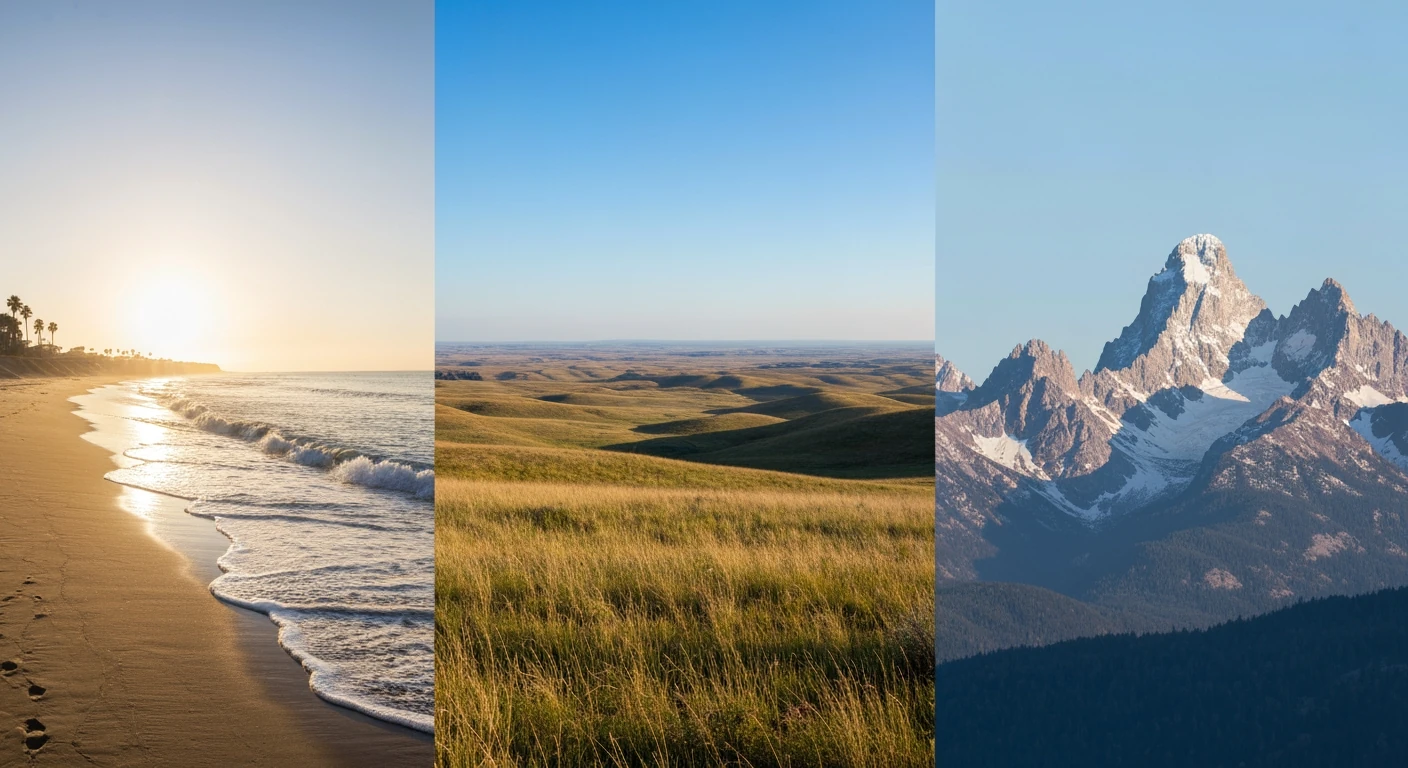
Trying to picture the geography of the United States is a bit like trying to imagine every item in a massive grocery store at once. On one coast, you have the sun-drenched beaches of California, while on the other, the historic, rocky shores of Maine greet the Atlantic. The country sprawls over 3.5 million square miles, a statistic from the U.S. Census Bureau that hints at some of the unbelievable facts about its scale.
The variety is astounding.
Start in the east, and you’ll find the gentle, forested slopes of the Appalachian Mountains, some of the oldest geological formations on the continent. Moving westward, the land flattens into the Great Plains, an agricultural heartland that seems to stretch on forever under a giant sky. Then, suddenly, the landscape rears up into the jagged, snow-capped peaks of the Rocky Mountains, a formidable barrier that splits the country in two.
This immense geographical spread naturally creates wildly different climates and ecosystems. You can find the humid, subtropical air of Florida just a few states away from the bone-dry deserts of Nevada and Arizona. How can one nation contain both scorching heat and frozen tundra? This diversity is precisely why understanding America’s seasons is key for any traveler. This landscape isn’t just a pretty postcard (though it makes for great ones); it’s the very foundation that shapes regional cultures and local life.
Taste of America: Iconic Dishes and Regional Delights
Just as the landscape shifts from sandy coasts to towering mountains, America’s menu transforms completely from one state to the next. The country’s culinary identity is a delicious mosaic, built by generations of immigrants, regional agriculture, and local history. It’s so much more than burgers and fries. Thinking about American food is like looking at a family cookbook—every region has its own cherished recipe, passed down with a unique twist.
This culinary diversity means there’s always something new to try. From coast to coast, you’ll find unique dishes that tell a story about the people who live there.
North, South, East, West: A Culinary Map
Traveling across the U.S. offers a constantly changing menu. The cool, rocky shores of New England provide the perfect setting for creamy clam chowder, a dish with roots stretching back to 18th-century fishermen. Head south, and the air gets smoky with the scent of slow-cooked barbecue, a culinary tradition with intense regional rivalries—from Texas’s beef brisket to Carolina’s pulled pork. What makes one style better than another? The answer often depends on who you ask.
Each dish tells a story about its home. Planning a trip to try these regional flavors? A good travel planner can help you match seasons with culinary events, like summer barbecue festivals or autumn apple harvests. The following table showcases just a few of the distinct flavors you might encounter.
| Dish | Regional Origin | Key Ingredients |
|---|---|---|
| New England Clam Chowder | Northeast Coast | Clams, potatoes, onions, cream or milk |
| Texas Barbecue | Texas | Beef brisket, dry rub (salt, pepper), slow-smoked with wood |
| California Burrito | San Diego, CA | Carne asada, French fries, cheese, guacamole (no rice!) |
| Chicago Deep-Dish Pizza | Chicago, IL | Thick crust, layered mozzarella, chunky tomato sauce on top |
| Gumbo | Louisiana | A dark roux, shellfish or sausage, and the “holy trinity” of vegetables |
| Key Lime Pie | Key West, FL | Key lime juice, egg yolks, sweetened condensed milk |
Beyond Burgers: Surprising American Staples
While regional specialties define local identity, some foods have captured the nation’s heart, becoming comfort staples everywhere. Macaroni and cheese is a prime example. From a simple boxed version to gourmet baked dishes with artisanal cheeses, it’s a dish that evokes a sense of home for millions. The underrated factor here is its sheer versatility.
But what about foods that aren’t originally “American”? Pizza and tacos have become so ingrained in the culture that they are practically national dishes. According to a report by the Department of Agriculture, about 13% of the U.S. population eats pizza on any given day. That’s a lot of slices. These adopted foods are constantly being reinvented, reflecting a delicious and ongoing cultural exchange— one of the most unbelievable everyday facts about the American diet.
This love for diverse flavors extends right into our kitchens. Many people are discovering the joy of recreating these classics at home. It’s easier than you might think.
After all, why wait for a trip to Louisiana to try a gumbo when you can learn the first steps to delicious home cooking yourself? The American plate is always evolving, mixing old traditions with new experiments. This constant change ensures there’s always another dish waiting to be discovered just around the corner.
America is not like a blanket—one piece of unbroken cloth, the same color, the same texture, the same size. America is more like a quilt—many pieces, many colors, many sizes, all woven and held together by a common thread.
— Jesse Jackson, Civil Rights Activist
| Dish | Regional Origin | Key Ingredients |
|---|---|---|
| New England Clam Chowder | Northeast Coast | Clams, potatoes, onions, cream or milk |
| Texas Barbecue | Texas | Beef brisket, dry rub (salt, pepper), slow-smoked with wood |
| California Burrito | San Diego, CA | Carne asada, French fries, cheese, guacamole (no rice!) |
| Chicago Deep-Dish Pizza | Chicago, IL | Thick crust, layered mozzarella, chunky tomato sauce on top |
| Gumbo | Louisiana | A dark roux, shellfish or sausage, and the “holy trinity” of vegetables |
| Key Lime Pie | Key West, FL | Key lime juice, egg yolks, sweetened condensed milk |
Festivals and Traditions: Celebrating American Spirit
Beyond the landmarks and landscapes, the United States reveals its character through its celebrations. From nationwide holidays that bring millions together to quirky local festivals celebrating everything from garlic to groundhogs, these traditions are the heartbeat of American culture. They offer a window into the values, history, and shared joy that connect diverse communities across the country. It’s a lot like a family recipe book; each celebration has its own unique ingredients and story.
These events are more than just dates on a calendar. They are living, breathing expressions of identity.
National Holidays: More Than Just a Day Off
Certain holidays act as a national unifier, observed from coast to coast with similar rituals. Think of the Fourth of July, with its dazzling fireworks displays and backyard barbecues marking the nation’s independence. Or Thanksgiving, a day centered on gratitude and gathering. Preparing the Thanksgiving feast is a tradition in itself, a perfect time to explore some delicious home cooking with family and friends. What most people miss is that these aren’t just government-mandated breaks; they are deeply ingrained cultural moments.
These holidays often involve shared experiences that have been passed down through generations. On Thanksgiving, for example, the National Turkey Federation reports that Americans prepare over 46 million turkeys. And the Macy’s Thanksgiving Day Parade has been a morning ritual for families since 1924. These traditions create a powerful sense of collective memory and belonging, even for people separated by thousands of miles.
Local Lore: Community Celebrations
But the true diversity of American spirit often shines brightest at the local level. A study by the American Folklore Society found that over 78% of small towns have at least one unique annual festival tied to their local history or primary industry. These events are deeply personal to the community and offer a much more intimate experience. This is where you’ll find some unbelievable local traditions.
Have you ever heard of the Albuquerque International Balloon Fiesta, where hundreds of hot air balloons paint the New Mexico sky? Or Mardi Gras in New Orleans, a world-famous party with roots stretching back centuries? Attending one of these unique events can be a highlight of any trip, and our ultimate travel planner can help you align your visit with a local celebration. These festivals are not just for tourists; they are for the community, by the community.
Deciding between a massive national event and a small-town festival can be tough. Here’s a quick look at the trade-offs:
- Major National Celebrations (e.g., New Year’s Eve in Times Square)
- Pros: Unmatched energy, iconic photo opportunities, and a feeling of being part of a historic moment.
- Cons: Massive crowds, high costs for travel and accommodation, and can feel impersonal or overwhelming.
- Smaller Local Festivals (e.g., a town’s Strawberry Festival)
- Pros: Authentic cultural immersion, lower costs, a chance to interact with locals, and support for the community.
- Cons: Less spectacle, may require more effort to discover, and amenities can be limited.
- Set Your Priorities: Before anything else, have a family meeting. Are you dreaming of roller coasters, majestic mountains, or historical deep dives? Getting everyone on the same page prevents arguments later.
- Map Your Time and Distance: A common mistake is underestimating travel time. Driving from New York City to Los Angeles, for example, takes about 45 hours of pure driving time, according to Google Maps data. Be realistic about what you can see in the time you have.
- Book the Big Things First: Secure your flights, rental car, and accommodations well in advance, especially if you’re traveling during peak season or visiting a popular national park. Some park lodges and campsites book up nearly a year ahead.
- Budget for Everything: Beyond flights and hotels, factor in gas, food, attraction tickets, and the inevitable souvenir shop. To manage costs, many families find that booking stays with kitchenettes allows for some quick meal prep, saving a lot compared to dining out three times a day.
- Pack Smart, Not Heavy: The key is layers. You could experience chilly mornings and hot afternoons in the same day, especially out west. Deciding when to travel is also important, as understanding the climates can make or break your trip; our guide on the best time to visit the USA can help with that.
Ultimately, experiencing these traditions—big or small—is about connecting with the stories people choose to tell about themselves. As communities evolve, so do their celebrations, promising new and fascinating traditions for future generations to discover.
Everyday Wonders: Uncovering Unique American Curiosities
Beyond the grand monuments and sprawling national parks, the United States is filled with delightful oddities that reveal its playful side. Many of these quirks are hiding in plain sight. For example, in Gainesville, Georgia, a city ordinance once made it technically illegal to eat fried chicken with anything other than your hands. It’s a real law.
What most people miss is the sheer volume of these charming eccentricities. Surprisingly, the U.S. has more public libraries than McDonald’s restaurants. A report from the Institute of Museum and Library Services noted over 16,000 library outlets, offering quiet community hubs that outnumber the fast-food giant. These kinds of discoveries are just a small part of a world brimming with unbelievable everyday facts.
This spirit extends to its landmarks. Forget the Statue of Liberty for a moment and consider Carhenge in Nebraska—a full-scale replica of England’s Stonehenge constructed entirely from vintage American cars. But why build such a thing? Sometimes the answer is simply, “why not?” Visiting these spots adds an unexpected twist to any road trip, especially if you’re using a seasonal travel planner to explore off-the-beaten-path destinations.
Of course, American quirks often involve food. The country’s love for pizza is so immense that, according to some industry reports, Americans eat approximately 100 acres of it every single day. That’s a lot of pepperoni. This national obsession has inspired countless people to try making their own delicious versions at home, turning a simple meal into a creative outlet.
These little details—the funny laws, the roadside oddities, the surprising statistics—are like discovering hidden tracks on a favorite album. They add texture and character, reminding you that there is always something new and unexpected to find, no matter where you look.
Planning Your American Adventure: Tips for a Memorable Trip
Inspired by the nation’s quirks and landmarks, you might be thinking about seeing the United States for yourself. It is a fantastic idea. planning a trip across a country that spans nearly 3.8 million square miles requires a bit more than just packing a bag and showing up. The sheer scale is something many visitors find surprising.
Think of it less like a single vacation and more like preparing a huge, complicated recipe from scratch. You need to gather your ingredients (destinations), time everything perfectly (transportation), and add the right seasoning (activities). The result, is always worth the effort. Let’s break down the primary steps for a memorable journey.
Getting Around: Transportation Options
Once you’re on the ground, navigating the U.S. presents a few choices, each with its own pros and cons. For covering vast distances between regions—say, from the East Coast to the West Coast—flying is almost always the most practical option. The country has more than 5,000 public airports, making most major cities accessible by air.
For regional exploration, renting a car is the quintessential American experience. It gives you the freedom to explore back roads, stop at quirky roadside attractions, and travel at your own pace. Just be prepared for traffic in and around major cities. In dense urban centers like Boston, Chicago, or San Francisco, public transportation—subways, buses, and trams—is often cheaper and more efficient than dealing with driving and expensive parking.
This is your best bet.
Cultural Nuances: What to Know Before You Go
While the U.S. shares many customs with other Western nations, a few local habits can catch visitors off guard. Tipping, for instance, is a significant part of the service industry culture. In restaurants, a tip of 18-20% of the pre-tax bill is standard for good service. The same goes for hairdressers, taxi drivers, and tour guides.
Americans also tend to be quite informal and friendly in casual interactions. Don’t be surprised if a stranger strikes up a conversation while you’re waiting in line for coffee. This friendliness often extends to a direct communication style that values openness. Most people appreciate a straightforward question over polite ambiguity. But how does this general openness play out in daily life? It creates a welcoming, if sometimes loud, atmosphere that many visitors find refreshing.
Making Memories: Activities for All Ages
The United States offers a staggering variety of activities that can appeal to every member of the family. From sprawling natural wonders to world-class museums, the challenge isn’t finding something to do, but rather narrowing down the options. The key is to balance high-energy outings with more relaxed experiences to avoid burnout.
Getting an early start can also be a major shift, especially in popular tourist spots. Beating the crowds to that perfect photo spot or museum exhibit often requires waking up a little earlier, but a few simple morning hacks for a brighter day can make that feel much easier. It’s a small adjustment that can dramatically improve your experience.
National Parks and Outdoor Fun
America’s National Park System is often called its “best idea.” With 63 designated national parks and hundreds of other monuments, seashores, and recreation areas, it’s a treasure trove for nature lovers. You can hike among the giant sequoias in California, watch geysers erupt in Wyoming, or explore the vast, silent canyons of Utah—and honestly, the pictures you’ve seen don’t even come close to capturing the real thing.
A recent report from the National Park Service noted over 325 million recreation visits in a single year, which highlights their popularity. To make the most of a visit, check the official park website for road closures, trail conditions, and any required reservations for entry or popular hikes. Many parks are enormous, so planning a specific area to explore each day is much more effective than trying to “see it all.”
Museums and Historical Sites
For a dose of culture and history, the country’s museums are second to none. The Smithsonian Institution in Washington, D.C., alone operates 19 museums, a zoo, and several research centers, and—what most people miss is—the majority of them offer free admission. You can see the original Star-Spangled Banner, the Wright brothers’ 1903 Flyer, and Dorothy’s ruby slippers from The Wizard of Oz.
Beyond the capital, nearly every city has museums dedicated to art, science, and local history. In Philadelphia, you can walk the same streets as the Founding Fathers, and in New Orleans, you can explore the origins of jazz. These sites aren’t just collections of old objects; they are storytellers that connect the present to the past. The real magic of a U.S. trip is found in this blend of the grand and the personal, creating a journey that is uniquely your own.
Beyond the Bucket List: What Does It Mean to ‘See’ America?
The sheer scale of the United States can be intimidating, tempting travelers to create a whirlwind tour of famous landmarks. Yet, to understand the country is to accept that it can’t be fully “seen” in a single trip, or even a dozen. Perhaps the best approach is to stop trying to conquer it all. Instead of a cross-country sprint, consider a deep dive into a single region. Spend a week exploring the hidden bayous of Louisiana, tracing the Oregon Trail, or getting lost in the history of the Appalachian Mountains. What if the goal wasn’t to check boxes, but to collect experiences, one distinct American story at a time?
Frequently Asked Questions
What are some must-try regional foods in the United States?
The U.S. is a culinary map of diverse flavors. In New England, you must try the creamy clam chowder, while the South is famous for its slow-cooked barbecue, with fierce rivalries between Texas brisket and Carolina pork. Don’t miss Louisiana’s rich gumbo or a classic deep-dish pizza in Chicago.
Is it easy to travel across the United States without a car?
It can be challenging but is certainly possible, especially between major cities. The Northeast Corridor has excellent Amtrak train service, and buses connect most towns. for exploring national parks and rural areas, a car provides primary freedom and flexibility that public transport often lacks.
What are the most family-friendly cities to visit in the US?
The best city depends on your family’s interests. Orlando is unbeatable for theme parks, while Washington, D.C. offers an incredible array of free Smithsonian museums for curious minds. For a mix of beaches, a world-class zoo, and a relaxed atmosphere, San Diego is a fantastic choice for all ages.
Are there any unique local customs I should be aware of when visiting different American regions?
While tipping around 15-20% for service is a standard custom nationwide, regional differences are more subtle. You might notice a slower pace of life and warmer greetings in the South, known as “Southern hospitality.” The best advice is to be observant and polite, as Americans are generally forgiving of cultural missteps.