How well do you know the world around you? We move through our days surrounded by familiar objects, routines, and concepts we rarely question. From the alarm clock that starts the morning to the historical figures we learned about in school, our understanding is built on a foundation of accepted truths. But what if that foundation is riddled with astonishing secrets, happy accidents, and bizarre realities that are far stranger than fiction?
The truth is, our daily lives are a living museum of scientific curiosities and historical oddities. The mundane act of making coffee, the design of a common office supply, or even an involuntary yawn are all governed by principles and backstories that challenge our perception of normalcy. The world isn’t just what we see on the surface; it’s a complex and often illogical tapestry of interconnected events, discoveries, and natural wonders that have been hiding in plain sight.
This article pulls back the curtain on the unbelievable. We will explore the shocking science behind your daily habits, from the bacteria thriving in your kitchen to the surprising reason your brain needs to cool down. We’ll then journey into the natural world to meet immortal jellyfish and see how rocks can sail across the desert. Finally, we’ll bust historical myths and uncover the accidental inventions and forgotten figures who quietly shaped the modern world. Prepare to question everything you thought you knew.
The Hidden Wonders of Your Daily Routine
From the moment your alarm clock rings, your day is filled with small, repetitive actions you barely think about. But what if those mundane moments held surprising secrets? The underrated factor here is just how much science and strange human behavior is packed into our daily lives, starting with the simple act of brushing your teeth.
Most of us feel we have a good grasp of our morning rituals, but the data suggests otherwise. According to research published in the British Dental Journal, the average person brushes their teeth for only 46 seconds. That’s a huge miss. This is one of those common mistakes that can derail your day before it even begins, falling well short of the two-minute mark dentists recommend for effective cleaning.
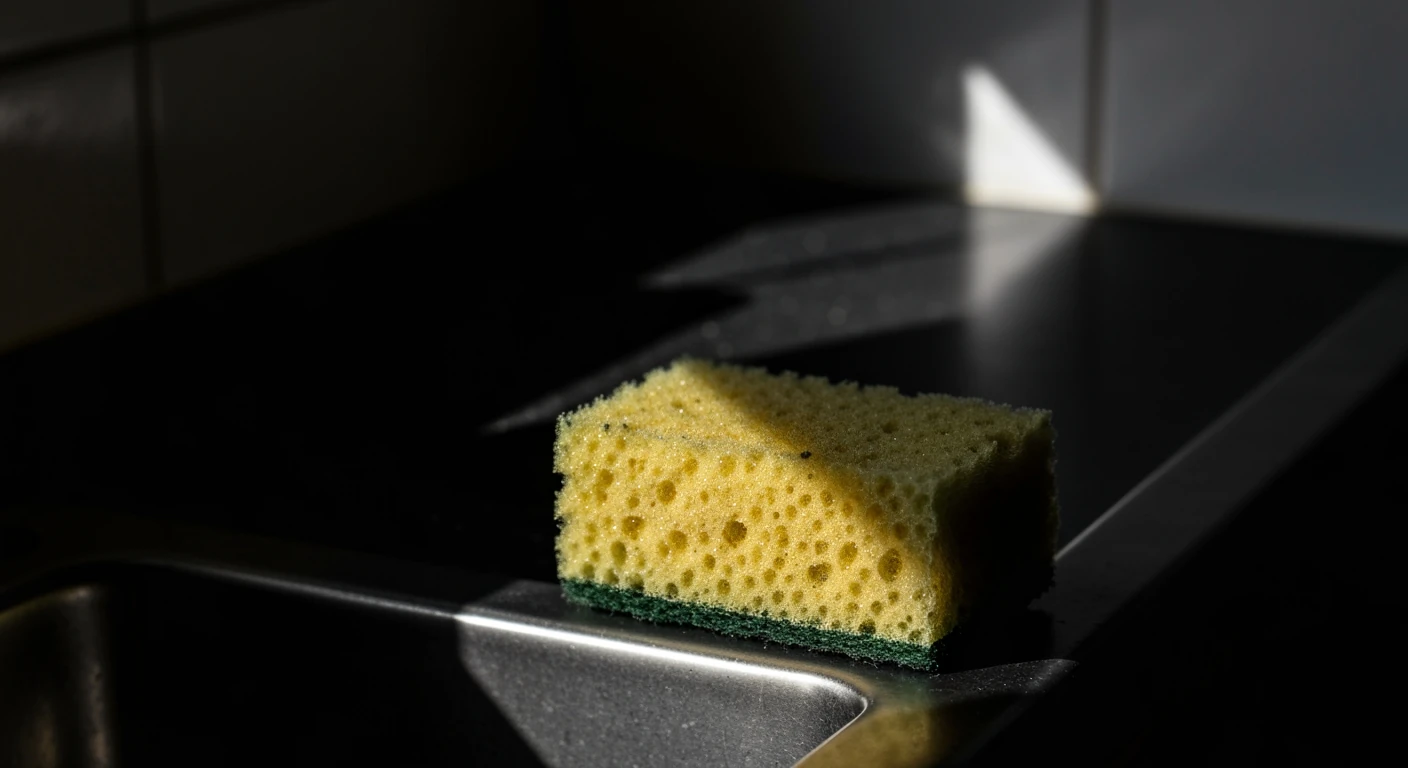
This pattern of overlooked details extends beyond personal hygiene and into other parts of the home, especially the kitchen. Think about your kitchen sponge. It’s a tool for cleaning, right? Surprisingly, a study from NSF International found that over 75% of kitchen sponges contain Coliform bacteria, a family of bacteria that includes Salmonella and E. coli. It’s one of those unexpected truths about home cooking that might make you look at your sink a little differently.
These little facts aren’t just trivia; they are reminders that even the most familiar parts of our day have hidden depths. The journey from a sleepy start to a productive day is built on a foundation of these small choices, and understanding them is the first step toward improving them. Building simple morning habits for a better you can make a noticeable difference in how you feel and perform.
Nature’s Quirks: Unveiling Earth’s Most Peculiar Phenomena
Moving beyond the curiosities in our homes, the natural world operates with a set of rules that can seem bizarre. Planet Earth is filled with creatures and geological events that challenge our understanding of what’s possible. Some of these facts are so strange they sound like they’ve been pulled from a science fiction story. It’s a wild world out there.
From animals that defy the life cycle to landscapes that appear to have their own agenda, these quirks remind us that nature is the original master of surprise. Exploring them is a fascinating journey. Understanding these natural wonders can be just as rewarding as uncovering the unexpected truths about home cooking or our daily routines.
Animals with Unexpected Abilities
The animal kingdom is packed with specialists possessing skills that seem almost supernatural. Consider the Turritopsis dohrnii, a species of jellyfish that has earned the nickname “the immortal jellyfish.” When faced with physical damage or starvation, it can revert completely to its earliest stage of life, a sexually immature polyp, and begin its life cycle anew. This ability to hit the reset button is a fascinating contrast to how we must consciously fix common mistakes that derail our day.
But the wonders don’t stop there. The mantis shrimp, a small but powerful crustacean, has one of the most complex visual systems ever discovered. While humans have three types of color-receptive cones, the mantis shrimp has between 12 and 16. What’s the point of all that extra hardware? Researchers at the University of Queensland discovered they perceive polarized light in a way that helps them detect prey and predators with incredible precision. They see a world completely hidden from our own eyes.
This is nature’s version of high-definition. Then you have the axolotl, a salamander that can regenerate not just its tail but also entire limbs, parts of its spinal cord, and even sections of its brain without any scarring — a feat that continues to baffle scientists.
Geological Marvels That Defy Logic
The planet itself also has its share of head-scratching phenomena. For decades, the “sailing stones” of Racetrack Playa in Death Valley National Park were a complete mystery. These large rocks, some weighing hundreds of pounds, would move across the flat desert floor, leaving long trails behind them with no human or animal intervention. It wasn’t until recently that scientists captured the process.
It happens under a very specific set of conditions. A rare winter rain forms a shallow lake that freezes overnight, creating a thin sheet of ice. As the sun warms the ice, it breaks into large, floating panels that are pushed by light winds, carrying the rocks along with them. The process is like a slow-motion hockey game played by nature itself.
Another breathtaking example is bioluminescence in certain bays, like Mosquito Bay in Puerto Rico. The water glows with a brilliant blue light when disturbed. According to Dr. Michael Latz of the Scripps Institution of Oceanography, this light comes from millions of microorganisms called dinoflagellates. He explains, “Their glow is a defense mechanism, a flash of light intended to startle predators.” It’s a stark reminder that some of the most beautiful displays on Earth are born from the struggle for survival.
Their glow is a defense mechanism, a flash of light intended to startle predators.
— Dr. Michael Latz, Scripps Institution of Oceanography
| Everyday Item or Phenomenon | The Surprising Truth |
|---|---|
| Kitchen Sponges | Over 75% contain Coliform bacteria, the same family as Salmonella and E. coli, making them one of the germiest items in the home. |
| Yawning | It’s not about a lack of oxygen. Evidence suggests it’s a thermoregulatory behavior that acts like a radiator to cool down your brain. |
| Post-it Notes | They were created from a failed experiment to make a super-strong adhesive. The weak, reusable glue was considered useless for years. |
| Immortal Jellyfish (Turritopsis dohrnii) | When faced with stress or injury, this jellyfish can revert to its earliest life stage and start over, achieving potential biological immortality. |
| Roman Vomitoriums | These were not rooms for purging after a feast, but large passageways in amphitheaters designed to let crowds exit (‘spew forth’) quickly. |
Historical Oddities: Beyond the Textbooks
History often gets a bad rap for being a dry collection of dates and battles. But beneath the surface of the official record lies a treasure trove of bizarre, hilarious, and downright strange stories about how our ancestors lived. The reality of the past is frequently more surprising than the fiction we’ve been taught. Many things we take for granted came about by sheer luck or misunderstanding.
Thinking about history this way is like examining the back of a complicated tapestry instead of the front; the knots and stray threads tell a much more interesting story. This is where we find the human element. The mistakes, the happy accidents, and the daily grind reveal more than any king’s decree ever could.
Inventions We Got Wrong (or Right, Accidentally)
Many of the world’s most useful inventions weren’t the product of a genius having a “eureka” moment. Instead, they were accidents—the result of a failed experiment or a search for something completely different. It’s a humbling reminder that sometimes the best discoveries happen when you’re looking for something else entirely.
The Serendipitous Discoveries
Take the microwave oven, a staple in nearly every modern kitchen. Its invention had nothing to do with food. In 1945, a Raytheon engineer named Percy Spencer was working with a new vacuum tube called a magnetron for radar equipment when he noticed the chocolate bar in his pocket had melted. Intrigued, he aimed the tube at some popcorn kernels, which promptly exploded all over the lab. The first commercial microwave, the “Radarange,” was born from this happy accident, though it was initially over 6 feet tall and cost more than $50,000 in today’s money.
Similarly, the ubiquitous Post-it Note came from a failed project at 3M. In 1968, scientist Dr. Spencer Silver was trying to develop an intensely strong adhesive. He created the opposite: a very weak, pressure-sensitive adhesive that would stick to surfaces but could be easily peeled off without leaving residue. For years, nobody could find a use for it. Then, his colleague, Art Fry, who was frustrated with his bookmarks falling out of his church hymnal, had an idea. He applied Silver’s “useless” glue to small pieces of paper, creating the perfect reusable bookmark. These are some of the unexpected truths about items in our homes that have fascinating origins.
Daily Life in Ancient Times: A Shocking Reality Check
We often have a distorted view of what daily life was like in ancient civilizations, colored by Hollywood films and popular myths. The truth, is often stranger and more practical. For instance, the Roman “vomitorium” had nothing to do with purging during lavish feasts. The term simply referred to the large entryways and passages in an amphitheater designed to “spew forth” large crowds quickly—an ancient form of crowd control.
Another surprising fact comes from ancient Egypt, where both men and women wore elaborate makeup, particularly heavy black eyeliner made from kohl. This wasn’t just a fashion statement. Scientific analysis of 52 samples from ancient cosmetic containers, reported by researchers from the Louvre Museum, found that the lead-based substances had a purpose. They stimulated the production of nitric oxide in the skin, which boosted the immune system to fight off the rampant bacterial eye infections common in the Nile region. Who knew ancient makeup was also medicine?
It’s a great example of why it pays to evaluate information from multiple sources before accepting it as fact.
| Common Myth | Historical Reality |
|---|---|
| Vikings wore horned helmets into battle. | There is zero archaeological evidence for this. The image was popularized by a costume designer for an 1876 opera by Wagner. Real Viking helmets were simple metal or leather caps. |
| Napoleon Bonaparte was exceptionally short. | He was around 5’7″, which was actually slightly above average height for a Frenchman of his time. The myth stems from British propaganda and confusion over the difference between French and English inches. |
| People in the Middle Ages believed the Earth was flat. | This is largely a 19th-century fabrication. The vast majority of educated people since the time of the ancient Greeks knew the Earth was a sphere. The debate was about its size, not its shape. |
Forgotten Figures Who Shaped Our World
History textbooks tend to focus on a small cast of characters, leaving countless other influential people in the shadows. One of the most remarkable is Hedy Lamarr. While most people remember her as a glamorous movie star from Hollywood’s golden age, her most significant contribution was in a field far from the silver screen: radio-guidance technology.
During World War II, Lamarr, an Austrian-born Jew who had fled her husband (an arms dealer for the Axis powers), was passionate about defeating the Nazis. Working with composer George Antheil, she developed a “Secret Communication System” to prevent enemy forces from jamming the signals of radio-controlled torpedoes. Their invention used “frequency hopping” to rapidly switch among 88 different frequencies—an idea Antheil was familiar with from synchronizing player pianos.
The U.S. Navy didn’t implement the technology (U.S. Patent No. 2,292,387) at the time, dismissing it as too cumbersome. But decades later, the principles of frequency-hopping became the foundation for many modern wireless technologies, including Wi-Fi, GPS, and Bluetooth. The underrated factor here is how her public image as just an actress completely overshadowed her scientific brilliance for most of her life.
Her story is a powerful reminder of the incredible tales hidden just beneath the surface of what we think we know, inspiring us to craft a more personalized approach to discovering the world’s stories.
It makes you wonder how many other “facts” we accept without question are just as wrong, and how many other hidden figures are waiting to have their stories told.
The Science Behind the Mundane: Explaining the Unexplainable
Ever wonder why that first sip of morning coffee has such a distinct, bitter bite? Science has a fascinating answer that goes beyond just the beans. The bitterness comes from compounds called chlorogenic acid lactones and phenylindanes, which are created during the roasting process. The darker the roast, the more phenylindanes are present, resulting in a stronger bitter flavor — a perfect example of the unexpected truths about home cooking that hide in our daily routines.
This hidden science applies to our own bodies, too. Take the simple act of yawning. For a long time, people thought it was about getting more oxygen, but that theory has been largely debunked. A more accepted explanation, according to a study in the journal Physiology & Behavior, is that yawning is a thermoregulatory behavior. Essentially, it works like a radiator for your brain.
It’s a built-in cooling system.
The stretching of the jaw increases blood flow to the head, while the deep inhalation of cooler air helps dissipate heat from the cerebral spinal fluid. Isn’t it strange to think that a contagious yawn in a meeting might just be your brain trying to cool down? This suggests that some of our most common behaviors are reactions to our environment, often without our conscious input.
Understanding these little quirks of biology and chemistry can make the world feel a bit more magical. Appreciating them can even become one of the simple morning habits for a better you, turning a mundane moment into a small discovery. The next time you yawn, you’re not just tired; you’re actively managing your brain’s temperature.
Mind-Bending Facts About Your Own Mind and Body
After exploring the science behind the world around us, the most astonishing subject is often the one we inhabit every day: ourselves. The human body and mind are filled with complexities and capabilities that defy belief. Many of these facts sound like they belong in science fiction, yet they are part of your daily existence.
The Brain’s Secret Powers and Peculiarities
Your brain is, without a doubt, the most complex object in the known universe. Despite weighing only about three pounds, it’s an electrical and chemical powerhouse. What most people miss is just how much information it can hold. Researchers at Stanford University estimate the brain’s storage capacity to be around 2.5 petabytes. That’s equivalent to about 3 million hours of television shows. It’s a lot of data.
To perform its constant calculations, your brain consumes a disproportionate amount of energy. It accounts for just 2% of your body’s mass but uses a staggering 20% of its oxygen and calories. But where does all that energy go? Much of it is spent on background processes and filtering the constant stream of sensory information you receive, a skill that’s surprisingly useful for crafting your perfect morning read by focusing only on what matters. Your brain is essentially a master of curation, deciding what gets your attention and what fades into noise.
Your Body: A Collection of Wonders (and Oddities)
The wonders are not confined to your skull. Your body is a biological machine of incredible scale. If you were to lay out all the blood vessels in an average adult end-to-end, they would circle the Earth more than twice—a length of over 60,000 miles. Yet, much of what we think we know about our bodies is based on myths passed down through generations. Let’s clear up a few common misconceptions.
- Myth: You only use 10% of your brain. This is perhaps the most persistent myth. Brain scans like fMRIs clearly show that we use virtually every part of the brain, just at different times. Even during sleep, areas like the frontal cortex and sensory regions are active.
- Myth: Shaving makes your hair grow back thicker. That thicker-feeling stubble is just an illusion. A shaved hair is cut at its thickest point, leaving a blunt end that feels coarse. It’s like cutting a tapered rope in the middle—the end feels thicker, but the rope itself hasn’t changed.
- Myth: You must drink eight glasses of water per day. This “rule” is an oversimplification. Hydration needs vary based on age, activity level, and climate. Plus, a significant amount of water comes from food, like fruits and vegetables—something to remember when establishing simple morning habits for a better you.
Understanding these truths helps demystify the incredible systems working inside you every second. It’s a reminder that reality is often more fascinating than fiction (and a lot less stressful than trying to count eight glasses of water).
The more we learn, the more questions arise, suggesting the greatest discoveries about what it means to be human are still ahead of us.
What Will You Question Next?
Uncovering these hidden facts does more than just arm you with interesting trivia for your next dinner party. It fundamentally changes your relationship with the world. It proves that beneath the surface of the ordinary lies an endless supply of the extraordinary, waiting for anyone curious enough to look. The realization that an immortal jellyfish exists, or that your microwave was a byproduct of radar research, serves as a powerful reminder that we are all beginners in the school of reality.
The most significant takeaway isn’t any single fact, but the habit of inquiry that discovering them inspires. The next time you perform a mundane task, find yourself in a familiar place, or recall a piece of common knowledge, pause and ask: Is there another story here? What am I not seeing? Cultivating this sense of wonder is not just about learning; it’s about living in a world that is perpetually new.
Frequently Asked Questions
What are some surprising facts about common foods?
Many common foods have surprising scientific properties. For example, the bitterness in coffee isn’t just from the bean itself but from compounds called phenylindanes that form during roasting; a darker roast means a more bitter taste. Another classic food fact is that botanically, bananas are considered berries while strawberries are not.
Are there any everyday objects with a hidden history?
Yes, many everyday objects were invented by accident. The microwave oven was discovered when an engineer noticed his chocolate bar melted while he was working on radar equipment. Similarly, Post-it Notes were born from a failed attempt to create a super-strong glue; the resulting weak adhesive found its perfect use as a removable note.
How many of these ‘shocking facts’ are actually true?
While the internet is full of misinformation, the facts presented in this article are sourced from credible research and historical records. For example, the data on toothbrushing habits comes from the British Dental Journal, and the analysis of ancient Egyptian makeup was published by researchers associated with the Louvre Museum. It’s always wise to check sources, but these facts are well-documented.
Where can I find more credible fun facts?
For reliable and fascinating information, turn to academic and scientific sources. University research portals like JSTOR, publications such as National Geographic, and museum websites like the Smithsonian are excellent resources. Scientific journals and reputable fact-checking websites also provide well-vetted information that goes beyond sensationalism.
Do any of these facts relate to health or wellness?
Absolutely. The fact that most people brush their teeth for less than a minute highlights a common gap in personal hygiene. Likewise, knowing that kitchen sponges are hotspots for bacteria can directly impact home cleanliness and health. Even historical facts, like the discovery that ancient Egyptian eyeliner helped prevent eye infections, connect to human wellness.