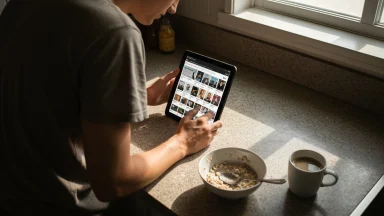
In an age of endless scrolling and instant updates, the line between credible information and compelling fiction has never been blurrier. Every day, we are bombarded with headlines, alerts, and shared stories, each vying for our attention. This constant stream can feel overwhelming, leading to a sense of news fatigue where it becomes easier to disengage than to discern. But what is the hidden cost of tuning out or, worse, trusting the wrong sources? The answer impacts not just our worldview, but our daily decisions and conversations.
This information overload isn’t accidental; it’s a feature of our modern digital ecosystem. Algorithms on social media are designed to show us what we’ll engage with, often creating ‘filter bubbles’ that reinforce our existing beliefs rather than challenging them. Simultaneously, the decline of traditional media business models has given rise to a new wave of outlets where the standards for accuracy and accountability can vary wildly. The responsibility has shifted from the gatekeepers to the individual, making media literacy a underlying skill for modern life, not just an academic concept.
So, how can you become a more confident and discerning news consumer without spending hours fact-checking every article? This guide offers a clear, practical framework for navigating the complex media landscape. We will explore the key differences between media types, reveal the tell-tale signs of a trustworthy news outlet, and compare some of the top news sources available. By the end, you’ll have the tools to build a healthier information diet and form a clearer picture of the world around you.
Why Your News Source Matters More Than Ever
Scrolling through headlines over a morning coffee is a modern ritual for millions. But this daily flood of information presents a hidden challenge. We are exposed to more stories, updates, and alerts than any generation before us, and choosing a reliable news source is more than just a preference; it’s a critical part of how we start our day right. The quality of information you consume directly shapes your understanding of the world.
Think of it like cooking. If you use expired spices or low-quality ingredients, your final meal will suffer, no matter how skilled you are as a chef. The same principle applies to news. Junk information leads to a junk understanding of complex issues, affecting everything from financial decisions to conversations with neighbors.
The stakes are surprisingly high. A study from researchers at MIT found that false news on social media platforms spread about six times faster than factual stories. That’s a staggering difference.
Being an informed citizen isn’t just about knowing what’s happening; it’s about knowing what’s actually happening. Relying on questionable sources can skew your perception and, what most people miss is, it can undermine your ability to participate meaningfully in your community. A core part of media literacy involves learning how to spot biases and understand media agendas before they shape your opinions. The goal is to build a clear picture of reality, not one clouded by someone else’s narrative.
Decoding News: Understanding Different Media Types
Choosing your news source is a bit like deciding on breakfast. Some days you might want a slow, sit-down meal with the morning paper, and other days you just need a quick update you can scan on your phone while the coffee brews. Each format—from the printed page to the screen in your hand—delivers information differently, with its own unique set of strengths and weaknesses.
Understanding these differences is the first step toward becoming a more discerning news consumer. It’s not about one type being “better” than another. It’s about knowing what to expect from each one.
The Enduring Appeal of Print and Broadcast
There’s a certain comfort in the familiar structure of print media like newspapers and magazines. The information is typically well-researched and has gone through multiple layers of editing before it reaches your hands, which can be a calming part of your simple morning habits. The downside, of course, is timeliness; by the time a story is printed, it might already be hours old. This format is built for depth and context, not breaking alerts.
Similarly, broadcast news on television and radio offers a curated experience. According to a recent Pew Research Center report, a surprising 35% of adults still regularly watch local TV news, valuing its visual storytelling and accessible format. The main limitation is time. A 30-minute newscast has to cover a lot of ground, which can lead to simplified stories that sometimes miss the deeper context.
Navigating the Digital News Frontier
Online news offers unmatched speed and a vast range of perspectives. From major news organization websites to independent blogs, the flow of information is constant—a non-stop firehose of updates. This immediacy is powerful, allowing you to follow events as they happen. But how do you sort the thoughtful analysis from the misleading clickbait? The sheer volume can be overwhelming, and the lack of traditional gatekeepers means more responsibility falls on you, the reader.
The underrated factor here is understanding how platforms operate. Social media feeds, for example, use algorithms that can create a “filter bubble,” showing you more of what you already agree with. This makes it more important than ever to proactively seek out diverse viewpoints and learn how to spot potential media agendas. While the digital world connects us globally, it’s also a great tool for finding your daily brew of local happenings, often with more detail than a brief TV segment.
Here is a quick comparison of the different media types:
| Media Type | Pros | Cons |
|---|---|---|
| Print (Newspapers/Magazines) | In-depth analysis; professional editing; clear story hierarchy. | Slow to update; can be costly; less interactive. |
| Broadcast (TV/Radio) | Visually/audibly engaging; accessible to a wide audience; good for breaking news summaries. | Limited time for depth; can prioritize sensationalism for ratings. |
| Digital (News Sites/Blogs) | Immediate updates; vast variety of sources; interactive (comments, sharing). | Information overload; quality varies wildly; requires careful vetting. |
| Social Media | fast; user-driven discovery; direct access to sources. | High potential for misinformation; algorithms create filter bubbles. |
Knowing the container is just part one. The real skill is learning to critically assess what’s inside, regardless of how it was delivered to you.
False news on social media platforms spread about six times faster than factual stories.
— Sinan Aral, Deb Roy, & Soroush Vosoughi, MIT Initiative on the Digital Economy
| News Source Type | Primary Focus | Typical Strength |
|---|---|---|
| Associated Press (Wire) | Factual, event-based reporting | Objectivity and speed; foundational facts |
| Reuters (Wire) | Global news with a financial focus | Breadth of coverage; business and market data |
| BBC World Service | International news with context | In-depth analysis and cultural understanding |
| The New York Times | National and international news | Investigative reporting and broad coverage |
| The Wall Street Journal | Business, finance, and economics | Deep market analysis and financial news |
| NPR / PBS NewsHour | U.S. and international news | Measured pace and expert interviews |
| Local Newspapers | Community-specific news | Direct impact on daily life (schools, local gov) |
Key Indicators of a Trustworthy News Outlet
Sorting through the mountain of news available each day can feel like trying to pick the freshest apple from a giant bin. Some look shiny and perfect, while others are bruised or just plain rotten. Luckily, there are clear signs that separate a quality source from a questionable one, and learning to spot them is a skill anyone can develop.
It all boils down to a few core principles. You don’t need to be an investigative journalist to do a quick background check on your news. Think of it less as a chore and more as a simple habit that improves your information diet.
Transparency and Accountability
Credible organizations are not afraid to show you who they are. They make it easy to find information about their funding, their leadership, and their mission. Look for a detailed “About Us” page, clear author biographies with credentials, and a publicly stated ethics policy. A source that hides this information is like a restaurant with a dirty kitchen—what are they trying to conceal?
This is especially true when you’re trying to get your daily brew of local happenings, as local outlets often have deep ties to the community they serve. A reputable source will proudly display its connections and history. If you can’t easily find out who is paying for the content or who is writing it, that’s a major red flag.
Unpacking Editorial Independence and Bias
Every news source has a perspective. The goal isn’t to find a perfectly neutral source—which I suspect doesn’t exist—but to understand the perspective of the one you’re reading. Reliable outlets work to separate their news reporting from their opinion sections. They often label opinion or analysis pieces clearly to avoid confusion.
What most people miss is that bias isn’t always political. It can be a bias toward sensationalism, a focus on a specific industry, or a tendency to favor official sources. Understanding this is a critical skill you can develop by learning to unmask media agendas and recognize their patterns. The key is whether the outlet is open about its viewpoint or tries to present it as objective fact.
Identifying Common Bias Traps
Beyond a simple left-or-right lean, bias shows up in subtle ways. Watch out for these common patterns:
- Bias by Omission: Leaving out one side of a story or critical details that would change a reader’s perception.
- Bias by Placement: Placing stories the outlet wants to emphasize at the top of a webpage or on the front page of a newspaper.
- Confirmation Bias: The tendency for reporters and editors to look for information that confirms their existing beliefs, often unintentionally.
- Sensationalism: Favoring exciting or shocking stories over stories that might be more socially or politically significant. This is often done to increase viewership rather than to inform.
The Role of Fact-Checking and Corrections
Even the best news organizations make mistakes. The mark of a trustworthy outlet isn’t perfection; it’s how they handle their errors. Look for a clear, accessible corrections policy. Do they publish corrections promptly and with the same prominence as the original error? Or do they bury them—or worse, ignore them completely?
A recent analysis from the Knight Foundation found that outlets with a clear and visible corrections policy were perceived as 22% more trustworthy by readers. This simple act of accountability speaks volumes. Making this quick check part of your daily routine—just like other simple morning habits for a better you—can dramatically improve the quality of information you consume.
This process builds confidence and shows a commitment to accuracy over ego.

A Curated Look at Top News Sources
Once you know how to spot a reliable source, the next step is finding a few that fit your routine. Choosing a primary news source is a bit like picking a knife from the kitchen block; a general chef’s knife is versatile, but you’ll want a serrated one for bread and a paring knife for detailed work. The goal isn’t to find one perfect source, but to understand what different types of outlets do best, making it one of your simple morning habits for a better day.
What most people miss is that many news outlets don’t do their own original reporting for every single story. Instead, they subscribe to wire services that act as the foundation for global news coverage. This is where you find the building blocks of news.
Global Perspectives: International News Leaders
For a broad, factual overview of world events, wire services like the Associated Press (AP) and Reuters are the industry standard. These organizations have journalists stationed across the globe, and their primary function is to report events as they happen with a focus on objectivity and speed. Their content is then sold to thousands of other news outlets, which may add their own local context or analysis.
Other sources, such as the BBC World Service, are known for providing not just the facts but also deep cultural and historical context. Their global network of correspondents often produces long-form documentaries and analytical pieces that explain the “why” behind the headlines. This approach offers a different texture of information, moving beyond the immediate event to explore its wider implications.
National Coverage: Understanding Domestic Affairs
For news closer to home, major national outlets offer full coverage of politics, business, and culture. Sources like The New York Times or The Washington Post provide extensive investigative reporting and a wide range of opinion columns. Meanwhile, publications like The Wall Street Journal offer a sharp focus on finance and business, providing detailed market analysis alongside national news.
Broadcast sources offer another way to consume information. A report from the Pew Research Center showed that 47% of U.S. adults prefer watching the news over reading it. Outlets like PBS NewsHour and NPR are known for a more measured, conversational pace, often featuring interviews with experts to break down complex topics. Their format is designed for listening during a commute or while preparing dinner—a contrast to the text-heavy experience of a newspaper.
Each serves a different purpose.
Evaluating Local News Options
While national news covers the big picture, local papers and broadcasters are necessary for understanding your own community. They report on city council meetings, school board decisions, and local business developments that directly impact your daily life. Finding your daily brew of local happenings keeps you connected to your immediate surroundings in a way no national outlet can.
To assess a local source, check its website for a physical address and a list of its reporting staff. The underrated factor here, I suspect, is the consistency and experience of the journalists. A newsroom with reporters who have covered the same town for years has a depth of knowledge that a newcomer simply can’t replicate. Do they issue corrections transparently? Do they engage with the community they serve? These are all signs of a healthy local news ecosystem.
Specialized Reporting: Diving Deeper into Topics
Sometimes you need more than a general overview. Specialized publications offer expert-level information on specific subjects, from technology (like Wired) and science (like Science News) to policy and foreign affairs. These sources assume a certain level of interest and knowledge from their audience, allowing them to skip the basics and get straight to the nuanced details. But how do you ensure their deep dives are fair?
This is where unmasking potential media agendas becomes particularly important, as even expert sources can have a specific point of view. For example, a trade publication funded by an industry group will likely present information differently than an independent, subscriber-funded journal. Understanding their funding and mission helps you contextualize their reporting—(and let’s be honest, it’s a critical step most people skip).
Here is a quick comparison of a few different source types:
| News Source Type | Primary Focus | Typical Strength |
|---|---|---|
| Associated Press (Wire) | Breaking global and national events | Speed, factual reporting, and breadth of coverage |
| The Wall Street Journal | Business, finance, and U.S. markets | In-depth financial analysis and corporate reporting |
| Your Local Newspaper | Community news, local government, and events | Direct relevance to daily life and civic engagement |
Ultimately, building a healthy news diet isn’t about reading everything from every source. It’s about consciously choosing a few reliable sources that, together, give you a clear and balanced view of the world around you.
Building Your Personal News Diet for Clarity
Crafting a personal news diet is a lot like planning your weekly meals. If you only eat fast food, you won’t feel your best. Similarly, passively consuming whatever comes across your social media feed can leave you feeling mentally sluggish and poorly informed. The goal is to consciously choose a variety of sources that nourish your understanding of the world. It’s about being an active participant, not just a passive observer.
The Power of Source Diversity
Relying on a single news outlet is like trying to see a whole room by peeking through one keyhole. You only get a tiny, specific angle. A survey from the Annenberg School for Communication at the University of Pennsylvania found that people who actively read sources with differing perspectives reported a 62% higher confidence in their ability to explain complex events. The underrated factor here is that seeing an issue from multiple sides doesn’t just show you “the other opinion”; it reveals the questions and priorities you might not have even considered.
A balanced diet includes a mix of national, international, and local reporting. While it’s great to know what’s happening globally, understanding your daily brew of local happenings keeps you connected to your immediate community. What many people miss is the importance of intentionally reading outlets that challenge their own assumptions. Learning to spot how different organizations frame the same story is a key skill in unmasking media agendas and becoming a more discerning reader.
To put this into practice, try this simple framework:
- Pick a “Main Course” Source: Choose one high-quality, in-depth national or international news organization for your primary updates.
- Add a “Side Dish” of Opposition: Select a reputable source from a different ideological viewpoint. You don’t have to agree with it, just understand its perspective.
- Don’t Forget Your “Local Greens”: Follow a dedicated local newspaper or broadcast station to stay grounded in your community.
- Sprinkle in a “Specialty” Source: Add a publication that focuses on a specific interest, like technology, science, art, or finance, to build deep knowledge in an area you care about.
Mindful Consumption: Avoiding Information Overload
Just as important as what you read is how and when you read it. The constant barrage of notifications and breaking news alerts can lead to information overload, leaving you feeling anxious rather than informed. But how can you stay up-to-date without feeling overwhelmed? The answer lies in setting intentional boundaries for your news consumption — a bit like deciding you won’t snack right before bed.
Many people start their day by immediately scrolling through headlines, which can hijack their focus before they’ve even had their coffee. Instead, try scheduling two or three specific times during the day to check the news, such as during your lunch break or evening commute. This prevents the constant “threat monitoring” that our brains fall into with perpetual updates. Replacing that morning scroll with one of these simple morning habits for a better you can completely change your daily outlook.
Your mental clarity is worth protecting.
Ultimately, curating your news diet is an act of self-care. It empowers you to engage with the world on your own terms, transforming news from a source of stress into a tool for curiosity and connection.
Staying Informed Without the Overwhelm
Building a balanced news diet is one thing, but managing the emotional toll is another challenge entirely. If you feel stressed by the headlines, you are not alone. A report from the American Psychological Association found that for more than half of Americans, the news causes significant stress. The constant stream of information can feel like trying to drink from a firehose. It’s exhausting.
The key is to set firm boundaries. This could mean designating specific times for news consumption and avoiding it right after waking up or before bed — two of the most common mistakes that can derail your day. Think of it like a morning coffee; a little bit can be great, but too much can leave you feeling jittery and anxious. What is the right balance for your own peace of mind?
Another powerful strategy is to shift your focus. Instead of only consuming problem-focused stories, actively seek out solutions-oriented journalism or sources dedicated to positive developments. Focusing on your daily brew of local happenings can also make information feel more concrete and less overwhelming than distant global crises.
Your mental well-being is not a luxury.
Ultimately, staying informed shouldn’t come at the cost of your sanity. By being intentional with your consumption, you can create a sustainable routine that keeps you updated without adding anxiety. It’s about incorporating mindful practices into your information intake, similar to adopting simple morning habits for a better you, ensuring you start and end your day on a positive note.
Beyond the Headlines: What’s Your Next Read?
Building a better news habit isn’t a one-time fix; it’s an ongoing practice, much like tending to a garden. You’ve now learned how to identify the weeds of misinformation and recognize the hallmarks of a healthy, reliable source. The real question is, what will you do with this knowledge tomorrow morning? The most powerful step you can take is to consciously curate your information flow. Try a small experiment: for one week, add a source to your routine that has a different perspective or format than your usual go-to, whether it’s a global wire service, a long-form investigative podcast, or a specialized industry journal. Observe not just what you learn, but how it changes the way you think about the day’s events. Will this intentional shift in your information diet reveal blind spots you never knew you had?
Frequently Asked Questions
How can I tell if a news source is biased?
Look for signs like loaded or emotional language, consistently favoring one perspective, or omitting key facts that would support a different view. Check the ‘About Us’ page for information on funding and mission. Reputable sources often clearly label opinion pieces to separate them from factual reporting.
What are some generally reliable news sources?
Sources known for strong journalistic standards include wire services like The Associated Press (AP) and Reuters, which focus on factual reporting. Broadcasters like PBS and NPR, and international outlets like the BBC, are also widely regarded for their editorial processes and commitment to issuing corrections.
Is social media a good place to get news?
Social media is excellent for speed and discovering breaking stories, but it’s a high-risk environment for misinformation. Algorithms can create ‘filter bubbles’ that limit your exposure to diverse viewpoints. It’s best to use social media to find news leads, then verify them with a trusted primary source.
How often should I check the news?
The quality of your consumption matters more than the quantity. Constant checking can lead to anxiety. Many experts suggest setting specific times, like once in the morning and once in the evening, to get updated without being overwhelmed by a 24/7 news cycle.
What does ‘media literacy’ mean for everyday readers?
For an everyday reader, media literacy is the practical skill of thinking critically about the information you consume. It means asking who created a message, why they created it, and what perspectives might be missing. It’s about being an active, thoughtful consumer of information rather than a passive one.