
That first glance at your phone in the morning often feels less like a gentle start to the day and more like opening a floodgate. An endless stream of headlines, notifications, and breaking alerts rushes in, leaving many of us feeling anxious, overwhelmed, and exhausted before we’ve even had our coffee. This phenomenon, known as information overload, isn’t just a feeling; it’s a significant source of stress in our hyper-connected lives, turning the noble goal of ‘staying informed’ into a draining chore.
The problem isn’t the news itself, but our relationship with it. We’ve adopted a passive, reactive approach, allowing algorithms designed for maximum engagement—not our well-being—to dictate what we see and how we feel. Just as a diet of nothing but junk food would leave our bodies feeling sluggish and unwell, a constant diet of sensational, emotionally charged, and unverified information takes a toll on our mental health. Adopting a mindful approach means shifting from being a passive consumer to an active curator.
But what does that actually look like in practice? This guide provides a clear, step-by-step framework for transforming your news consumption habits. We’ll explore how to reliably vet sources and separate credible information from noise. You’ll discover powerful tools and techniques for building a personalized ‘news diet’ that informs without overwhelming. Finally, we will shift your focus from simply reading the news to critically engaging with it, empowering you to reclaim your attention and your peace of mind.
Why a Mindful Approach to News Matters More Than Ever
The morning alarm buzzes, and before your feet even touch the floor, your phone is in your hand, scrolling through a torrent of headlines, updates, and notifications. This constant stream of information often feels less like staying informed and more like trying to drink from a firehose. The result is a growing sense of information overload, leaving many of us feeling anxious and drained before the day has begun. A few simple tweaks to your morning routine can make a world of difference.
Adopting a mindful approach to news consumption isn’t about being uninformed; it’s about being intentional. Think of it like managing your kitchen pantry. You wouldn’t just eat random ingredients all day, would you? Instead, you plan meals for nourishment and enjoyment, much like how thoughtful meal prep makes life easier. Applying this same logic to information helps protect your mental well-being.
The continuous barrage of news, especially when it’s negative, has measurable effects. A report from the American Psychological Association found that for more than half of Americans, the news is a significant source of stress. What most people miss is that our brains simply weren’t designed to process global crises in real-time, 24/7. It’s an exhausting cognitive load.
As digital wellness researcher Dr. Elena Vance explains, “Each notification and breaking news alert triggers a small shot of cortisol, the stress hormone. Over time, this creates a state of chronic hyper-vigilance that depletes our mental and emotional resources.” This explains that perpetually wired-but-tired feeling so many of us experience — it’s not just in your head! Instead of doomscrolling, sometimes it’s better to read about unbelievable everyday facts to give your brain a break.
By choosing when, where, and how you engage with the news, you can shift from a reactive state to a proactive one. This simple change allows you to stay aware of important events without sacrificing your peace of mind, setting the stage for a more focused and positive day.
Sifting Through the Noise: Identifying Reliable News Sources
Once you’ve decided to be more intentional with your news habits, the next step is figuring out what’s actually worth reading. It feels like navigating a grocery store where half the labels are misleading. You need a reliable way to check the ingredients before you put something in your cart—or in this case, your brain. This process is less about finding perfectly unbiased sources (a true rarity) and more about understanding the biases that exist.
Building this skill is a bit like learning a new kitchen technique. At first it feels slow, but soon it becomes second nature. Just as you’d check your ingredients before trying one of our culinary techniques for home chefs, you need to vet your information sources for quality. The goal is to create a media diet that is as nourishing for your mind as a good meal is for your body.
Checklist: How to Vet a News Source
Before you commit to reading an article or trusting a publication, run it through this quick mental checklist. It only takes a minute. The underrated factor here is consistency; doing this every time builds a powerful habit of critical thinking.
- Check for Transparency: Who is behind this information? Look for a clear “About Us” page that explains the organization’s mission and funding. Reputable sources also provide easy-to-find contact information and a public list of their editors and journalists. If it’s hard to tell who wrote it, be skeptical.
- Verify the Evidence: A credible news story will cite its sources. Does the article link to original studies, quote experts by name and title, or reference official documents? According to data from the Pew Research Center, public trust in journalism is closely tied to perceptions of its sourcing, with 69% of adults saying it’s important for journalists to provide links to original sources.
- Look for a Neutral Tone: Is the language balanced and objective, or is it emotionally charged? Words like “outrageous,” “shocking,” or “miracle” are often red flags. The story should present the facts, not tell you how to feel about them. This is different from discovering everyday facts that will amaze you, which is about curiosity, not manipulation.
- Examine the Author: Does the writer have a byline? A quick search can tell you if they are a real person with expertise in the topic they’re covering. Seasoned journalists often have a portfolio of work you can review to assess their track record and perspective.
Red Flags: What to Avoid
Spotting unreliable sources becomes easier once you know the common traps. Your mind is wired to pay attention to danger and excitement, and some outlets exploit this for clicks. But what grabs your attention isn’t always what deserves it.
Be wary of websites with an overwhelming number of pop-up ads, flashing banners, and clickbait headlines. This design choice suggests their primary goal is ad revenue, not informing the public. Sensationalism—using exaggerated language and focusing on conflict over context—is another major warning sign. Does the headline make a wild promise or ask a dramatic, unanswerable question?
No author attribution is a huge red flag. (I’ve found that anonymous articles are often opinion pieces disguised as news.) If you can’t hold a specific person accountable for the information presented, you should question its validity. For a more detailed breakdown, our guide to trustworthy information offers an even deeper look into source analysis.
Ultimately, this isn’t about becoming a cynical news reader. It’s about becoming a discerning one, someone who can confidently separate the signal from the noise and stay informed without feeling overwhelmed.
Each notification and breaking news alert triggers a small shot of cortisol, the stress hormone. Over time, this creates a state of chronic hyper-vigilance that depletes our mental and emotional resources.
— Dr. Elena Vance, Digital Wellness Researcher
| Strategy | Why It Works | First Step to Take |
|---|---|---|
| Curate Your Sources | Reduces exposure to low-quality information and misinformation at the source. | Unfollow or mute accounts on social media that consistently post rage-bait or unverified claims. |
| Use Filtering Tools | Replaces algorithm-driven feeds with a controlled, chronological flow of information. | Set up a free RSS reader like Feedly and add 3-5 of your most trusted news sites. |
| Schedule News Time | Prevents the constant ‘drip’ of cortisol from notifications and creates intentional boundaries. | Designate two 15-minute slots per day for checking news and turn off all other news alerts. |
| Engage Critically | Shifts you from a passive recipient to an active thinker, reducing susceptibility to bias. | For the next news story you read, ask yourself: “What perspective might be missing here?” |
Crafting Your Personalized News Diet: Tools and Techniques
Once you’ve learned how to spot a trustworthy source, the next step is to actively curate what you consume. Think of it like stocking your pantry. You wouldn’t just grab random items off the grocery store shelves; you choose ingredients that are healthy, that you enjoy, and that work well together. Your news diet deserves the same thoughtful consideration, and surprisingly, the very technology that contributes to information overload can be your greatest ally in building a healthier one.
This isn’t about finding one perfect source. It’s about building a system. A well-designed system filters out the noise and delivers only the information you need.
Leveraging Technology for Smarter Consumption
The passive days of getting news from a single nightly broadcast or a morning paper are long gone. We now face a constant stream of information from countless apps and platforms. The underrated factor here is that you have more control than ever before. By using specific tools, you can shift from being a passive recipient to an active curator of your own information stream, much like how a few simple morning hacks can transform your day from reactive to proactive.
RSS Readers and Custom Feeds
One of the most powerful—and often overlooked—tools for this is an RSS reader. RSS stands for Really Simple Syndication, and it works like a personal delivery service for your favorite websites. Instead of you visiting ten different sites, the RSS reader automatically fetches the latest articles from those sites and presents them in one clean, chronological list. There are no algorithms trying to guess what will make you angry or what will keep you scrolling.
You are the editor-in-chief. This control is vital for mental well-being. A report from the American Psychological Association found that a majority of adults feel stressed by constant exposure to the news cycle. By using an RSS feed, you decide when and how you engage. You check your reader once or twice a day, catch up on what you care about, and then close it. The temptation to endlessly refresh is significantly reduced.
Smart News Aggregators: A Comparative Look
If a traditional RSS reader feels a bit too technical, smart news aggregators offer a more visual, user-friendly alternative. These apps pull content from thousands of sources and often let you follow general topics (like “home cooking” or “space exploration”) in addition to specific publications. They combine the control of RSS with a polished, magazine-style interface.
But how do you choose the right one? Each platform offers a slightly different experience tailored to different needs.
| Aggregator | Best For | Pros | Cons |
|---|---|---|---|
| Feedly | The Power User |
|
|
| The Visual Browser |
|
|
|
| Apple News | The Apple Enthusiast |
|
|
Ultimately, the choice depends on your goal. If you want absolute control and a chronological feed, Feedly is an excellent option. If you prefer a more relaxed, visually driven discovery experience, Flipboard might be a better fit. Regardless of the tool, remember that the principles from our guide to reliable news sources are just as important here.
Setting Boundaries with Social Media
It’s impossible to talk about news consumption without addressing social media. For many, platforms like X (formerly Twitter), Facebook, and Instagram are primary sources of information. While they offer immediacy and a wide range of perspectives, they are also optimized for engagement, which often means promoting sensational or emotionally charged content.
The key isn’t necessarily to quit, but to curate with intention. It’s far too easy to fall down a rabbit hole of endless scrolling—we’ve all been there at 1 AM—but a few deliberate actions can reclaim your feed. Just as you might use quick meal prep secrets to plan a healthy week of meals, you can prep your social media for a healthier information diet.
Unfollowing and Muting Strategies
The most direct approach is to simply unfollow accounts that consistently post rage-bait, unverified claims, or content that leaves you feeling drained. This isn’t about creating an echo chamber; it’s about pruning sources that are actively detrimental to your mental space.
For a less permanent solution, the mute function is your best friend. You can mute specific accounts you don’t want to unfollow (perhaps a relative with strong opinions) or, more powerfully, mute keywords. During a contentious event, muting words like “disaster” or “outrage” can provide an immediate sense of calm without disconnecting you completely. Another powerful but underused tool is creating private lists. You can build a list of just 10-15 trusted journalists or topic-specific experts, allowing you to check a highly-curated feed without the noise of the main timeline.
With these digital tools and boundaries in place, the primary challenge shifts from the technical to the personal. The next step is building the discipline to stick to your new, healthier news diet and resisting the constant lure of information junk food.
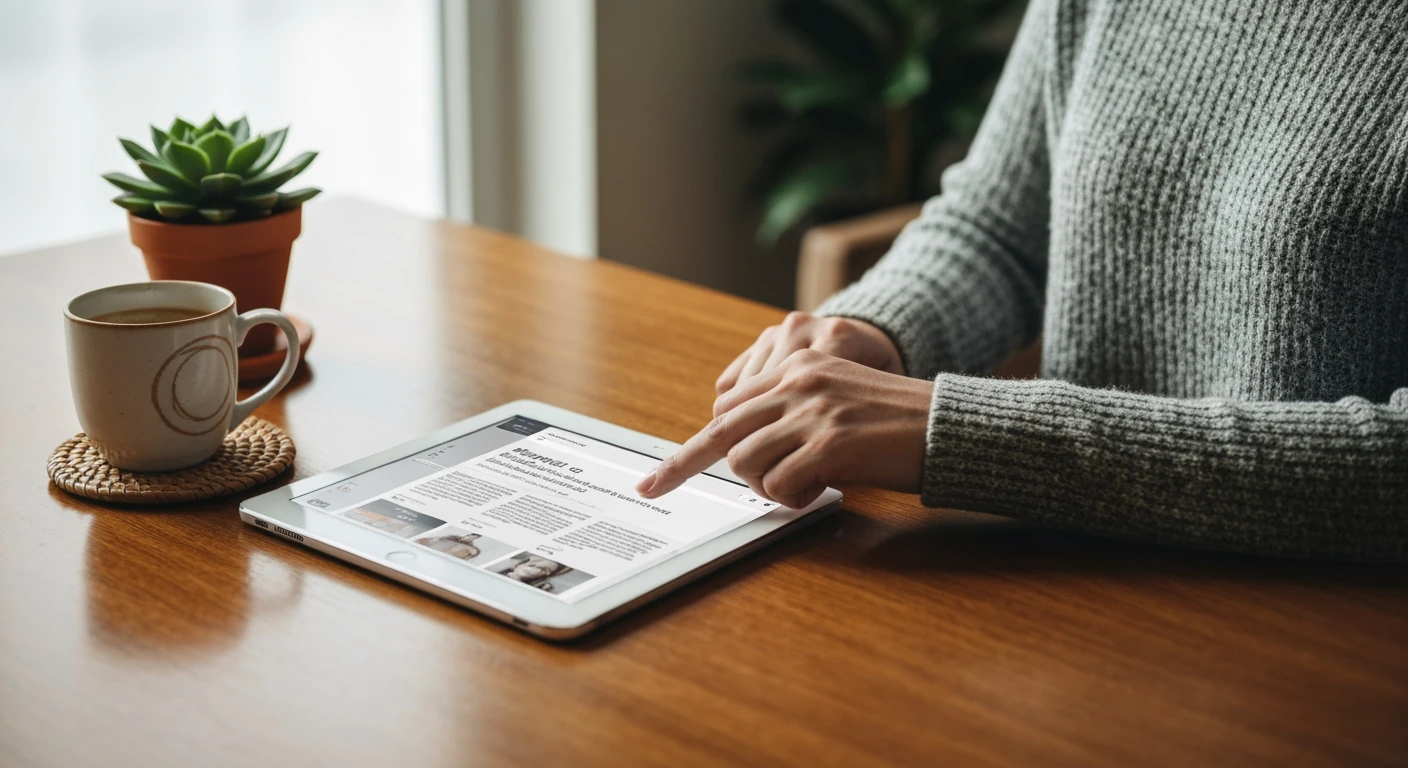
From Passive Reader to Active Thinker: Engaging Critically with Information
Curating your news feed is an excellent first step, but the real transformation happens when you change how you read the information you let in. Moving from a passive consumer to an active thinker means you stop letting headlines wash over you and start questioning what’s being presented. It’s less like watching a movie and more like being the detective in it. This shift doesn’t require a special degree; it just requires a bit of intention.
The goal isn’t to become cynical about everything you read. It’s about building mental resilience and clarity.
Identifying Bias: Yours and Theirs
Every news source has a bias. This isn’t always a sign of bad faith; sometimes it’s simply a result of which stories are chosen to be featured or which experts are quoted. A report from the Pew Research Center noted that people’s primary news sources often align strongly with their political leanings, creating an echo chamber. The underrated factor here is not just the outlet’s slant, but how it interacts with your own confirmation bias—our natural tendency to favor information that confirms what we already believe.
Recognizing bias in others is one thing, but what about the lens you’re looking through? Acknowledging our own biases is arguably the more difficult and more important task. We all have mental shortcuts and preconceived notions shaped by our experiences. The key is to notice when they are activated. Ask yourself: Am I dismissing this information because of its content, or because of its source? Developing this self-awareness is one of the most powerful mental habits you can build for a clearer day.
Simple Fact-Checking Habits
Fact-checking doesn’t have to be a time-consuming investigation. Instead, think of it as a set of quick, simple habits you can integrate into your reading routine. When a story elicits a strong emotional reaction—either anger or excitement—that’s a perfect signal to pause and verify. Strong emotions can cloud our judgment and make us more susceptible to misinformation.
Building a list of trustworthy information sources is a great foundation, but even then, a few simple checks can go a long way. Some stories just seem too wild or perfectly aligned with a certain narrative to be true—much like some unbelievable everyday facts that demand a second look. That gut feeling is your cue to do a quick search.
Here are a few actionable steps to get started:
- Check the source’s “About Us” page: Look for information about their funding, leadership, and mission statement. Reputable organizations are transparent about who they are.
- Look for multiple sources: Can you find at least two other reputable outlets reporting the same story? If a major event is only reported by one niche blog, that’s a red flag.
- Question emotional and loaded language: Words like “devastating,” “shocking,” or “miracle” are often used to sway your opinion rather than just report the facts.
- Do a quick reverse image search: If a photo seems particularly dramatic, you can use tools like Google Images to see where else it has appeared. Often, images are old or taken from a completely different context.
By treating the information you consume with a healthy dose of curiosity, you take back control from the headlines and empower yourself to form your own informed opinions.
The Art of Disconnecting: When to Step Away from the News Cycle
After learning how to critically analyze information, the final and perhaps most important skill is knowing when to simply walk away. Constantly consuming news is like drinking from a firehose; you get overwhelmed long before you get hydrated. The goal of staying informed isn’t to know everything happening everywhere, all at once. True mindfulness comes from understanding your own limits.
This isn’t just a feeling; the data backs it up. A report by the American Psychological Association found that for more than half of U.S. adults, keeping up with the news is a source of stress. What can you do when the headlines feel too heavy? The answer is to schedule intentional breaks. You wouldn’t work out the same muscle group every single day without rest, and your brain needs a similar recovery period from the constant influx of information.
Start with small, manageable steps. Try implementing a “news curfew” — no screens or news updates for at least an hour before bed. This one change can have a remarkable effect on sleep quality. Another popular strategy is to designate specific “news-free” zones in your home, like the dinner table, to encourage conversation and connection instead of scrolling.
It’s all about swapping a habit. Instead of reaching for your phone first thing, explore some simple morning hacks for a brighter day. If you find yourself doomscrolling during your lunch break, try one of these quick meal prep secrets to get a head start on dinner. You could even replace your news app with a bookmark to some everyday facts that will amaze you for a lighter mental snack.
Actively choosing to step away protects your mental health and, surprisingly, can even make you a more informed person. When you return to the news after a digital detox, you do so with a clearer perspective, better able to absorb and process what’s important. This isn’t about ignorance; it’s about engagement on your own terms.
Beyond Self-Care: Mindful News as a Civic Tool
Ultimately, curating a healthier news diet is about more than just reducing personal anxiety. While protecting your mental peace is a valid and notable goal, the skills you build in the process have a far greater implication. By learning to sift through noise, identify bias, and focus on substantive information, you are not retreating from the world; you are preparing to engage with it more effectively. What happens when we stop reacting to every fleeting outrage and instead invest our limited attention in understanding the issues that shape our communities? We move from being overwhelmed spectators to becoming informed, capable participants, ready to act on the information that matters most.
Frequently Asked Questions
How much news is too much news?
There’s no magic number, as ‘too much’ is a personal threshold. Key signs you’ve crossed it include increased anxiety, trouble sleeping, a sense of dread, or feeling constantly overwhelmed. The goal is to consume news with intention until you feel informed, not to scroll until you feel drained.
Can I trust news I see on social media?
You should approach news on social media with extreme skepticism. These platforms are designed to maximize engagement, not verify accuracy. It’s best to use social media to discover topics, but always leave the platform to verify the information with multiple, trusted primary news sources.
What are the best apps for getting unbiased news?
No source or app is unbiased, but some tools offer more control than others. RSS readers like Feedly give you a chronological feed from sources you choose, removing algorithms. News aggregators like Apple News or Flipboard are good for discovery but are more algorithm-driven, so it’s vital to actively curate what you follow.
How can I stay informed without feeling overwhelmed?
The key is setting boundaries. Schedule specific, limited times to check the news, such as 15 minutes in the morning and evening. Turn off push notifications from news apps and focus on weekly summary newsletters or podcasts, which provide context without the 24/7 urgency.
Is it okay to ignore some news topics?
Yes, it’s not only okay, it’s a necessary strategy for mental well-being. You cannot possibly pay equal attention to every crisis and story. Strategically choosing to focus on local issues or topics where you can have a tangible impact is a healthy way to manage your attention and avoid compassion fatigue.