
In a world overflowing with information, how do you separate the signal from the noise? It can feel like standing in a grocery store where every package screams for your attention, but none have a reliable list of ingredients. One headline claims a new superfood will change your life, while another debunks it as a myth. This constant flood of conflicting information isn’t just confusing; it actively shapes our decisions about everything from our health and finances to our daily routines.
The challenge is that our brains are often wired to react to the most sensational, emotional, or surprising claims, which are frequently the least accurate. Research from institutions like MIT has shown that false stories spread significantly faster and wider than true ones, creating a polluted information environment. This digital smog makes it difficult to make clear, informed choices. A steady diet of misinformation can subtly alter our perceptions and lead us down paths based on shaky ground rather than solid facts.
This guide is designed to be your personal filter. It’s not about memorizing a list of ‘good’ and ‘bad’ websites, but about building a durable set of critical thinking skills that you can apply anywhere. We’ll walk through a practical process for decoding any news source, identifying the subtle fingerprints of bias, and using simple tools to verify information before you trust it. By the end, you’ll have a toolkit for navigating the news with confidence, ensuring your understanding of the world is built on a foundation of truth.
Why Trust Matters: The Foundation of Informed Decisions
Imagine trying to follow a recipe where the measurements are all wrong. You expect a fluffy cake but end up with a soupy mess. Navigating the world with unreliable news is surprisingly similar; the information we consume forms the basis for our daily choices, big and small. Just as crafting the perfect cup of espresso requires quality beans, making good decisions requires a foundation of quality information.
The challenge is that false information often travels faster than the truth. A well-known study from the MIT Sloan School of Management, for example, found that false news stories on social media were 70% more likely to be shared than factual ones. It spreads like wildfire. This creates a cluttered environment where it’s difficult to distinguish between what’s real and what’s just noise.
So, what does this mean for you while you’re planning your week? It impacts everything from the financial tips you follow to the health advice you consider. What most people miss is that a steady diet of misinformation can subtly shift our perspective without us even realizing it. Building a habit of seeking out reliable sources is one of the most effective hacks for a clearer day, ensuring your plans are based on solid ground, not shaky assumptions.
Being an informed person isn’t about knowing everything—that’s an impossible task. It’s about having a trustworthy filter and knowing the difference between a genuine headline and some of the more far-fetched tales you might find alongside unbelievable everyday facts. The goal is to build a toolkit for sorting the credible from the questionable, which is exactly what we’ll explore next.
Decoding the Source: Key Indicators of Credibility
Figuring out which news sources to trust can feel like trying to follow a complex recipe with half the ingredients missing. You know the final product should be nourishing and true, but the steps to get there are often unclear. The process starts not with the headline, but with a deeper look at the publisher itself. It’s about checking the label before you consume the contents.
Just like you’d want to know who is preparing your food, you should want to know who is writing your news. Think of it as a first step in your daily information diet, right alongside establishing some simple morning hacks for a clearer mind.
Checking for Editorial Independence and Transparency
A credible news organization is open about its operations and who is in charge. Start by looking for an “About Us” page or a “Mission Statement” on their website. These sections should clearly outline their journalistic goals, funding sources, and key leadership. If this information is hidden or completely absent, consider it a major warning sign.
Another critical element is the presence of author bylines. An article written by a named journalist with a biography and a history of work is immediately more accountable than one attributed to “Staff” or “Admin.” In fact, a study from the Knight Foundation suggests that articles with clear author bios are perceived as over 60% more trustworthy by readers. Knowing who wrote the piece allows you to assess their expertise and potential biases over time.
Transparency is a sign of confidence.
To help you quickly assess a source, here is a simple comparison of common signals:
| 🟢 Green Lights (Signs of a Good Source) | 🔴 Red Flags (Reasons to Be Skeptical) |
|---|---|
|
|
The Role of Fact-Checking and Corrections
Surprisingly, one of the best indicators of a trustworthy source is its willingness to admit when it gets something wrong. Even the most respected journalists and publications make mistakes. The underrated factor here is not perfection, but accountability. A high-quality outlet will have a clear and visible corrections policy, explaining how they handle errors, from minor typos to significant factual inaccuracies.
You will often find corrections at the bottom or top of an updated article, clearly stating what was wrong and how it has been fixed. After all, wouldn’t you rather trust a source that is open about its mistakes than one that pretends it never makes them? This commitment to accuracy is what separates professional journalism from simple content creation — and it’s required for anyone who enjoys learning unbelievable everyday facts that have been properly vetted.
Spotting these corrections shows that an organization values truth over ego. It’s a process of refinement, much like the patience required for your complete cold brew companion to steep overnight. This ongoing dedication to getting it right is what ultimately builds a long-term relationship of trust with the reader.
We are not just passive consumers of information, but active participants in its dissemination. The health of our information ecosystem depends on the choices we each make every day.
— Dr. Evelyn Reed, Media Literacy Institute
| Action Item | What to Look For | Why It Matters |
|---|---|---|
| Investigate the Source | A clear ‘About Us’ page, author bios with credentials, and a public corrections policy. | Establishes accountability and shows the organization values transparency over ego. |
| Analyze the Content | Distinctions between news reporting (facts) and opinion (arguments). Check for loaded, emotional language. | Helps you separate objective information from persuasive rhetoric, preventing manipulation. |
| Seek Broader Context | Read about the same event from multiple, diverse sources (local, national, international). | Reveals different angles, uncovers potential bias, and provides a more complete picture of the story. |
| Verify Viral Claims | Use independent fact-checking websites like Snopes, PolitiFact, or FactCheck.org. | Stops the spread of misinformation and confirms if a surprising claim has been vetted by experts. |
Beyond the Headline: Developing Critical Reading Skills
Reading only the headlines to stay informed is like trying to understand a complex recipe by only reading its title. You get the general idea—”Chicken Noodle Soup”—but you miss the nuance, the specific ingredients, and the step-by-step process that makes it nourishing. To understand the news, you need to develop critical reading skills that allow you to see beyond the bold text. This is a skill you build over time.
This process isn’t about becoming a cynic who distrusts everything. Instead, it’s about becoming an active, engaged reader who can distinguish between high-quality information and content designed to provoke a simple emotional reaction. It’s about looking at an article with the same discerning eye you might use when picking fresh ingredients at the market.
Identifying Different Types of Bias
Bias is a natural part of human communication, and it isn’t always a sign of bad intentions. It’s simply a perspective. A journalist’s background, an outlet’s ownership, or even the intended audience can subtly shape how a story is presented. The key is to learn how to spot it.
Political bias is the most commonly discussed type, where a story is framed to favor a particular political party or ideology. For example, a report on new economic data might be headlined “Unemployment Drops to Historic Low” by one outlet, while another reports “Wage Growth Stagnates for Millions.” Both headlines can be factually correct, but they emphasize different aspects of the same report to create very different impressions.
Corporate bias is another powerful, yet often overlooked, influence. A 2022 Pew Research Center study found that a staggering 55% of U.S. adults believe news organizations’ own business interests heavily influence their reporting. This can manifest in positive coverage of a parent company’s products or a lack of reporting on its controversies. The underrated factor here is that this bias is often one of omission—what isn’t being said is sometimes more telling than what is.
Finally, we all have to contend with our own confirmation bias. This is the natural human tendency to seek out and favor information that confirms what we already believe (I suspect we’ve all fallen for this after going down an internet rabbit hole). Recognizing this in yourself is one of the most important first steps toward becoming a more critical reader. It’s a foundational part of any good mental routine, much like the simple morning hacks that set you up for a successful day.
Understanding Opinion vs. Reporting
One of the biggest sources of confusion in the modern news landscape is the blurring line between straight news reporting and opinion commentary. They serve different purposes, but are often presented side-by-side. Differentiating them is primary. Think of it this way: news reporting is the list of ingredients and measurements in a recipe, while an opinion piece is the story of why that recipe is a family favorite.
News reporting should present verifiable facts from multiple sources and use neutral, objective language. Its goal is to inform you about what happened. In contrast, opinion pieces—often labeled as “Editorial,” “Op-Ed,” or “Commentary”—are designed to persuade you. They use emotive language, first-person arguments, and rhetorical questions to argue a specific point of view. Is an author using words like “disastrous,” “remarkable,” or “clearly” to frame an event? That’s a strong signal you’re reading an opinion.
Separating these two types of content helps you properly weigh what you are consuming. You can appreciate a well-argued opinion without mistaking it for a bundle of unbelievable but true facts.
The Power of Context: Looking for the Full Story
A single news article is rarely the whole story. It’s a snapshot in time, and without context, that snapshot can be misleading. A report about a sudden price increase for avocados, for instance, is incomplete without understanding the broader context of weather patterns in Mexico, changes in shipping logistics, or recent agricultural policy shifts. Without the background, the fact of the price increase lacks meaning.
Providing context is a hallmark of quality journalism. It requires a bit more effort from both the writer and the reader. It’s the difference between seeing a finished meal and understanding the quick meal prep secrets that made it possible. Good reporters will include historical background or explain the significance of new developments. As a reader, you should actively seek it out.
Cross-Referencing Information with Multiple Sources
The most effective way to build context is to practice cross-referencing. This means reading about the same event from several different, ideally diverse, news sources. Don’t just read two articles from outlets with similar political leanings. Instead, compare a local paper’s report with a national one and an international source. The goal isn’t to find the “one true story.” It’s to see the event from multiple angles.
This process is like comparing two methods for brewing coffee, such as in a guide to Chemex versus V60. The same coffee bean will yield different flavor notes depending on the brewing method; similarly, the same set of facts can be presented with different emphasis and framing. By comparing them, you get a richer, more complete understanding of the bean—or the news story.
Here is a simple checklist to run through when you encounter a new article:
- Who is the author? Do they have expertise on this topic? A quick search can tell you a lot.
- What sources are cited? Does the article mention where its information comes from? Are there links to original reports or studies?
- What is the purpose? Is the article trying to inform you with facts or persuade you with an argument? Check the section label (e.g., “Opinion”).
- What might be missing? Based on what you’ve read elsewhere, is there a key piece of context or a counter-argument that isn’t mentioned?
- How is the language used? Is it neutral and descriptive or emotional and persuasive?
Turning this checklist into a habit doesn’t take long, but it fundamentally changes how you consume information, making you a more confident and knowledgeable news consumer.
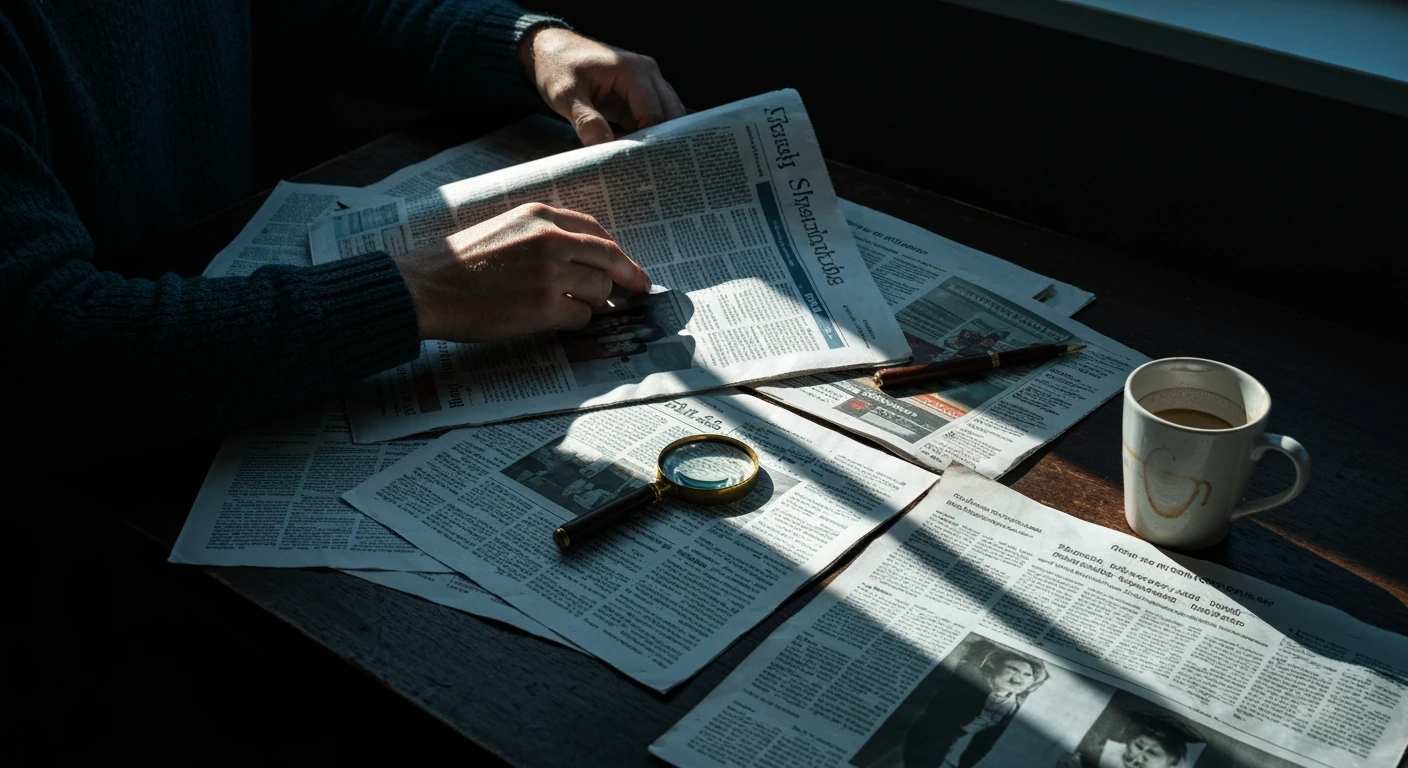
Tools and Resources for Verifying Information
After you’ve learned to spot the signs of a wobbly story, the next step is using dedicated tools to check its foundation. Think of this as your personal toolkit for digital detective work. Having a few reliable resources on hand makes it much easier to confirm or debunk a claim before you share it over your morning coffee. These tools are simple to use and incredibly effective.
What most people miss is that verification isn’t just for big, breaking news. It’s for that viral “miracle cure” your aunt shared or a surprising historical photo making the rounds. A 2018 study from MIT found that false news spreads significantly faster and wider than true stories, which means we encounter it often. Doubt is your best friend.
Top Fact-Checking Websites and How to Use Them
Several non-profit organizations dedicate themselves to sorting fact from fiction. They act like referees in the information game, reviewing claims made by politicians, public figures, and social media. When you come across a questionable story, simply copy and paste a key phrase or the headline into one of these sites’ search bars. You’ll often find they’ve already done the hard work for you.
Here are a few of the most respected options:
- Snopes: One of the oldest fact-checkers, Snopes is great for debunking urban legends, internet rumors, and email forwards. Pros: Extensive archive and a straightforward rating system. Cons: Its casual tone can sometimes be less suited for deep political analysis.
- PolitiFact: This Pulitzer Prize-winning site focuses on political claims, rating them on its “Truth-O-Meter” from “True” to “Pants on Fire.” Pros: Clear, sourced explanations for their ratings. Cons: Primarily focused on U.S. politics.
- FactCheck.org: A project of the Annenberg Public Policy Center, this site takes a scholarly approach to monitoring the factual accuracy of what is said by U.S. political players. Pros: Very detailed, well-researched articles. Cons: Can be dense reading if you’re looking for a quick answer.
Using these sites helps you discover what’s real, sometimes revealing everyday facts that will amaze you with their truthfulness.
Reverse Image Search: Unmasking Visual Deception
A picture might be worth a thousand words, but are they the right words? Images and videos are frequently taken out of context to support a false narrative. An image from a protest a decade ago might be presented as happening today, or a photo from one country could be used to illustrate an event in another. A reverse image search helps you find the photo’s original source and see where else it has appeared online.
It’s surprisingly simple to do. Websites like Google Images and TinEye allow you to upload an image or paste an image URL. The search engine then scours the web for that picture. This process is like checking the origin of a coffee bean before you decide on your brewing method—just as you’d compare a Chemex vs a V60 for different results, you must check an image’s source for its true context.
Is that really a shark swimming on a flooded highway? A quick search will probably show you it’s a well-known fake. This simple habit—which takes less than 30 seconds—is one of the most powerful tools against visual misinformation. With practice, making these checks becomes as automatic as any of your other daily routines.
Cultivating a Balanced News Diet for a Clearer Mind
Think of your news consumption like your daily meals. If you only ate pizza every day, you’d miss out on vital nutrients, and the same is true for information. Consuming news from only one or two like-minded sources creates what experts call a filter bubble, an online space where you rarely encounter opposing viewpoints and your own beliefs are constantly amplified.
The effect on our well-being can be surprisingly significant. A report from the Pew Research Center indicated that 68% of adults feel “worn out” by the constant stream of news, a condition often called news fatigue. When your worldview is only ever confirmed and never challenged, doesn’t it make the outside world seem more confusing or even hostile? This constant validation loop, while comfortable, can actually increase anxiety and a sense of division.
Actively diversifying your sources is the simplest antidote. Make a point to read, watch, or listen to one publication you normally wouldn’t each week—maybe while you’re waiting for your coffee to brew. You don’t have to agree with its perspective or change your mind.
It’s about exposure, not conversion.
This practice does more than just break you out of an echo chamber; it builds mental flexibility and reduces that “worn out” feeling. In fact, creating this balance is one of the most effective simple hacks for a brighter day. Just like how thoughtful meal prep ensures a healthy week, a varied information diet supports a healthier mindset and even frees you up to enjoy lighter topics, like uncovering some unbelievable facts that spark curiosity.
What most people miss is that a balanced news diet isn’t about abandoning your convictions. It’s about building a more complete picture of the world, which allows you to form opinions that are tested and entirely your own.
From Consumer to Curator: Your New Role in the Information Age
Mastering the art of media literacy isn’t a one-time task you can check off a list; it’s the development of a new, core habit. Think of it less like learning a complex recipe and more like learning to taste the ingredients themselves—to distinguish fresh from stale, authentic from artificial. You won’t catch every misleading detail every time, and that’s okay. The goal is progress, not perfection. The most significant change happens when you shift from being a passive consumer of content to an active curator of your own information diet.
So, where do you go from here? The most powerful next step is a simple one: for the next week, practice a ‘two-source rule.’ Before you form a strong opinion or share an article about a significant event, make a point to find and read a second article on the same topic from a completely different and ideologically diverse source. This single habit does more to reveal bias, fill in missing context, and build a nuanced worldview than any other technique.
As we move into a future where AI-generated content will become increasingly indistinguishable from human-written work, these foundational skills of verification and critical thinking will only become more vital. Will you be ready to discern the difference? Your ability to do so won’t just determine how informed you are—it will define your anchor in reality itself.
Frequently Asked Questions
How can I tell if a news article is biased?
Look for loaded or emotional language that tries to sway your opinion rather than simply state facts. Notice the story’s framing—what information is emphasized, and what is ignored? Reading about the same event from a different source is often the fastest way to see how a particular bias is shaping the narrative.
Are social media news sources ever reliable?
Social media can be a starting point, but it’s rarely a reliable final destination for news. Trust posts from established news organizations or verified journalists over memes or screenshots from unknown accounts. Always click through to the original article and evaluate the source directly before accepting the information as true.
What are some reputable, unbiased news organizations?
While no source is entirely free of bias, some are globally respected for their commitment to objective, fact-based reporting, such as The Associated Press (AP) and Reuters. Others like the BBC and NPR are known for high-quality journalism, but it’s always wisest to consume a variety of sources to gain a balanced perspective.
How do I avoid getting overwhelmed by too much news?
Curate a small, manageable list of diverse sources and schedule specific times to check them, rather than constantly scrolling. Turn off non-primary news notifications on your phone. The goal is to be informed, not inundated, so focus on understanding a few key stories deeply instead of skimming hundreds superficially.
Can AI-generated news be trusted?
You should be cautious with AI-generated news. While AI can summarize factual data, it is also prone to ‘hallucinating’—inventing facts, sources, and quotes that sound plausible but are entirely false. Always verify any surprising claims from an AI source with a reputable, human-led news organization.