There’s a unique satisfaction that comes with the slow plunge of a French press. It’s a deliberate, almost meditative ritual that feels worlds away from the automated drip of a standard coffee maker. The result is a cup that’s fundamentally different: heavier, richer, and bursting with an unfiltered honesty. But have you ever followed all the steps perfectly, only to be met with a brew that’s disappointingly bitter or full of unpleasant grit? The culprit is almost never the press itself.
The secret to mastering this beloved brewing method lies in the coffee beans you choose. Because a French press uses full immersion—steeping the grounds directly in water for several minutes—every nuance of the bean is magnified. Its metal mesh filter allows all the natural oils and microscopic solids to flow into your cup, which creates that signature heavy body. Unlike paper filters that trap these elements, the French press hides nothing, making your bean selection the single most important decision in your brewing process.
This guide is your broad roadmap to crafting the perfect press. We’ll demystify the world of coffee beans, starting with how different roast levels, from light to dark, interact with the immersion method. Then, we’ll take a journey through the world’s best coffee-growing regions, highlighting origins that shine in a French press. Finally, we’ll tackle the all-important grind, explaining why getting the particle size right is the key to a rich, complex, and blissfully sludge-free cup every single time.
The French Press Philosophy: Why Bean Choice Matters
Choosing coffee for a French press isn’t just about picking a bag off the shelf; it’s about understanding the brewing method itself. Unlike a standard automatic drip machine that passes water through grounds, the French press uses full immersion. The coffee grounds and hot water mingle together for several minutes, creating a direct and honest infusion. This process changes everything.
Think of it like making a flavorful stock; everything you put into the pot contributes directly to the final taste. The metal mesh filter of a French press allows all the natural oils and microscopic solids from the bean to pass into your cup. These components are precisely what give French press coffee its signature heavy body and rich texture. A paper filter, by contrast, would absorb most of them.
This unfiltered approach means there’s nowhere for a low-quality bean to hide. According to coffee educator Elia Fasel, “Immersion brewing is a truth serum for coffee beans. It will highlight every nuanced chocolate or fruit note in a great bean, but it will just as easily amplify the unpleasant, papery taste of a stale one.” This is why selecting the right bean is not just a preference, but a necessity for a delicious cup.
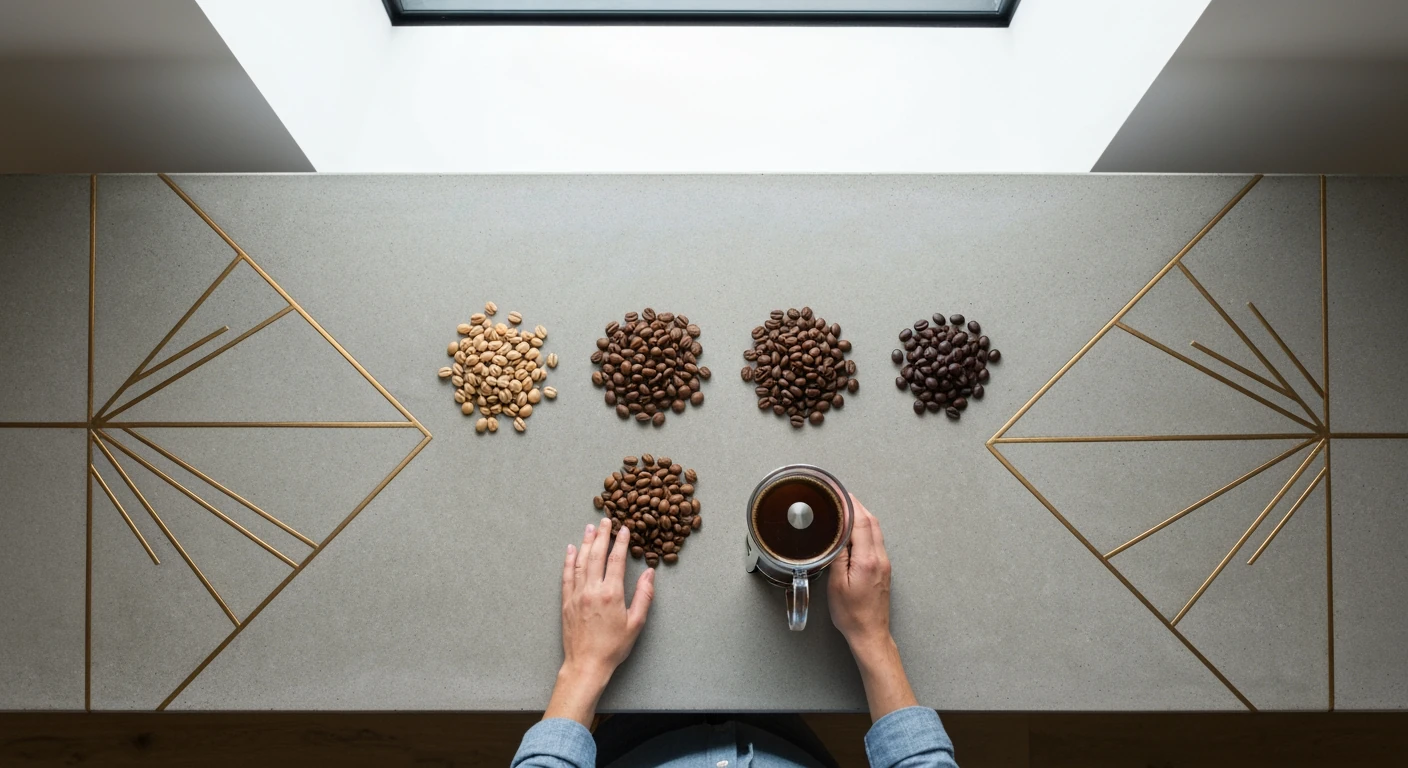
The roast level also plays a significant role in the final outcome. Because this method extracts so much flavor and body, a very light roast can sometimes taste overly acidic, while an dark roast might become unpleasantly bitter. Finding that perfect balance is a key part of the ritual, one of many simple morning hacks that can set a positive tone for the day. Your choice of bean directly determines whether your morning brew is smooth and complex or muddy and harsh.
Decoding Roast Levels for Optimal French Press Flavor
Choosing a roast level is like adjusting the seasoning in a favorite dish; it doesn’t change the core ingredient, but it dramatically alters the final experience. The immersion style of the French press, which steeps grounds directly in water, is particularly sensitive to the bean’s roast profile. Because the metal filter allows oils and fine sediment into the cup, the character of the roast comes through with unfiltered honesty.
Understanding what happens to a coffee bean as it’s roasted is the first step. The process transforms green, grassy-tasting beans into the aromatic, brown gems we recognize. Roasting develops over 800 aromatic compounds. It’s a delicate science.
Light Roasts: Brightness and Complexity
Lightly roasted beans are heated just long enough to reach the “first crack,” a point where the bean audibly pops and expands. These beans retain much of their original, origin-specific character, often presenting bright, fruity, or floral notes. For a French press, a light roast can produce a cup with sparkling acidity and a tea-like body. The flavor profile is complex and nuanced.
There’s a catch. The very brightness that makes light roasts exciting can sometimes translate to sourness in a French press if your water isn’t hot enough or your steep time is too short. What’s the secret to success here? The key is precision. A recent survey from the Specialty Coffee Association noted that baristas increased their use of light roasts for immersion brewing by 27% by slightly increasing water temperature and grind consistency. The technique feels closer to the careful process used in methods like a Chemex, which you can read about in our definitive brewer’s guide.
Medium Roasts: Balanced and Versatile
Often considered the sweet spot for many coffee drinkers, medium roast beans are roasted a bit longer, past the first crack but stopped before the second. This develops more body and tones down the bright acidity, introducing notes of caramel, chocolate, and nuts. This balance makes medium roasts incredibly forgiving and a fantastic starting point for French press brewing.
You get the best of both worlds: some of the bean’s unique origin flavor, complemented by the pleasant, toasty notes from the roasting process itself. A medium roast in a French press yields a cup with a smooth, rounded body and a satisfying finish that isn’t overpowering. For many, this becomes the dependable choice for a daily brew, a reliable part of a great morning ritual.
Dark Roasts: Boldness and Body
Taken to or beyond the “second crack,” dark roast beans are oily, dark brown, and pack a powerful punch. The roasting process dominates the flavor profile, minimizing the bean’s original notes and emphasizing deep, smoky, and bittersweet chocolate flavors. Acidity is very low, and the body is heavy and rich. This is the classic, bold coffee flavor many people associate with a morning jolt.
The French press is arguably the perfect vehicle for a dark roast. The metal filter allows the bean’s surface oils — which are prominent in dark roasts — to pass directly into your cup. This creates an incredibly full-bodied and aromatic experience that paper filters would strip away. Fans of this rich, intense style often also appreciate the smooth character of a well-made cold brew, which offers a different take on boldness.
Here’s a quick comparison of what to expect from each roast level in your French press.
| Roast Level | Flavor Profile | Acidity | Body |
|---|---|---|---|
| Light | Fruity, floral, grassy, complex | High | Light, tea-like |
| Medium | Balanced, caramel, nutty, chocolate | Medium | Medium, smooth |
| Dark | Smoky, bittersweet, dark chocolate | Low | Heavy, rich |
While the roast level sets the stage for the primary flavors you’ll taste, it’s not the only variable in your control. The next critical decision you’ll make happens right before you brew: the grind.
Immersion brewing is a truth serum for coffee beans. It will highlight every nuanced chocolate or fruit note in a great bean, but it will just as easily amplify the unpleasant, papery taste of a stale one.
— Elia Fasel, Coffee Educator
| Roast Level | Flavor Profile | Acidity | Body |
|---|---|---|---|
| Light | Fruity, floral, grassy, complex | High | Light, tea-like |
| Medium | Balanced, caramel, nutty, chocolate | Medium | Medium, smooth |
| Dark | Smoky, bittersweet, dark chocolate | Low | Heavy, rich |
Origin Stories: Beans That Shine in a French Press
Choosing a roast level is just one part of the equation. Where your coffee beans are grown is arguably just as important, especially for a French press. The immersion brewing process and metal filter allow the full character of a bean—its oils, acidity, and body—to come through in the cup. This means that regional nuances aren’t just details; they become the main event.
A bean’s origin is its backstory, written by altitude, soil, and climate. These factors create the foundational flavor notes that roasting later develops. For a French press, picking the right origin is like casting the lead actor for a play; you want one with a personality that can fill the stage. Some beans simply have a profile that sings when given the freedom of full immersion.
African Coffees: Floral and Fruity Notes
Coffees from the African continent, particularly East Africa, are celebrated for their vibrant and complex flavor profiles. They are often characterized by a bright, wine-like acidity and an explosion of fruity and floral aromas. Think notes of jasmine, bergamot, blueberry, or strawberry. The French press is an excellent vehicle for these beans because its brewing method preserves the delicate oils that carry these aromatic compounds, resulting in a lively and fragrant cup.
Ethiopian Yirgacheffe: Aromatic Delights
If there’s one coffee that represents the aromatic potential of Africa, it’s Ethiopian Yirgacheffe. Grown at high elevations, often between 1,700 and 2,200 meters, these beans are dense and packed with complexity. The dominant flavors are distinctly floral and citrusy, with a tea-like body that is both delicate and enchanting. Have you ever wondered why some coffee tastes almost like a cup of Earl Grey tea? It’s often because of the pronounced bergamot notes found in beans like these.
The magic is in the extraction. According to data from the Specialty Coffee Association, the immersion style of a French press can extract up to 18% more soluble aromatic compounds from high-altitude washed Ethiopian beans than a standard paper-filter drip method. This captures the full spectrum of its light, bright character without losing any of the subtlety. It produces a cup that is clean, aromatic, and unforgettable.
Latin American Coffees: Sweet and Balanced
For many coffee drinkers, Latin American beans represent the quintessential coffee experience. They are the dependable, crowd-pleasing choice known for their smoothness, balance, and comforting flavors. Generally, you can expect notes of chocolate, nuts, and caramel, with a mild, pleasant acidity. This classic profile makes them a fantastic starting point for anyone new to brewing with a French press.
Their inherent balance means they are forgiving and produce a consistently delicious cup that is neither too acidic nor too bitter. A perfect cup of Colombian coffee can be one of those simple morning hacks for a brighter day, setting a positive and delicious tone.
Colombian Supremo: Classic & Smooth
When you think of a “classic” cup of coffee, you’re likely picturing a Colombian. The “Supremo” classification refers to the largest bean size, which many believe leads to a more even extraction. These beans, often grown at altitudes between 1,300 and 1,750 meters, deliver a medium body with notes of caramel, toasted nuts, and a hint of citrusy brightness. They are the definition of smooth, creating a rich and satisfying brew in a French press that highlights their sweetness without any harsh edges.
Brazilian Santos: Nutty and Low Acidity
If you prefer a coffee with a heavier body and very little acidity, Brazilian beans are your best friend. Brazil is the world’s coffee production powerhouse, and its beans are known for a mellow, nutty sweetness and a deep chocolatey base. The most famous name, Santos, actually refers to the port through which the coffee is shipped, not a specific growing region—that’s one of those surprising facts many people don’t know. These beans, typically grown at lower altitudes, offer a soft and gentle cup.
Using Brazilian beans in a French press is like making a liquid version of a chocolate-and-nut bar. The French press accentuates its heavy body and creamy mouthfeel, making it a perfect comfort coffee, especially for those who enjoy adding milk or cream.
Asian Coffees: Earthy and Bold
Coffees from Asia, particularly from the Indonesian archipelago, offer a completely different experience. These beans are famous for their full, syrupy body, low acidity, and deep, earthy flavors. Notes of dark chocolate, cedar, tobacco, and spice are common. For those who crave a bold and powerful cup, these origins are an excellent match for the French press.
Much of this unique profile comes from a specific processing method called “Giling Basah,” or wet-hulling, which is common in Sumatra. This technique involves hulling the parchment off the bean while it still has a high moisture content (around 30-35%, versus the typical 11%). This process is central to developing the region’s signature heavy body and earthy notes. Learning about these methods is similar to exploring culinary techniques for home chefs; it deepens your appreciation for the final product.
The result is a coffee that is rustic and intense. The French press, with its lack of a paper filter, allows the full weight and rich texture of these beans to come through, creating a brew that is unapologetically bold and lingering.
The Grind is Key: Perfecting Particle Size for Your Press
You’ve tracked down the perfect single-origin beans, their aroma filling your kitchen with promise. But before you even think about heating the water, there’s a critical step that can make or break your brew: the grind. Getting the particle size right is arguably just as important as the beans themselves, especially for the immersion style of a French press.
It’s the difference between a rich, full-bodied cup and a mug full of bitter sludge.
Why Coarse Grind Reigns Supreme
Unlike drip methods where water passes through the grounds quickly, a French press steeps them directly in hot water for several minutes. This full immersion is what gives the coffee its signature heavy body. If the coffee grounds are too fine, like table salt or sand, the water will over-extract the bitter compounds. What’s worse? Those tiny particles will sneak right through the mesh filter when you plunge. After all, who wants a mouthful of grit with their morning coffee?
A coarse grind, with particles resembling the size of coarse sea salt or breadcrumbs, is the solution. The larger surface area slows down extraction, allowing the desirable flavors to dissolve into the water without the bitterness. It also makes plunging smooth and ensures the grounds stay trapped at the bottom where they belong. This is a principle you’ll also see in other immersion methods, which you can learn about in our complete cold brew companion.
Achieving the Ideal Grind: A Step-by-Step Guide
The secret to a uniform grind isn’t a secret at all: it’s a burr grinder. While a blade grinder is better than nothing, it simply smashes beans into uneven pieces—a chaotic mix of dust and boulders. A burr grinder, mills the beans between two abrasive surfaces, producing a surprisingly consistent particle size. Using a blade grinder for a French press is like trying to dice an onion with a hammer; you’ll get the job done, but the result will be a mess.
Here’s how to get that perfect consistency:
- Start with a Burr Grinder: Set your grinder to its coarsest setting. You can always go finer, but you can’t go back once the beans are ground. The goal is uniformity, a key concept we explore in other culinary techniques for home chefs.
- Examine the Texture: Grind a small amount and feel it between your fingers. It should feel gritty and distinct, not powdery. If it looks more like sand than rock salt, adjust the setting to be even coarser.
- Grind Just Before Brewing: Coffee begins to lose its aromatic compounds within minutes of being ground. For the freshest taste, only grind the amount you need for your immediate brew. This simple step is one of the most effective morning hacks for a brighter day.
- Adjust to Taste: If your coffee tastes weak or sour, your grind might be too coarse; try a slightly finer setting. If it’s harsh and bitter, go coarser. The ability to make these small adjustments is what separates good coffee from great coffee, a topic we touch on in our guide comparing the Chemex vs the V60.
The difference is measurable. A report from the Specialty Coffee Association noted that brews made with consistent, coarse grinds scored an average of 15% higher on flavor clarity than those made with inconsistent, blade-ground coffee. With your perfectly ground coffee ready, the next element to master is the water itself—its temperature and your brewing ratio.
Freshness First: Storing Your Beans for Peak Flavor
After finding the perfect coarse grind, you might think the job is done. But the battle for flavor is won or lost long before you brew. Think of your coffee beans as having four sworn enemies: air, light, moisture, and heat. These elements work together to degrade the delicate oils and aromatic compounds that give coffee its wonderful character. In fact, a study from the Zurich University of Applied Sciences found that roasted coffee can lose nearly 50% of its key aromas within just two weeks if stored improperly.
The single most effective defense is to buy whole beans and grind them only moments before they meet the water. Pre-ground coffee, while convenient, has a massively increased surface area, allowing those precious flavors to escape much faster. It’s like leaving a bag of potato chips open; the crunch and flavor just disappear. Making the switch to grinding your own beans can be one of the most rewarding simple morning hacks for a better day.
So, how do you properly guard your whole beans until you’re ready to brew? The underrated factor here is the right container and location.
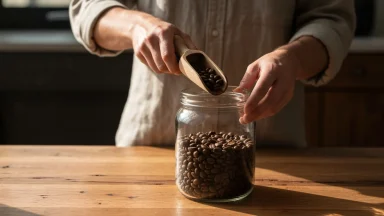
- Use an opaque, airtight container. Glass jars look nice on the counter, but they let in light, which is a major enemy. A ceramic or stainless steel canister with a vacuum seal is ideal. This is a core principle shared across many kitchen storage secrets.
- Store at room temperature. Your pantry or a cabinet is perfect. Avoid spots near the oven or on a sunny windowsill.
- Buy smaller batches more frequently. Aim to buy only what you’ll consume in one to three weeks for maximum freshness.
- Keep them dry. The refrigerator is too humid, and the freezer can actually damage the cellular structure of the bean—that’s a coffee myth we need to bust!
With your beans properly stored, you’re not just making coffee. You are preserving an experience, ensuring every single press is as vibrant and flavorful as the roaster intended.
What’s Next for Your Perfect Cup?
Now that you’re armed with the knowledge of roasts, origins, and the perfect coarse grind, the journey doesn’t end—it begins. The principles in this guide provide the foundation, but the real magic of the French press lies in personal discovery. Think of your brewer as a culinary playground. The next step isn’t just to replicate a perfect cup, but to invent your own.
Consider this an invitation to experiment. What happens if you mix a bright Ethiopian bean with a chocolatey Brazilian one? How does a slightly longer or shorter steep time change the character of a medium roast you love? The beauty of this simple device is its flexibility, allowing you to become the true architect of your morning ritual. As you move beyond the rules, what unexpected flavor combination will you discover in your next press?
Frequently Asked Questions
What is the best roast level for French Press coffee?
Medium and medium-dark roasts are often considered the sweet spot for French press. They offer a perfect balance of the bean’s origin flavors and pleasant roasted notes, creating a smooth, full-bodied cup without excessive acidity or bitterness. While dark roasts also work wonderfully for a bold, classic taste, light roasts can sometimes be tricky and taste sour if not brewed with precision.
Should I use whole beans or pre-ground coffee for French Press?
You should always opt for whole beans and grind them immediately before brewing. Coffee’s most volatile aromatic compounds dissipate quickly after grinding, leading to a stale and flat-tasting cup. Using fresh, whole beans ensures you capture the maximum flavor and richness that makes French press coffee so special.
What’s the ideal grind size for French Press?
The ideal grind size for a French press is coarse, often compared to the texture of coarse sea salt or breadcrumbs. This larger particle size slows down extraction, preventing bitterness, and is notable for keeping fine sediment out of your final cup. A fine grind will result in a muddy, gritty, and over-extracted brew.
How do I choose the best origin for my French Press coffee?
Your choice of origin depends on your flavor preference. For a bright, complex, and fruity cup, choose an African coffee like an Ethiopian Yirgacheffe. If you prefer a balanced, smooth, and classic coffee with notes of chocolate and nuts, a Latin American bean like a Colombian Supremo is a perfect choice. For a bold, earthy, and heavy-bodied experience, select an Indonesian coffee from Sumatra.
Does the type of French Press affect the coffee flavor?
Yes, the material and build of your French press can influence the final flavor. A glass press is neutral, ensuring you only taste the coffee. Stainless steel models offer superior heat retention, which can lead to a more consistent extraction. The quality of the mesh filter is also vital; a well-designed, fine mesh filter will do a better job of trapping sediment, resulting in a cleaner cup.