
Have you ever finished reading two articles about the same event and felt like you just read about two different realities? One report paints a picture of progress and hope, while another focuses on conflict and failure. This jarring experience is common, leaving many of us feeling overwhelmed and uncertain about who to trust. It’s easy to throw your hands up and disengage, but what if you could develop a skill that acts as a reliable compass, helping you navigate the complex world of information with confidence?
This compass is media literacy, and at its core is the ability to identify news bias. Bias isn’t always a sinister plot to mislead you; often, it’s a natural result of human perspective, editorial choices, and the simple fact that no single story can ever capture the whole truth. From the words a journalist chooses to the stories an outlet decides to feature on its front page, subtle influences shape the narrative you consume. A recent study from the Poynter Institute found that nearly three-quarters of people believe the news they read is biased, highlighting a widespread desire for more clarity.
This guide provides a friendly, practical roadmap to becoming a more discerning news consumer. We’ll break down the most common forms of bias you’ll encounter, from stories left untold to emotionally charged language. You’ll get a simple, step-by-step checklist to apply to any article you read. Finally, we’ll explore the most powerful filter of all: your own mind, and how to recognize the cognitive biases that shape how you interpret the world. The goal isn’t to find a perfectly ‘unbiased’ source, but to empower you to piece together a more complete and accurate picture for yourself.
Why Understanding Bias Matters for Your Daily Read
Think about following a recipe for your favorite soup. If the instructions call for a pinch of salt but you use a tablespoon, the final dish is completely different. News works in a surprisingly similar way; a slight change in an author’s perspective or the choice of which facts to highlight can change the entire “flavor” of a story. This isn’t always a deliberate attempt to mislead, but simply a reflection of the lens through which a person sees the world.
This subtle filtering happens constantly. A recent report from the Poynter Institute indicated that nearly 74% of people believe the news they consume has some level of bias. The goal isn’t necessarily to find news with zero bias—an almost impossible task—but to understand what that bias is. Are you getting the full picture, or just one slice of it? Recognizing these different angles is a key part of building your daily reading habits, much like perfecting your simple morning hacks for a better start to the day.
It changes how you see your community and the world.
By spotting these perspectives, you empower yourself to piece together a more complete and accurate understanding. Instead of taking one report as the final word, you learn to seek out different viewpoints, almost like creating a custom meal plan for your mind. This skill helps you move beyond just consuming information to understanding it, allowing you to craft a more personalized news experience that genuinely informs you.
Ultimately, learning to identify bias isn’t about becoming cynical about the news. It’s about becoming a smarter, more discerning reader—someone who can confidently navigate the information flowing into their home and form their own well-rounded opinions.
Common Forms of Bias: What to Look For
Think of building your understanding of the world like making a soup. The facts are your ingredients. Sometimes, a important ingredient is left out entirely, and the soup tastes bland. Other times, one ingredient—say, cayenne pepper—is used so heavily that you can’t taste anything else. This is essentially how the most common forms of news bias work, shaping the “flavor” of the story you consume.
Recognizing these patterns is the first step toward becoming a more discerning news reader. It’s not about distrusting everything, but about understanding how a story is constructed.
Bias by Omission: The Stories Left Untold
Bias by omission is probably the sneakiest type because it’s centered on what is left out of a report. A story can be technically accurate, containing only verifiable facts, but still be biased if it deliberately ignores key details or alternative viewpoints that would give a more complete picture. The difficulty, of course, is that you can’t see what isn’t there. It’s a real challenge.
A recent Gallup poll revealed that only 34% of Americans have a “fair amount” of trust in the mass media. The underrated factor here is often omission, as people sense they are not getting the whole truth. For example, a report on a new city park might highlight its beautiful design but omit the fact that its construction displaced a community garden. By leaving that detail out, the story creates a purely positive, but incomplete, narrative. A great way to counter this is to explore different sources, including ones that focus on local happenings that larger outlets might miss.
Bias by Selection: Choosing What to Highlight
While omission leaves things out, bias by selection is about what a news outlet chooses to put in. This includes the specific stories an outlet decides to cover and the ones it ignores. If a news organization consistently runs stories about crime in one neighborhood but rarely reports on positive community events there, it’s creating a skewed perception through selection bias. It paints a picture using only one color from the box.
This also applies within a single story, where certain facts or quotes are given more prominence than others. What most people miss is how this subtly guides their interpretation without presenting any false information. Learning to personalize your news diet can help you see which stories different outlets prioritize. The choice of which stories to lead with on a homepage or at the top of a broadcast is a powerful form of selection bias—it tells you what the outlet thinks is most important, whether it is or not.
To make it clearer, here’s a simple breakdown:
| Feature | Bias by Omission | Bias by Selection |
|---|---|---|
| What It Is | Leaving out facts or entire stories. | Choosing which facts or stories to feature. |
| The Effect | Creates an incomplete picture of an event. | Creates a skewed perception through emphasis. |
| Example | Reporting on a company’s record profits but not mentioning recent employee layoffs. | Consistently running stories about a political candidate’s gaffes but not their policy proposals. |
While these two types of bias are incredibly common, they often work together with even more subtle methods, like the specific words used or where a story is placed.
When our information diet is curated by algorithms to please us, we risk mistaking validation for information. The echo chamber doesn’t just show us what we want to see; it convinces us that’s all there is to see.
— Dr. Anya Sharma, Digital Media Researcher
| Type of Bias | What It Looks Like | How to Spot It |
|---|---|---|
| Bias by Omission | Key facts or alternative perspectives are left out of a story. | Cross-reference with other sources to see what they include that this story doesn’t. |
| Bias by Selection & Placement | Certain stories, facts, or quotes are given more prominence than others. | Note the main headline and first few paragraphs. Ask if contradicting info is buried at the end. |
| Bias by Loaded Language | Using words with strong emotional connotations to influence the reader. | Pay attention to adjectives and adverbs. Is the language neutral or emotionally charged? |
| Confirmation Bias (Your Own) | The tendency to seek out and agree with information that confirms your existing beliefs. | Actively seek out reputable sources with different perspectives. Ask yourself, “Am I challenging my own view?” |
Practical Steps: Your Checklist for Critically Reading News
Knowing the different flavors of bias is one thing; spotting them in the wild is another. Developing a habit of critical reading isn’t about becoming a cynic who distrusts everything. It is about becoming an active, thoughtful participant in your own information intake. Think of it as a simple mental checklist you can run through with your morning coffee. This process makes you a smarter reader.
Building this skill is just as important as curating what shows up in your feed in the first place. For a more informed morning, you might want to learn how to personalize the news you receive to get a balanced perspective from the start. The following steps will help you analyze what you’re actually reading, piece by piece.
Step 1: Consider the Source and Its Reputation
Before you even read the first sentence of an article, take a moment to look at the name at the top of the page. Is it a long-standing news organization with a history of journalistic standards, or is it a blog you’ve never heard of? Reputable sources will typically have a public “About Us” page, a list of their journalists, and a clear corrections policy. They aren’t afraid to admit when they get something wrong.
A recent Pew Research Center study found that public confidence in journalists is quite varied, with only about 36% of U.S. adults expressing a fair amount of confidence that they will act in the public’s best interest. This skepticism means it’s on us, the readers, to do a little homework. Is the piece you’re reading a straight news report, an opinion column, or a piece of analysis? A good source will label these clearly. The underrated factor here is understanding that an opinion piece is *supposed* to be biased—its job is to persuade you, not just inform you.
It’s a simple first check. You can even find guides that offer a breakdown of different news sources and their general leanings, which can be a helpful starting point.
Step 2: Look for Loaded Language and Tone
Words have power, and the specific words a writer chooses can subtly—or not so subtly—steer your emotions and opinions. This is called using loaded language. These are words and phrases with strong emotional connotations, designed to provoke a reaction beyond their literal meaning. For example, describing a protest as a “mob” versus a “gathering” paints two very different pictures in your mind.
Think about how you’d describe food. Calling a dish a “hearty, home-cooked casserole” feels warm and comforting, while “a processed cheese and pasta bake” sounds clinical and unappetizing. Both could be describing the same meal, but the language frames your perception entirely. Pay attention to adjectives and adverbs. Is a politician’s plan “bold and ambitious” or “risky and expensive”? Is a company “streamlining operations” or “firing hundreds of workers”? The word choice reveals the outlet’s perspective.
Tone works the same way. Is the article written in a neutral, factual tone, or does it feel sarcastic, angry, or mocking? An overly emotional tone is a red flag that you’re likely reading a piece meant to persuade, not just report. Learning these quick checks for misinformation can be incredibly helpful.
Step 3: Analyze Story Placement and Emphasis
Bias doesn’t just live in the words on the page; it’s also in what gets prioritized. When you open a newspaper or a news website, what is the top headline? The story that gets the biggest font and the main image is what the editors have decided is most important. This is bias by placement.
A story about a local hero might be relegated to the back of the lifestyle section, while an unverified rumor about a celebrity gets front-page treatment. That tells you a lot about the publication’s values. But what do you do when you are already inside an article? The same principle applies. The information presented in the first few paragraphs is what the writer wants to emphasize. Facts or quotes that support one side of an issue might be placed at the top, while contradicting information is buried paragraphs down—or omitted entirely.
This is a subtle but powerful way to shape a narrative.
Ask yourself: What is the main point being made in the first three paragraphs? Is there another side to this story that isn’t mentioned until the very end? The data suggests—though not conclusively—that most readers only skim headlines and opening lines, making this initial framing influential.
Step 4: Cross-Reference with Multiple Outlets
This might be the single most effective step you can take to get a clearer view of reality. Don’t rely on a single source for your news, no matter how much you trust it. Every outlet has its own perspective, blind spots, and, yes, biases. The solution is to read about the same event from several different sources, ideally from across the political spectrum.
Pick a major news story of the day and read the coverage from three different organizations. You’ll often find that while the core facts are the same (who, what, where, when), the interpretation and the emphasis can be wildly different. One outlet might focus on the economic impact, another on the human-interest angle, and a third on the political fallout. The truth of the event often lies in the factual overlap between these different accounts—the details that all of them agree on.
This doesn’t have to be a chore. Using some of the best news apps available can make it easy to quickly switch between different sources. The goal isn’t to find a “perfectly” unbiased source (it probably doesn’t exist), but to triangulate the truth by consuming a more balanced information diet. It’s a small investment of time—like checking a few different weather apps before a big trip—that pays off in a much more accurate understanding of the world.
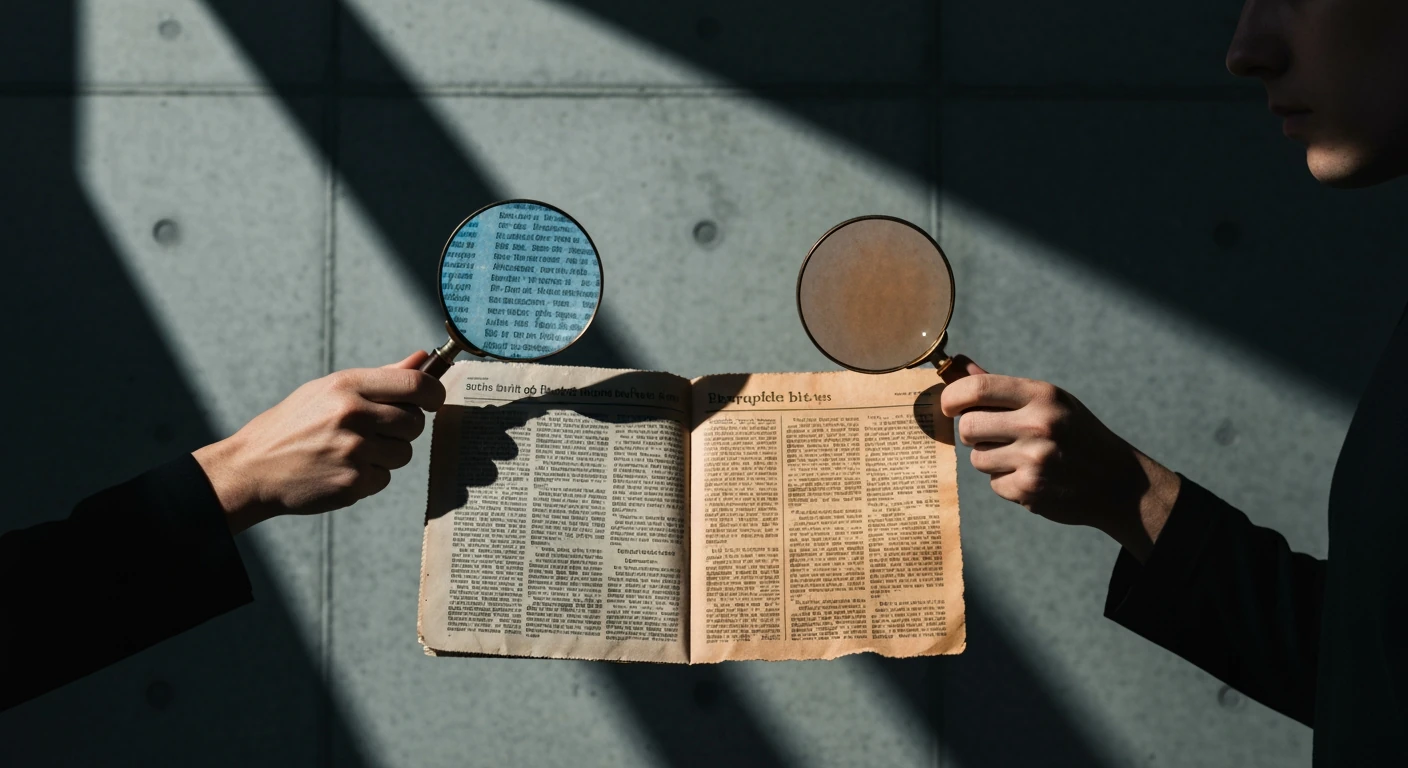
Recognizing Your Own Filters: Cognitive Bias and News
After you’ve vetted an article’s sources and checked for loaded language, the final step is to look inward. The most powerful filter affecting how you interpret information is your own brain. We all have mental shortcuts, known as cognitive biases, that help us process the massive amount of information we encounter daily. While useful, these shortcuts can also distort our perception of reality, especially when it comes to the news.
The most common culprit is confirmation bias. This is the natural tendency to favor, seek out, and recall information that confirms what you already believe. It’s like having a favorite spice in the kitchen; you’re tempted to sprinkle it on every dish, even when another flavor might be more appropriate. A study from Stanford University’s Graduate School of Business suggested that individuals are significantly more likely to click on and read articles that align with their pre-existing viewpoints. This isn’t a character flaw. It’s just how our brains are wired.
The Echo Chamber Effect
When confirmation bias meets modern technology, it creates a powerful feedback loop. Social media feeds and news aggregators are designed to show you more of what you like. Over time, your information diet becomes an echo chamber, reflecting your own views back at you with increasing intensity. You might find yourself scrolling through articles that all seem to agree on everything — which feels validating, but what does it really accomplish?
This digital bubble makes it difficult to encounter, let alone consider, different perspectives. Surprisingly, what feels like staying informed is often just reinforcing a single point of view. The result is a skewed perception of the world and public opinion. It also makes you more susceptible to misinformation that’s tailored to your beliefs, a topic we explore in our guide on how to unmask misinformation quickly.
Pros and Cons of Relying Solely on Familiar Sources
- Pros: It’s fast, comfortable, and reinforces a sense of community with like-minded people. You get information that feels relevant and easy to process.
- Cons: You develop a skewed understanding of issues, miss out on important nuances, and may fail to spot flaws in your own arguments. It can also lead to increased polarization.
Overcoming Confirmation Bias
Breaking free from your own biases requires conscious effort, much like building any healthy habit. The first step is acknowledging that you have them (it’s human nature, after all). From there, you can take active steps to challenge your own thinking. Start by deliberately seeking out news sources that present a different perspective. You don’t have to agree with them, but simply reading them can broaden your understanding.
A great tactic is to actively question your emotional response to a headline. If an article makes you feel angry or self-righteous, pause and ask why. Is it challenging a deeply held belief? The underrated factor here is intellectual humility. Try playing devil’s advocate for an argument you disagree with. This process of intentional diversification is key to crafting a more balanced and personalized news diet.
Building this awareness is a continuous practice, not a one-time fix. It’s a mental muscle that gets stronger with use, similar to how committing to quick meal prep transforms your week. The goal isn’t to eliminate your opinions but to ensure they are built on a foundation that is as broad and well-informed as possible.
Building a Balanced Information Diet
Thinking about your news consumption is a bit like planning your meals for the week. If you only eat from one food group, you miss out on vital nutrients. Similarly, relying on a single news source gives you an incomplete picture of events, seasoned with that outlet’s specific biases. Building a balanced information diet means intentionally sampling stories from different perspectives to form a more complete understanding.
The data suggests this approach works. According to a recent study by the Poynter Institute, readers who consult at least four different sources are 57% more likely to accurately identify the core facts of a news event. What most people miss is that every source has a frame, a particular way of looking at the world. Seeing multiple frames helps you see the whole picture, not just a small corner of it.
This doesn’t mean you have to double your reading time.
You can start by making small, simple additions to your current habits. If you favor a large national publication, try adding a local paper to understand how big issues affect a specific community. Another great strategy is to use technology to your advantage and discover the best news apps that aggregate content from a variety of publishers. Have you ever considered setting one of your browser tabs to an international news agency?
Ultimately, the key is making a conscious effort. By personalizing your news intake to include voices and viewpoints you might not typically encounter, you actively sharpen your critical thinking. With practice, this small adjustment can become a powerful part of your morning routine, helping you become a more discerning news consumer before you’ve even finished your first cup of tea.
Beyond Bias: What Does It Mean to Be Informed?
Mastering the ability to spot news bias is more than just an intellectual exercise; it’s a foundational skill for modern citizenship. In a world where information is both abundant and fragmented, simply consuming more news doesn’t necessarily make you more informed. The real transformation happens when you shift from being a passive recipient to an active interrogator of information. This skill allows you to engage in more thoughtful conversations, make better decisions for your family and community, and build a more resilient understanding of the world that isn’t easily shaken by the latest outrage or viral headline. As algorithms and AI continue to reshape how we receive news, will your ability to think critically keep pace, or will you find yourself in an echo chamber of your own design?
Frequently Asked Questions
What is the easiest way to tell if a news article is biased?
The easiest red flag is loaded or emotional language. Words designed to make you feel angry, happy, or scared are a sign of persuasion, not just reporting. The most effective method, is to quickly compare the story with two other reputable sources. If key facts are missing or the emphasis is wildly different, you’ve likely found significant bias.
Can news from reputable organizations still have bias?
Absolutely. Bias in reputable organizations is often unintentional and structural. It can appear through the selection of which stories to cover (selection bias), which expert to quote, or where a story is placed on a website. Even with strong ethical standards, every outlet has inherent perspectives and blind spots, which is why reading from multiple sources is key.
How can I teach my children about identifying news bias?
Make it a practical activity. Pick a simple news event and find two articles about it from different sources. Ask your child to be a detective and ‘spot the differences’ in headlines, photos, and descriptive words. Discuss why one article might call a group ‘protesters’ while another calls them a ‘mob.’ This turns critical thinking into an engaging game.
Are there tools or websites that help identify news bias?
Yes, several organizations like AllSides and Ad Fontes Media provide media bias charts that rate news sources on their political leaning and factual reporting. These tools are excellent starting points for discovering a wider range of sources. they are still just guides; they should supplement, not replace, your own critical reading and judgment.