
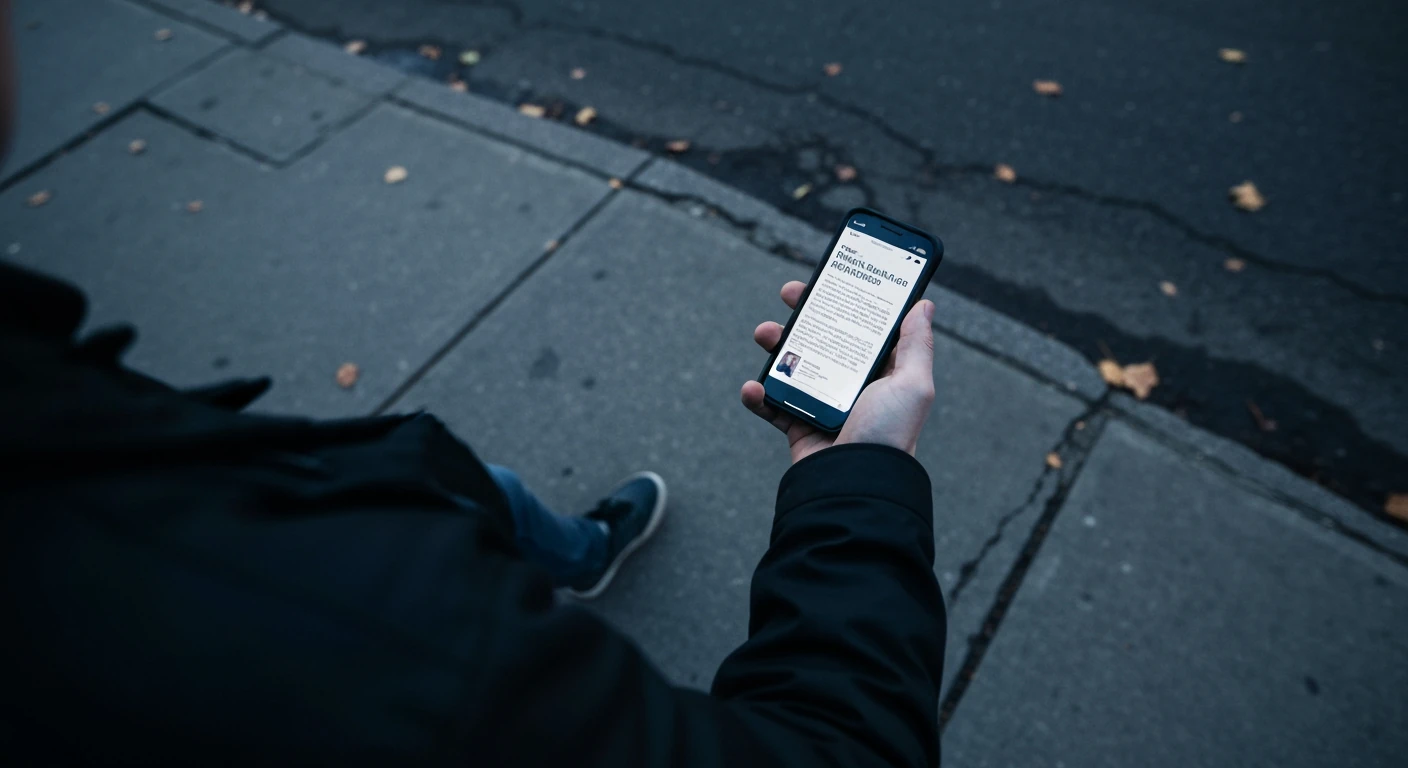
Have you ever scrolled through your news feed and felt like you’re in a conversation with someone who knows you a little too well? Headlines and stories seem perfectly aligned with your interests, from your favorite hobbies to your political leanings. This isn’t a coincidence; it’s the modern news landscape, meticulously crafted by algorithms and driven by powerful digital trends that have transformed how information reaches us. The days of a single, shared front page are long gone, replaced by millions of unique, personalized realities delivered to the palm of your hand.
This underlying shift from print to pixels has been swift and all-encompassing. The convenience of 24/7 access to information has completely reshaped our daily routines and our relationship with the world. Data from the Pew Research Center highlights this change, showing that 86% of U.S. adults now get news from a digital device. This isn’t just about convenience; it’s about a new information ecosystem where the rules are constantly being rewritten by technology, user behavior, and the economic pressures on media outlets.
But what are the invisible forces behind your curated feed? This article decodes the latest trends shaping digital news today. We’ll explore the dual-edged sword of AI-powered personalization and the ‘filter bubbles’ it creates. We will also examine the unstoppable rise of visual storytelling and short-form video, analyzing how platforms like TikTok are changing the very definition of a news story. Finally, we’ll look at the move towards interactive journalism and what it means for you, the reader, to become part of the story itself. Understanding these trends is the first step to becoming a more informed and discerning news consumer.
The Shifting Sands of News Consumption
Remember spreading a newspaper across the kitchen table, its crinkly pages competing for space with your cereal bowl? For many, that daily ritual feels like a lifetime ago. Today, our news diet is less of a sit-down meal and more of an all-day snack bar, with headlines delivered directly to the glowing screens in our pockets. This change has completely reshaped our simple morning routines and our relationship with information.
The numbers behind this evolution are staggering. A recent study from the Pew Research Center found that an overwhelming 86% of U.S. adults now get at least some of their news from a digital device like a smartphone, computer, or tablet. Surprisingly, what most people miss is that this isn’t just a trend among younger generations; it cuts across nearly all age groups. It’s a universal switch.
This constant access changes everything. The old way was like a scheduled TV dinner — you got the news at 6 p.m. and that was that. Now, it’s a 24/7 buffet, but is anyone checking the ingredients? With so much information flying around, knowing how to separate fact from fiction is a skill we all need.
This new reality isn’t just about convenience — though grabbing your phone is certainly easier than chasing down a paper in the wind. It alters the very nature of how stories are told and which ones rise to the top of our feeds, challenging the basic purpose of news in our daily lives.
Personalization and AI: Your Curated News Feed
If you’ve ever noticed your news app seems to know you a little too well, you’re not just imagining it. This is the world of personalized news, powered by artificial intelligence (AI) and complex algorithms. These systems observe your reading habits—what you click, how long you read, and what you share—to build a profile of your interests. The goal is to deliver a feed that’s uniquely tailored to you, making your morning scroll as efficient as possible.
It has become a fluid part of many people’s routines, right alongside their coffee and other simple morning hacks for a brighter day. But how does this digital curation actually work?
The Algorithm’s Influence on Discovery
Think of the algorithm as a personal chef. Instead of you browsing a massive buffet of global events, this chef learns you prefer stories about home cooking and travel but dislike politics. Soon, your plate is filled only with tasty recipes and destination guides. This is a bit like how some people apply quick meal prep secrets to their week; it’s about efficiency and getting exactly what you want.
This process is incredibly effective at keeping you engaged. What people often miss, is that this digital chef also decides what you don’t get to try. A recent Pew Research Center study found that over 65% of adults get news from social media, where these algorithms have immense control. You might see more about your favorite sports team but miss a critical local government update entirely. The machine is making choices for you.
Pros and Cons of Personalized News
This automated approach to news delivery comes with a clear set of trade-offs. What makes it convenient for one person can feel limiting to another, and understanding both sides is key to navigating the modern information stream.
- Pro: Highly Relevant Content. Your feed is less cluttered with topics you don’t care about, saving you time and delivering news that genuinely interests you. It feels efficient and custom-made.
- Con: The “Filter Bubble.” By only showing you content you’re likely to agree with, algorithms can shield you from different perspectives. This can reinforce existing beliefs and create an echo chamber, making it harder to find common ground with others.
- Pro: Discovering Niche Topics. Paradoxically, an algorithm that knows you love gardening might introduce you to a fascinating new subtype of urban farming you never knew existed. It can deepen your existing interests.
- Con: Risk of Misinformation. If an algorithm determines you engage with sensational or dramatic content, it may serve you more of it, regardless of its accuracy. This makes it more important than ever to have a family guide for learning how to verify news.
Ultimately, these personalized systems are not going away. The real challenge is learning to use them wisely, ensuring we still get a balanced and complete picture of the world around us, which is central to unpacking the core role of news in our lives.
The algorithm that promises a world of infinite information is the same one that builds the walls of our digital comfort zones. The more ‘perfect’ our feed becomes, the smaller our world often gets.
— Dr. Anya Sharma, Media Futurist
| Digital News Trend | What It Is | Key Implication for Readers |
|---|---|---|
| AI Personalization | Algorithms track your reading habits to create a customized news feed tailored to your interests. | Creates a relevant but potentially narrow experience (‘filter bubble’) that can limit exposure to different viewpoints. |
| Short-Form Visuals | Delivering news through quick, engaging videos (under 90 seconds) and infographics on platforms like TikTok and Instagram. | Makes news more accessible and shareable, but risks oversimplifying complex topics. |
| Interactive Journalism | News content that includes polls, quizzes, user-submitted stories, and interactive data visualizations. | Fosters deeper engagement and community, but requires careful moderation to remain constructive. |
| Immersive Storytelling | Using Virtual Reality (VR) and Augmented Reality (AR) to let users ‘experience’ a story rather than just read it. | Offers powerful tools for empathy and understanding, but is still in early adoption and can be costly to produce. |
Visual Storytelling and Short-Form Content Dominance
If you’ve noticed your news consumption shifting from reading long articles to watching quick videos, you’re not alone. The way we receive information has become intensely visual. News organizations, once built on the power of the written word, are now operating like mini film studios to keep up. This isn’t just a trend; it’s a underlying rewiring of how stories are told and understood by millions.
The change is driven by our own habits. Think about how you scroll through social media feeds. Your thumb is looking for something that catches the eye, and static text often loses the battle against a moving image. What’s often overlooked is that this visual-first approach is also changing the basic role of news in our daily lives, making it a constant, bite-sized companion rather than a scheduled event.
The Power of Video in Breaking News
When a major event happens, video is unmatched in its ability to convey urgency and reality. A well-written article can describe a storm, but a shaky phone video from inside that storm puts you right there in the moment. It creates an immediate emotional connection and a sense of shared experience that text struggles to replicate. This is a major shift.
Data from the Reuters Institute for the Study of Journalism shows that video engagement on social platforms can increase by more than 50% during breaking news events. People want to see what’s happening, not just be told about it. The underrated factor here is the raw, unedited feel of user-generated content, which often feels more authentic to viewers than a polished studio report — though this immediacy also means it requires a sharp eye for verification.
Micro-Content: News in a Snapshot
The rise of platforms like TikTok and Instagram Reels has created a new category of news: micro-content. These are short, digestible clips, usually under 90 seconds, that explain a single concept or highlight a key moment. It’s like getting the movie trailer for a major news story. This format is especially effective at reaching audiences who might not proactively seek out traditional news sources, becoming a key part of their information diet alongside their regular morning routine.
Major outlets like The Washington Post have famously embraced this, using TikTok to explain complex topics with humor and personality. But can a 60-second video cover all the nuances of a new piece of legislation? Probably not. The goal isn’t to provide a broad briefing but to act as a hook, sparking curiosity that might lead a viewer to learn more. It’s about delivering the flavor of a story quickly, much like smelling a dish before you decide to eat it.
This approach is surprisingly effective at distilling complex topics into surprising facts and memorable takeaways.
Comparison: Visual News Formats
Not all visual content is created equal. Choosing the right format depends entirely on the story you’re trying to tell. An infographic breaking down a national budget and a short video of a community event serve completely different purposes, even if they both live on the same website. Understanding the strengths of each is key.
Infographics vs. Short Videos
Think of infographics as the organized, tidy sibling of visual media. They excel at presenting data, timelines, and step-by-step processes in a clean, easy-to-scan format. An infographic can show population growth over decades or illustrate the supply chain of your morning coffee — all in a single, shareable image. Their power is in clarity and density of information.
Short videos, are the charismatic, storytelling sibling. They are built for emotion, action, and personality. A video can capture the tone in a speaker’s voice, the energy of a crowd, or a scientist’s excitement about a new discovery. While an infographic gives you the “what,” a video often delivers the “why” and “how it feels,” creating a more personal connection to the subject matter.
Interactive Journalism and Community Engagement
After consuming so much visual content, audiences are no longer content to just sit on the sidelines. News outlets are discovering that readers want to be part of the story, not just passive consumers of it. This shift is turning the one-way street of traditional media into a dynamic, two-way conversation. It’s a profound change.
Building this community connection has become a major focus. The data suggests—though not conclusively—that engaged readers are more loyal. A report from the American Press Institute noted that comment sections, when properly moderated, can increase the time a reader spends on a page by as much as 35%. This interaction fosters a sense of belonging and investment in the news source. It deepens the connection to the core purpose of news in our daily lives by making it a shared experience.
Beyond Reading: Participating in the News
Modern digital news is much more than just text. Think about the last time you read an article that included a poll asking for your opinion on a local issue, or a quiz that tested your knowledge on a topic. These features are designed to pull you into the narrative. Some organizations use interactive maps to show the impact of an event on your specific neighborhood or data visualizations that let you filter information based on what’s important to you.
What most people miss is that this isn’t just for fun; it’s a powerful strategy for building loyalty. When readers participate, they feel heard and valued, which makes them more likely to return. It’s like discovering new secrets for your kitchen; once you see how a simple change improves the final dish, you incorporate it every time. The challenge, of course, is ensuring these interactive spaces remain constructive, which requires a commitment to moderation.
The Rise of Reader-Submitted Stories
Some news organizations are taking engagement a step further by actively inviting their audience to contribute content. This is often called user-generated content or community journalism. It can be as simple as a local TV station asking viewers to send in photos of the first snowfall or as complex as a national outlet building an entire investigative piece around stories submitted by readers.
This approach treats the audience as collaborators. For example, a news site might ask for stories about navigating the local farmers market, effectively crowdsourcing tips that benefit the entire community. This not only provides the outlet with unique, authentic content but also strengthens its bond with its audience. By tapping into the collective experience of their readers, journalists are capable of unearthing surprising local stories that might have otherwise gone unnoticed. The future likely involves finding even more direct ways to integrate these valuable community insights into professional reporting.
The Future Outlook: What’s Next for Digital News?
As news organizations build stronger connections with their audience, the technology used to tell stories is also taking a huge leap forward. The future isn’t just about more comments or polls; it’s about fundamentally changing how we experience a story. The core purpose of news remains the same, but the delivery methods are getting a serious upgrade. We are moving from being passive readers to active participants in the narrative.
What does this mean for your morning scroll? It means news that you can see, hear, and almost touch. The data suggests this is more than just a gimmick. A report from the Reuters Institute for the Study of Journalism indicated that while only about 12% of news consumers have tried a VR news experience, nearly 65% of news executives see immersive tech as a key part of their future strategy. The industry is betting big on these new formats.
Immersive Experiences: VR and AR in Reporting
Imagine not just reading about a wildfire, but standing in a virtual recreation of the affected forest, seeing the scale of the damage firsthand. That’s the promise of Virtual Reality (VR) journalism. Major outlets are already experimenting with VR documentaries that transport you to remote locations or put you in the middle of a historical event. It’s a powerful tool for building empathy and understanding complex situations.
Augmented Reality (AR) is perhaps even more accessible. It doesn’t require a bulky headset; it just uses your smartphone’s camera to overlay digital information onto the real world. Think of pointing your phone at a new building in your city and seeing architectural plans and timelines pop up on your screen. The story comes to you. This technology turns a simple walk down the street into an interactive learning experience.
The Resurgence of Audio: Podcasts and Beyond
While visuals get a lot of attention, audio is having a massive comeback. Podcasts have become a staple for millions, fitting perfectly into commutes, workouts, or even while making breakfast. The format allows for deep, nuanced storytelling that often gets lost in short articles. It’s like having a personal briefing from an expert while you go about your day — a perfect addition to your list of simple morning hacks for a brighter day.
Beyond podcasts, news organizations are investing in high-quality audio versions of their articles. This trend caters to screen fatigue and multitasking lifestyles. The human voice conveys emotion and tone in a way text cannot. What’s the underrated factor here? The intimacy of audio. Listening to a story creates a surprisingly strong connection between the narrator and the listener, making the information more memorable and impactful.
Navigating the News: A Checklist for the Modern Reader
With all these new formats and an endless stream of information, being a well-informed reader requires a little strategy. It’s not about consuming everything, but about consuming thoughtfully. This isn’t a chore; it’s a skill that makes you a smarter, more engaged citizen.
Verify Sources and Facts
The easier it is to produce content, the more critical it is to check its credibility. Before you share a story, take a moment to see who published it. Is it a reputable news organization with clear standards, or an anonymous blog? Learning how to do a quick fact-check is required. For anyone looking to get better at this, our family guide to verifying news provides simple, actionable steps you can use right away.
Diversify Your News Diet
Relying on a single source for news is like eating the same meal every day — you miss out on necessary nutrients. Make an effort to explore outlets with different perspectives. If you usually read a national paper, try a local one. If you love political podcasts, mix in a science or culture show. Broadening your information intake with things like unbelievable everyday facts can also spark new interests.
This practice doesn’t mean you have to agree with everything you read. The goal is to understand the full picture, not just one corner of it. A varied news diet helps you build a more complete and resilient understanding of the world, preparing you for whatever headlines tomorrow may bring.
Beyond the Screen: Are We Ready for Embodied News?
As we move from text to video, and now toward fully immersive experiences with VR and AR, the line between observing the news and living it begins to blur. The trends of personalization and interaction are not just about convenience; they are pulling us deeper into the narrative. But this raises a critical question: as journalism becomes more emotionally resonant and sensorially engaging, do we risk losing the critical distance needed for objective analysis? When a story is no longer something you read but something you ‘experience,’ does it become more persuasive than it is truthful? The next frontier for digital news isn’t just about new technology, but about our collective ability to navigate the powerful, and potentially manipulative, new realities it can create.
Frequently Asked Questions
How has social media changed how we get our news?
Social media has transformed news from a scheduled event, like a nightly broadcast, into a constant, 24/7 stream. It prioritizes content selected by algorithms based on engagement, rather than by traditional editors, making our news feeds highly personalized but also susceptible to echo chambers and misinformation.
What are ‘filter bubbles’ and how do they affect my news experience?
A ‘filter bubble’ is an echo chamber created when algorithms show you content you’re likely to agree with, based on your past behavior. This makes your news feed feel relevant but shields you from opposing viewpoints, potentially reinforcing biases and making it harder to understand different perspectives.
Is AI making journalism less human?
Not necessarily. While AI is increasingly used for tasks like data analysis and personalizing content, it’s not replacing the core human elements of journalism. AI frees up journalists to focus on in-depth investigation, storytelling, and verification, arguably allowing them to be ‘more human’ in their work.
What’s the difference between traditional news and citizen journalism?
The main difference is process and oversight. Traditional news involves professional journalists, editors, and a verification process before publication. Citizen journalism is raw, immediate content from the public, which can be powerful but often lacks formal fact-checking and context.
How can I ensure the news I’m reading is trustworthy?
To ensure trustworthiness, consume news from a variety of reputable sources, not just one. Pay attention to author credentials, check for citations or sources within the story, and be skeptical of headlines designed to provoke a strong emotional reaction. Cross-referencing information is a key skill.