Have you ever stopped to consider the secret life of a strawberry, the scandalous past of your fork, or why squirrels are nature’s most forgetful gardeners? Our daily lives are surrounded by objects, foods, and routines we take for granted, each one a quiet character with a story to tell. Most of us move through our day on autopilot, missing the fascinating, bizarre, and often hilarious truths hiding in plain sight. But what if the mundane was actually a museum of wonders just waiting to be explored?
This sense of hidden history isn’t just a quirky thought experiment; it’s a reality woven into the fabric of our world. From the botanical misclassifications in your fruit bowl to the accidental inventions that now populate your home, our environment is the result of centuries of happy accidents, scientific discoveries, and strange cultural shifts. The words we use, the foods we eat, and even the behaviors of the animals in our backyard are all pieces of a much larger, more interesting puzzle than we often realize.
This article pulls back the curtain on the ordinary to reveal the extraordinary. We’ll delve into the surprising chronicles of your kitchen, uncovering why a banana is a berry but a strawberry isn’t. We will then explore the unexpected origins of everyday items like bubble wrap and chainsaws. Finally, we’ll look at the amusing quirks of the animal kingdom and the whimsical history behind common words and phrases. Prepare to see your world in a completely new and delightful light.
Curious Kitchen Chronicles: Food Facts You Never Knew
Your kitchen is a treasure trove of stories, with every ingredient holding a secret history you’ve likely never considered. The humble foods we use daily often have the most surprising origins, turning everyday meals into a miniature history lesson. What most people miss is that the journey from farm to table is filled with botanical oddities, historical accidents, and fascinating cultural shifts.
It’s like being a detective in your own pantry. You think you know what you’re eating, but the truth is often much stranger—and more interesting—than you imagine.
The Secret Lives of Fruits and Vegetables
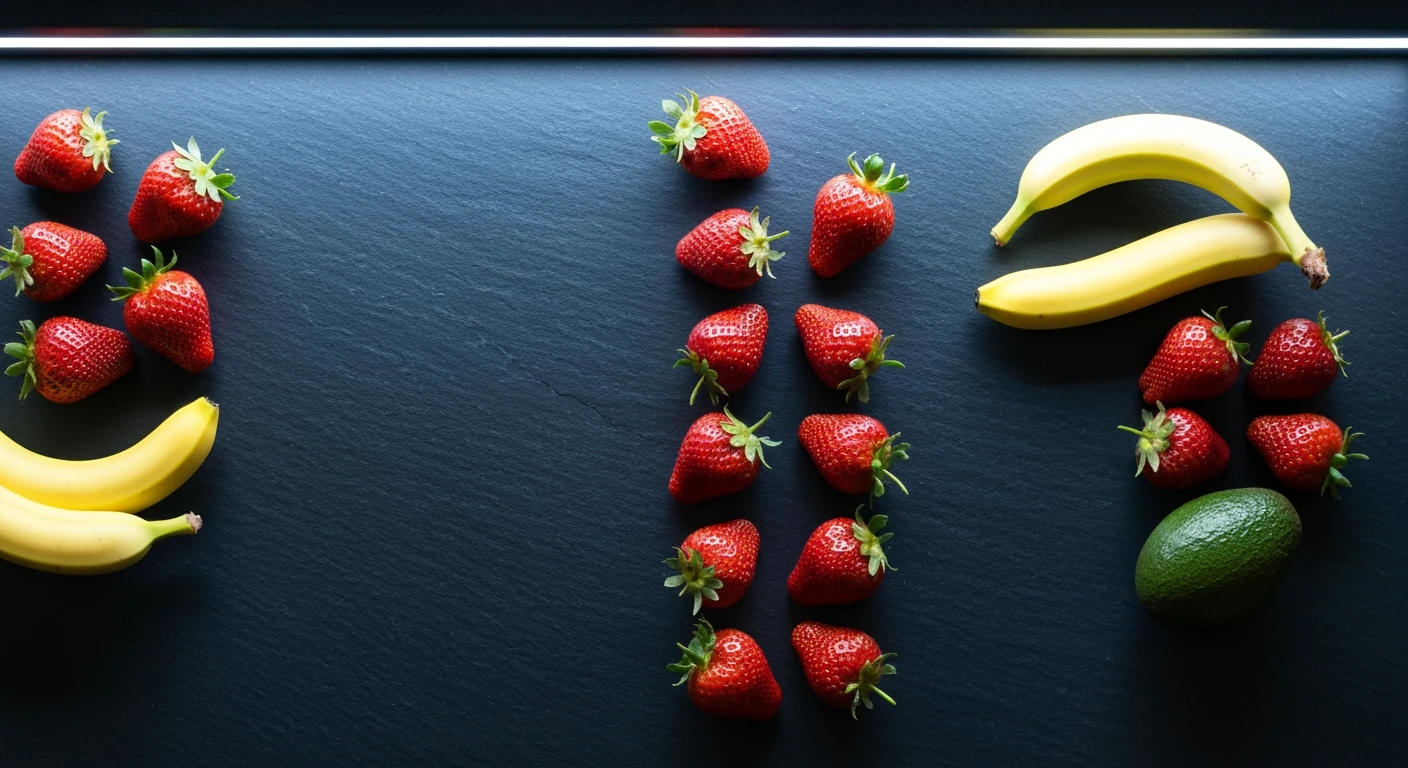
Let’s start with something you probably have in your fridge: a strawberry. Its bright red color and sweet taste are iconic. But did you know that the strawberry isn’t a berry at all? Botanically, it’s considered an “aggregate accessory fruit” because its flesh doesn’t come from the plant’s ovaries but from the receptacle that holds them. Its seeds are actually the tiny fruits themselves. a banana, with its single ovary that develops into a fleshy fruit with seeds inside, is technically a berry. It’s a botanical mix-up that feels almost like a prank.
This kind of classification chaos is surprisingly common. Avocados and watermelons are also berries, while raspberries and blackberries—which have “berry” right in their names—are not. It’s like sorting laundry and finding a sock in the t-shirt pile; things aren’t always where they seem to belong. These little quirks are part of what make even the most simple recipes an adventure. You might be using ingredients with completely unexpected family trees. A USDA report noted that the average American consumes about 8 pounds of fresh strawberries annually, likely without ever questioning its botanical identity.
| Surprising Truth | Common Misconception |
|---|---|
| Carrots were originally purple, white, and yellow. The iconic orange color was popularized by Dutch growers in the 17th century. | Carrots have always been orange. |
| A pineapple is not a single fruit but a cluster of up to 200 “fruitlets” fused together. | A pineapple grows on a tree like an apple. (It grows from a leafy plant on the ground). |
| Peanuts are not nuts; they are legumes, belonging to the same family as beans and lentils. | Peanuts are tree nuts. |
| White chocolate contains no cocoa solids, only cocoa butter, making it technically not “chocolate” in the traditional sense. | White chocolate is a type of chocolate just like milk or dark. |
Baking & Beyond: Sweet Surprises
The world of desserts and baked goods is equally filled with delightful deceptions. Many of the treats we associate with specific places were actually invented elsewhere or by accident. The way culinary delights shape our day is often tied to these sweet histories, providing comfort and a touch of indulgence.
Take the croissant, for instance. It’s a symbol of Parisian bakeries and French culture worldwide. Surprisingly, its origins trace back to the “kipferl,” a crescent-shaped bread created in Vienna, Austria, in the 17th century. It only arrived in Paris around 1838 when Austrian artillery officer August Zang opened his “Boulangerie Viennoise” (Viennese Bakery). French bakers later adapted the recipe by laminating the dough with butter, creating the flaky pastry we know today.
Unusual Origins of Favorite Desserts
Many beloved desserts have similarly unexpected backstories. German chocolate cake, for example, has nothing to do with Germany. It was named after Samuel German, an American baker working for the Baker’s Chocolate Company who developed a type of dark baking chocolate in 1852. The cake recipe using his product was first published in a Dallas newspaper in 1957, and its popularity soared.
According to Dr. Eleanor Vance, a food historian at the Culinary Institute of America, “Happy accidents are the unsung heroes of the dessert menu.” She points to the invention of the chocolate chip cookie, which happened when Ruth Wakefield of the Toll House Inn ran out of baker’s chocolate and substituted it with chopped semi-sweet chocolate, expecting it to melt. It didn’t. The result was a new and iconic American treat.
Beverage Blunders and Breakthroughs
Even what we drink has a story. Coffee, the fuel for so many mornings, was supposedly discovered by an Ethiopian goat herder named Kaldi who noticed his goats became energetic after eating berries from a particular tree. While likely a legend, it highlights the observation that kick-started a global industry. Today, an estimated 2.25 billion cups of coffee are consumed globally each day.
Tea also has its share of legends, most famously involving Chinese Emperor Shen Nung in 2737 B.C. when leaves from a wild tea bush blew into his pot of boiling water. Whether fact or fiction, these stories add a layer of magic to the simple act of brewing a cup. It’s a reminder that even the most established parts of a personalized morning routine were once brand new discoveries.
From coffee to Coca-Cola (originally marketed as a temperance wine and nerve tonic), our favorite drinks often started as something else entirely. These historical twists reveal how much adaptation and happy accidents have shaped our palates over centuries.
Everyday Wonders: Uncovering the Ordinary’s Extraordinary Side
Moving from the pantry to the rest of the house, you’ll find that countless objects we use without a second thought have surprisingly rich histories. Many of the items that furnish our daily lives weren’t originally designed for their current purpose. They are the accidental heroes of our homes. The stories behind them are often more fascinating than the items themselves.
What most people miss is the secret life of these objects. They are like quiet characters in the story of our day, each with a backstory full of twists, turns, and sometimes, complete failures. It’s a bit like discovering your quiet accountant neighbor used to be a world-champion rock-paper-scissors player.
The Hidden History in Your Home
Take a look at the bubble wrap from your latest package delivery. Its satisfying pop is now its main attraction, but it started life with a much different ambition. In 1957, inventors Alfred Fielding and Marc Chavannes tried to create a textured, three-dimensional plastic wallpaper. It was a total flop. People wanted smooth walls. Only after they rebranded it as protective packaging did it find its true calling.
Even the humble fork has a scandalous past. While spoons and knives are ancient, the fork was considered an immoral and overly dainty instrument in Europe for centuries. A report from the 11th century described a Byzantine princess who used one as showing “excessive delicacy.” It took hundreds of years for it to become a standard part of a table setting. These little details can completely reframe how you see the start of your day, adding a layer of wonder to your personalized morning routine.
Here are a few more quick-fire curiosities to consider:
- Did you know that the Slinky was invented by a naval engineer who accidentally knocked a spring off a shelf and watched it “walk” across the floor?
- Did you know that chainsaws were originally invented in the late 18th century for assisting in childbirth? (Thankfully, their application has changed.)
- Did you know that the inventor of the microwave, Percy Spencer, realized its potential when a magnetron tube he was working on melted a chocolate bar in his pocket?
Science in the Simple: Explanations for the Mundane
Beyond history, simple science governs so much of our daily experience. Have you ever wondered why bread gets stale? It’s not actually drying out, but a process called retrogradation, where the starch molecules recrystallize and force water out of the bread’s structure. This insight comes from food science research, with studies from institutions like the American Institute of Baking confirming the process happens fastest at refrigerator temperatures.
This is why keeping bread in the fridge makes it go stale quicker than leaving it on the counter. It’s a simple trick that can improve your daily culinary adventures.
The world is full of these small scientific puzzles. Why does hot water sometimes freeze faster than cold water, a phenomenon known as the Mpemba effect? Scientists still debate the exact reasons, with leading theories involving evaporation rates and dissolved gases. Understanding these little quirks doesn’t just satisfy curiosity; it helps us see the complex physics at play in a simple ice cube tray.
Recognizing these hidden layers of science and history in our environment can transform routine chores into moments of discovery. It’s a reminder that even the most mundane parts of our lives are connected to a much bigger story, making it easier to start savoring the everyday moments. The next time you make toast, you’re not just using a kitchen appliance; you’re interacting with a legacy of accidental genius and complex chemistry.
Happy accidents are the unsung heroes of the dessert menu.
— Dr. Eleanor Vance, Food Historian at the Culinary Institute of America
| The Everyday Item | The Unexpected Truth |
|---|---|
| Strawberry | It’s not botanically a berry. Its seeds on the outside are the actual fruits. |
| Croissant | It originated in Vienna, Austria as the ‘kipferl,’ not in France. |
| Bubble Wrap | It was originally invented as a form of textured, 3D plastic wallpaper. |
| Sea Otters | They hold hands while sleeping to keep from drifting away from each other. |
| The phrase ‘Spill the Beans’ | It likely comes from an ancient Greek voting method using beans in a jar. |
Animal Kingdom’s Quirks: Amusing Tidbits About Our Furry Friends
Moving from man-made history to the natural world reveals just as many surprises, often right in our own homes. Consider the simple house cat. What most people don’t realize is that a cat’s purr isn’t just a sign of contentment. A feline purrs at a frequency between 25 and 150 Hertz, a range that studies from the University of California, Davis suggest can promote bone density and healing. This unique ability might explain why having a cat around can feel so calming, making them a perfect companion for a peaceful morning routine.
But this hidden complexity isn’t limited to our pets. In the wild, sea otters hold hands while they sleep in the water. This isn’t just for show; they do it to keep from drifting away from their partners or family groups—a built-in buddy system. “This behavior is a prime example of social bonding that serves a direct survival purpose,” explains Dr. Lena Petrova, an animal behaviorist with the Monterey Bay Aquarium. It’s a simple act that showcases a powerful instinct for connection, reminding us of the importance of simple, supportive rituals in our own lives.
Some animal contributions are surprisingly far-reaching.
The common gray squirrel, for instance, is one of nature’s most forgetful gardeners. They misplace thousands of nuts each year. A study from the University of Richmond found that squirrels fail to recover up to 74% of the acorns they bury. This forgetfulness is like misplacing your keys, but instead of a minor inconvenience, it results in the planting of entire forests. Their actions are a key part of forest regeneration and a beautiful example of how nature supports the principles of sustainable living.
These small, often overlooked behaviors paint a picture of a world filled with purpose and wonder. It makes you wonder what other secrets are hiding in plain sight, just waiting to be noticed during a quiet moment.
Language & Literature: Words with Whimsical Origins
Words are the building blocks of our stories, recipes, and conversations, but we rarely stop to think about where they came from. Many of the words and phrases we use every day have surprisingly bizarre backstories, filled with historical quirks and cultural misunderstandings. Their evolution is a testament to how language lives and breathes alongside us.
Learning the history of a word is a bit like finding a faded, handwritten recipe on the back of an old photograph—it tells a story you never expected. You think you know what it is, but its origins reveal a completely different flavor.
Where Do Those Phrases Come From?
Have you ever told someone to “spill the beans”? This phrase for revealing a secret has nothing to do with legumes in the kitchen. The data suggests it originates from an ancient Greek voting system, where citizens would place a white or dark bean into a jar to cast their vote. If someone knocked over the jar, the secret results were revealed to everyone prematurely.
Another common one is “bite the bullet.” This phrase conjures a tough image, and for good reason. Before modern anesthesia, surgeons would give wounded soldiers a lead bullet to bite down on to cope with the excruciating pain of an operation. It was a grim reality. It’s a far cry from the minor inconveniences we apply it to today—like finally tackling that pile of laundry.
Unexpected Roots of Common Words
The origins of individual words can be just as strange. The word “avocado,” for example, comes from the Nahuatl (Aztec) word āhuacatl, which also meant “testicle,” likely due to its shape. This is just one of many fascinating culinary delights with a rich history. Similarly, the word “nightmare” wasn’t originally about a bad dream, but about a malevolent spirit—a mare—that was believed to sit on a person’s chest while they slept.
This constant evolution raises a question: how should we approach new words, especially slang? Dr. Anya Sharma, a linguist at the University of Chicago, explains, “Slang is the engine of linguistic change. While some terms fade quickly, others, like ‘cool,’ become permanent fixtures.” There are definite upsides and downsides to adopting the latest lingo.
- Pro: Using current slang can help you connect with different groups and show that you’re culturally aware. It keeps your communication fresh and relatable.
- Con: Misusing a term or forcing it into your vocabulary can sound inauthentic—or worse, just plain cringey. It can sometimes create confusion if your audience isn’t familiar with the word.
Ultimately, the language we use is a personal choice, reflecting our personality and how we engage with the world. Whether you’re a fan of classic literature or the latest internet trends, every word has a story, making each conversation a small journey through time. It adds another layer to our daily lives, much like how finding the perfect book can enhance an evening meal, creating ideal pairings of literary adventures with food.
The next time you hear a new phrase, you might just be witnessing the birth of a future dictionary entry.
Global Glimpses: Lighthearted Cultural Curiosities
Venturing beyond our own kitchens and neighborhoods reveals a delightful collection of customs that shape daily life around the world. In Japan, for instance, audibly slurping your noodles is not only acceptable but is considered a sign of appreciation for the chef. It’s a compliment. This simple act shows you are thoroughly enjoying the meal, a stark contrast to the quiet dining etiquette often preferred in many Western countries.
But it’s not just about table manners. The concept of time itself can differ dramatically. In some parts of Latin America, the notion of being “on time” is much more relaxed, where arriving 15 to 30 minutes after the agreed-upon moment for a social gathering is perfectly normal. This isn’t a sign of disrespect; it’s a cultural rhythm that prioritizes people and relationships over the strict ticking of a clock. Understanding this can entirely reframe how we see our own personalized morning routines and packed schedules.
What most people miss is how these traditions are woven into the fabric of a community’s identity. A study by the Pew Research Center found that in Italy, 79% of adults still eat their main meal together as a family on a daily basis, highlighting the cultural importance of shared meals. This practice of commensality, or eating together, reinforces social bonds. Exploring these small differences is much like discovering the hidden stories in our own lives, finding the “news” in daily culinary adventures.
And in the Netherlands, a unique tradition for birthdays involves congratulating not just the person celebrating, but their entire family as well—a lovely gesture that acknowledges the collective joy. These tiny, specific actions are what allow us to appreciate how culinary delights and daily habits shape a joyful lifestyle across the globe. They remind us there are countless ways to connect, celebrate, and simply be.
Your Invitation to Curiosity
Now that you’ve seen the hidden stories in everything from coffee beans to the common house cat, the world around you is no longer just a collection of objects and routines; it’s a library of untold tales. The real takeaway isn’t just a list of facts to share at your next dinner party, but an invitation to adopt a more curious mindset. The same spirit of discovery that uncovered these truths is available to you every single day.
Instead of just seeing a product on a shelf, you can now wonder about its accidental origin. Instead of just hearing a common phrase, you can question its bizarre journey into our language. This shift in perspective transforms the mundane into the meaningful, making every moment an opportunity for wonder. So, what secret history hiding in your own home will you uncover next?
Frequently Asked Questions
What is the most surprising food fact?
One of the most surprising food facts is the botanical classification of berries. While we call strawberries and raspberries ‘berries,’ they technically are not. Conversely, fruits you would never expect, like bananas, avocados, and even watermelons, are botanically classified as berries.
Are there any fun facts about coffee?
Yes, the discovery of coffee is tied to a fun legend. The story goes that an Ethiopian goat herder named Kaldi noticed his goats became incredibly energetic after eating berries from a specific tree. This observation of ‘dancing goats’ supposedly led to the first human use of coffee beans.
How can I find more interesting facts for daily conversation?
To find more interesting facts, cultivate a habit of curiosity. Pay attention to the origins of words, read the history behind common objects, or watch documentaries on nature and science. Following educational social media accounts or listening to trivia podcasts can also provide a steady stream of shareable knowledge.
What’s a common misconception people have about everyday objects?
A common misconception is that most objects were designed for their current purpose. In reality, many were accidental inventions. For example, the Slinky was created when a naval engineer knocked a spring off a shelf, and the microwave was discovered when a magnetron melted a chocolate bar in an engineer’s pocket.
Do animals have funny habits we don’t know about?
Absolutely. The animal kingdom is full of quirky habits. For instance, sea otters hold hands with each other while they sleep so they don’t float away, and squirrels are so forgetful about where they bury their nuts that they are responsible for planting thousands of trees each year by accident.