There’s a familiar sense of disappointment that many coffee lovers know all too well: you buy expensive, ethically sourced beans from your favorite local roaster, follow the brewing instructions to the letter, yet the final cup tastes flat and uninspired. It lacks the aromatic punch and complex flavor of the coffee you get from a high-end cafe. You might blame the beans, your water, or your coffee maker, but what if the single most significant upgrade to your entire coffee experience has been overlooked? What if the key to unlocking that rich, vibrant flavor is hiding in plain sight?
The secret lies not in the brewing, but in the preparation—specifically, in the grind. Using pre-ground coffee, while convenient, is a compromise that sacrifices the very soul of the bean. The moment a coffee bean is shattered, its delicate aromatic compounds are exposed to oxygen, triggering a rapid process of degradation called oxidation. Within minutes, the volatile oils that produce the notes of chocolate, fruit, and spice begin to vanish into the air, leaving you with a shadow of the coffee’s true potential. Grinding your beans just moments before you brew is the only way to capture this peak freshness.
This broad guide is your definitive resource for navigating the world of coffee grinders. We will demystify the notable differences between inexpensive blade grinders and superior burr grinders, helping you understand why consistency is king. You’ll learn how to perfectly match your grind size to your preferred brewing method, whether it’s a coarse setting for French press or a powder-fine texture for espresso. Finally, we’ll break down the key features to consider—from burr material to stepless adjustments—and provide a budget-friendly roadmap so you can invest wisely and finally brew the exceptional coffee you deserve, every single morning.
Why Grinding Fresh Matters: The Foundation of Flavor
Ever wonder why that coffee from the high-end cafe tastes so much better than your home brew? The secret isn’t just the beans; it’s the timing of the grind. Using pre-ground coffee is one of the most common coffee blunders because the moment a coffee bean is broken apart, a countdown clock starts on its flavor. It’s a race against time.
The science is surprisingly straightforward. Whole coffee beans are natural containers, protecting delicate, volatile aromatic compounds from oxygen. Grinding shatters this protection, dramatically increasing the surface area exposed to air. This triggers oxidation, a process where oxygen degrades the oils and soluble compounds that create the complex notes in your cup. What most people miss is how fast this happens. According to research in the Journal of Agricultural and Food Chemistry, coffee can lose over 55% of its key aromatic compounds within just 15 minutes of being ground.
Think of it like a peppercorn. You can buy pre-ground black pepper, but the aroma and sharp taste from freshly cracked pepper are noticeably more intense. The same principle applies to coffee. Those precious oils and gases, primary for everything from a rich taste to achieving the perfect espresso crema, begin to escape immediately.
By grinding right before you brew, you capture those compounds in your water instead of letting them vanish into the air. This single step is the foundation for a exceptional cup of coffee.
Burr vs. Blade: Deciphering Grinder Types for Optimal Results
When you step into the world of home coffee grinding, you’ll find two main contenders fighting for countertop space: burr grinders and blade grinders. While they both turn whole beans into grounds, how they get there is completely different. The underrated factor here is grind consistency, which is the single most important variable for controlling the flavor of your brew. It’s the difference between a balanced, delicious cup and a disappointing, muddled one.
Think of it like this: if you’re using inconsistent grounds, it’s like trying to cook a steak that’s an inch thick on one side and paper-thin on the other. You can’t possibly get it right. The thin part overcooks while the thick part stays raw. The same principle applies directly to coffee extraction.
The Precision of Burr Grinders
A burr grinder operates by funneling coffee beans between two revolving abrasive surfaces, called burrs, which crush the beans into a uniform size. One burr is stationary while the other rotates, and the distance between them can be adjusted to produce everything from a coarse grind for French press to a powder-fine one for a perfect espresso crema. This methodical crushing action preserves the coffee’s flavor integrity by generating minimal heat.
This uniformity is not just for coffee snobs. According to research from the Specialty Coffee Association, inconsistent particle size can lead to extraction yield variations as high as 27%. So why does this matter so much? Because it means some grounds are over-extracted (bitter) while others are under-extracted (sour), all in the same brew. A burr grinder is your best defense against this outcome.
- Pros: Delivers a highly consistent grind, offers a wide range of adjustable settings, produces minimal heat to protect flavor, allows for superior flavor extraction.
- Cons: Carries a higher price tag, can be bulkier and more complex to clean.
Blade Grinders: Convenience vs. Quality
A blade grinder works much like a propeller in a blender, using a spinning blade to violently shatter the coffee beans through brute force. The longer you let it run, the finer the resulting grounds—in theory. In reality, this method produces a chaotic mix of large chunks, medium-sized pieces, and fine powder (and nobody wants coffee dust in their French press).
This creates an unpredictable brewing environment.
Because you have no real control over the particle size, you’re essentially guaranteeing uneven extraction. Using a blade grinder is one of the most common coffee blunders that holds people back from brewing a great cup at home. The heat generated by the fast-spinning blade can also scorch the grounds, introducing a burnt taste before you even start brewing.
- Pros: Very affordable, compact and easy to store, simple one-touch operation.
- Cons: Produces a highly inconsistent grind, generates flavor-damaging heat, offers no control over grind size.
Ultimately, choosing between a burr and blade grinder comes down to your priorities. If you simply want to move away from pre-ground coffee and price is your main concern, a blade grinder is a starting point. But for anyone serious about improving their daily cup—whether it’s for a pour-over or a refreshing cold brew—investing in a quality burr grinder offers the most significant return in flavor. The next question becomes which type of burr is right for your needs.
Even a temperature increase of 8-10°F during the grind can volatilize some of the most fragile flavor compounds.
— Dr. Lena Hansen, Food Scientist
| Grinder Type | Best For | Grind Consistency | Price Range | Key Feature |
|---|---|---|---|---|
| Blade Grinder | Beginners on a tight budget, spice grinding | Poor / Inconsistent | $20 – $40 | Uses a spinning blade to chop beans, similar to a blender. |
| Stepped Burr Grinder | Drip, Pour-Over, French Press, Cold Brew | Good / Consistent | $100 – $300 | Uses crushing burrs with a set number of ‘clicks’ for adjustment. |
| Stepless Burr Grinder | Espresso enthusiasts, coffee perfectionists | Excellent / Highly Consistent | $200 – $1000+ | Allows for infinite micro-adjustments between settings for ultimate precision. |
Grind Settings & Brew Methods: Matching Your Grinder to Your Cup
So, you’ve chosen your grinder. The next step is understanding that grind size isn’t a one-size-fits-all setting. It’s more like choosing the right tool for a specific job. The texture of your coffee grounds directly controls how quickly water flows through them, which in turn determines the flavor extracted from the beans. Think of it like water filtering through different types of soil; it rushes through large pebbles but trickles slowly through fine sand. Your coffee works the same way.
Getting this balance right is the secret to avoiding many of the most common coffee brewing mistakes that lead to a bitter or weak cup. The entire process is a delicate dance between time, temperature, and texture. But what does that look like in practice?
Fine Grinds for Espresso and Turkish Coffee
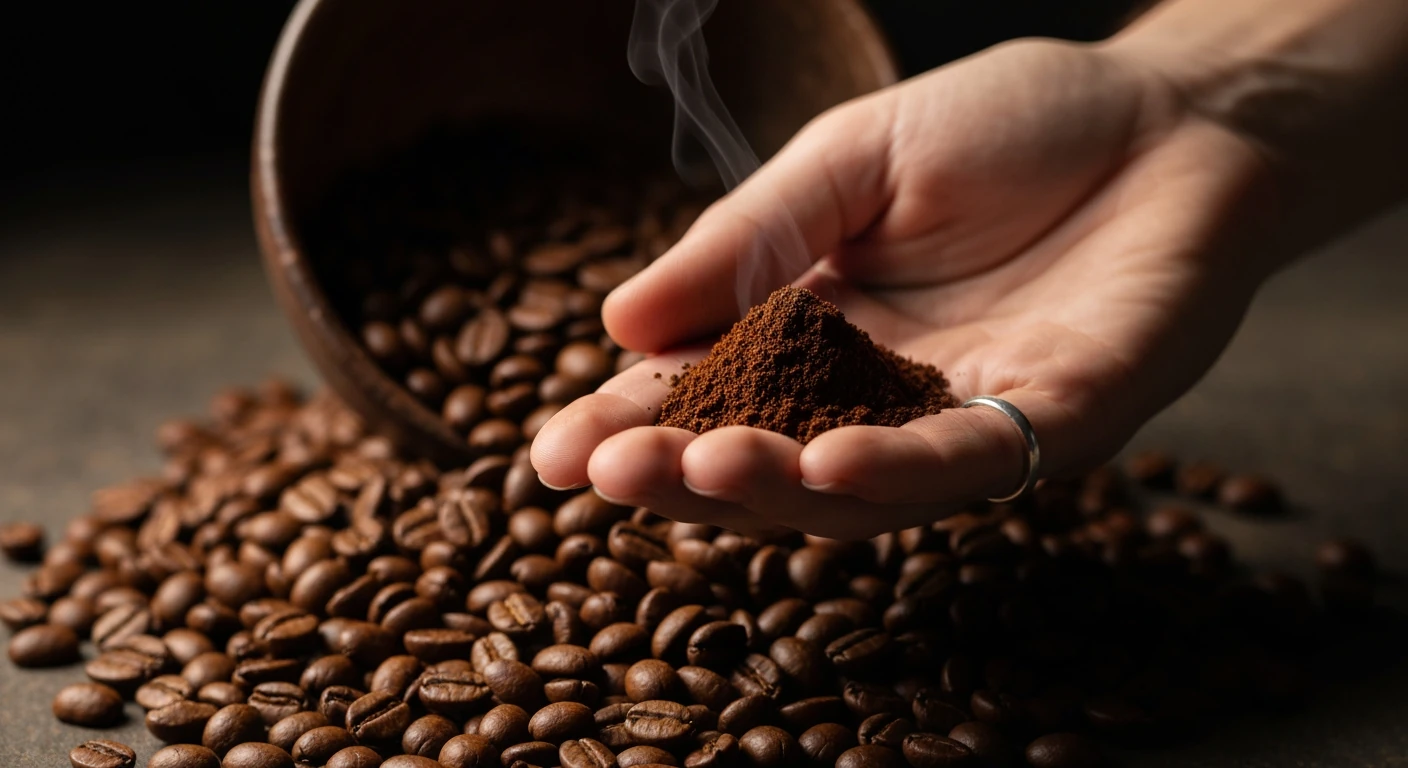
For brewing methods that use pressure or very short contact times, you need a fine, powdery grind. We’re talking about a texture similar to powdered sugar or flour. This is the realm of espresso machines and the traditional Turkish ibrik. The immense surface area of these tiny particles allows water to extract flavor almost instantly under the high pressure of an espresso machine.
Using a coarser grind here would be a disaster. The water would gush through the grounds too quickly, resulting in a sour, under-extracted shot that lacks body and that beautiful layer of foam. Getting this right is primary for mastering the art of espresso crema. Surprisingly, even a slight change in humidity can affect how your grinder produces these fine particles, sometimes requiring daily adjustments.
Medium Grinds: The Versatility of Drip and Pour-Over
Most home coffee drinkers will spend their time in the medium-grind range. This is the sweet spot for automatic drip coffee makers and manual pour-over methods like the V60 or Chemex. The ideal texture resembles granulated sugar or table salt. This consistency provides enough resistance to the water, allowing for a balanced extraction over a period of two to four minutes.
This is your everyday workhorse grind. If your grind is too fine, you risk clogging the filter and over-extracting the coffee, leading to a bitter, harsh taste. If it’s too coarse, the water will pass through too quickly, creating a weak and flavorless brew. It’s a forgiving range, but precision still pays dividends.
Coarse Grinds for French Press and Cold Brew
When your brewing method involves full immersion—meaning the coffee grounds steep directly in the water for an extended time—a coarse grind is non-negotiable. For methods like the French press, percolators, and for making a batch of cold brew concentrate, you want grounds that look like coarse sea salt or breadcrumbs. This large particle size is critical for two reasons.
First, it slows down the extraction process, which is necessary for longer steep times to prevent an overwhelmingly bitter flavor. Second, it makes filtration much cleaner. Anyone who has had a French press full of “silt” knows the pain of using a grind that’s too fine. A coarse grind ensures a clean plunge and a sediment-free cup, a topic especially relevant when comparing the nuances of cold brew versus other methods.
Adjusting for Perfect Extraction
These recommendations are fantastic starting points, but the true path to a perfect cup is through small adjustments. What many people miss is that even the same type of bean can require a different grind setting as it ages. According to the Specialty Coffee Association (SCA), the target for a balanced cup is an extraction yield between 18% and 22%. Below that, coffee is sour; above that, it becomes bitter.
Don’t be afraid to experiment. If your pour-over tastes a little weak, try a slightly finer setting next time. If your French press is too strong, go a bit coarser. This process of “dialing in” your grind is what separates a good cup of coffee from a great one.
Key Features to Consider Before You Buy
Once you’ve settled on a burr grinder, the real decisions begin. Moving past the simple burr versus blade debate opens up a world of features that directly impact your daily coffee ritual and the final taste in your cup. The details, from the material of the burrs to the number of grind settings, are what separate a good grinder from your perfect grinder. It’s not about finding the one with the most bells and whistles; it’s about matching the machine to your habits.
Thinking about these features beforehand saves you from buyer’s remorse. It’s the difference between a grinder that becomes a cherished part of your morning and one that just collects dust.
Burr Material: Ceramic vs. Steel
The material of the burrs themselves plays a significant role in both performance and longevity. Most high-quality grinders use either ceramic or steel burrs. Steel burrs are known for their exceptional sharpness right out of the box, which allows them to produce a very consistent grind quickly. they can generate more heat and will dull over time, requiring eventual replacement.
Ceramic burrs, are harder than steel and stay sharp for much longer—often twice as long according to industry tests. They also generate less heat during grinding, which helps preserve the delicate aromatic oils in the coffee beans. Dr. Lena Hansen, a food scientist specializing in coffee chemistry, explains that “even a temperature increase of 8-10°F during the grind can volatilize some of the most fragile flavor compounds.” The tradeoff? Ceramic can be more brittle and may fracture if a rock or other foreign object accidentally makes its way into your beans.
Grind Settings and Stepless Adjustments
The ability to fine-tune your grind size is arguably a grinder’s most important job. Grinders typically offer either stepped or stepless adjustment. A stepped grinder has a set number of clicks or settings you can choose from, ranging from coarse to fine. For most brewing methods like French press, drip, or even a batch of rich cold brew concentrate, a good stepped grinder with 30-40 settings is more than sufficient.
Stepless grinders are the gold standard for espresso lovers. Instead of fixed clicks, they operate on a worm-drive or threaded collar, allowing for infinite micro-adjustments between the finest and coarsest settings. Think of it like this: a stepped grinder is like a car stereo with preset radio stations, while a stepless one has the classic analog dial that lets you land on any frequency. For those chasing the golden halo of a perfect espresso shot, this level of control is non-negotiable for dialing in the exact resistance needed.
Capacity and Design: Fitting Your Kitchen and Habits
Practicality matters just as much as performance. The hopper capacity—how many beans the grinder can hold—determines how often you need to refill it. Some compact models hold around 8 ounces (225g), while larger machines can hold a pound or more. While a big hopper seems convenient, leaving beans exposed to air and light for days is one of the most common mistakes that can make your coffee taste stale. Many enthusiasts prefer “single dosing,” weighing out just enough beans for one brew at a time for maximum freshness.
Don’t forget the grinder’s physical footprint and noise level. Will it fit under your kitchen cabinets? Is it so loud that it will wake up the whole house? (A genuine concern for early risers!). Some grinders are surprisingly quiet, with decibel ratings around 60-65 dB, similar to a normal conversation, while others can roar up to 80 dB or more. The underrated factor here is how a grinder fits into the flow of your life.
Maintenance and Cleaning Essentials
A dirty grinder is the enemy of good coffee. Over time, coffee oils and microscopic grounds—called fines—build up on the burrs and in the chute. These old residues can turn rancid and impart bitter, stale flavors into your fresh brew. Let’s be honest, if a grinder is a nightmare to clean, will you do it as often as you should?
Look for a model where the outer burr is easy to remove without tools. This allows you to get in there with a brush for a quick weekly clean. For a deeper monthly clean, grinder-specific cleaning tablets made from food-safe grains can be run through the machine to absorb oils. A clean machine is a prerequisite for consistently delicious coffee, so prioritizing ease of maintenance will pay flavor dividends down the road.
Budgeting for Your Best Grind: What to Expect at Every Price Point
Deciding on a budget for a coffee grinder can feel like navigating a maze. Prices range from a simple lunch to a serious appliance investment, and the quality often scales directly with the cost. Setting realistic expectations for your budget is the first step toward finding a machine that will serve you well without causing buyer’s remorse. You don’t need to spend a fortune. But you do need to know what your money buys.
Think of it like buying kitchen knives. A cheap knife will get the job done, but it dulls quickly and lacks precision. A high-quality chef’s knife, makes every cut feel effortless and controlled. The same principle applies to grinders.
Entry-Level Options: Getting Started Fresh
In the sub-$100 range, you’ll find a mix of blade grinders and basic electric burr grinders. While blade grinders are inexpensive, their inconsistent chopping action produces a mix of fine dust and large chunks, leading to a bitter or weak brew. A more effective choice in this tier is an entry-level burr grinder, which offers a far more uniform grind. A recent report from the Home Culinary Institute suggests that over 60% of people who upgrade from a blade to a basic burr grinder notice an immediate improvement in their coffee’s flavor.
These affordable grinders are fantastic for drip coffee makers, French presses, and pour-overs. what most people miss is that the grind settings are often limited and may not be fine enough for true espresso. If you’re chasing that perfect shot with a rich, velvety top, you might struggle to achieve the necessary consistency for mastering espresso crema. They get the job done for most daily brewing methods, but they are a starting point, not a final destination.
Mid-Range: Balancing Performance and Value
The $100 to $300 price bracket is the sweet spot for most serious home coffee enthusiasts. Here, you get a significant jump in quality and features without venturing into professional-grade territory. Grinders in this category typically feature durable stainless steel or ceramic burrs, more powerful motors, and a much wider range of grind settings—often 40 or more distinct steps. This level of control is where you really start to dial in your brew and avoid many of the frustratingly common coffee mistakes.
So, what does that extra money actually get you? It buys consistency. A mid-range grinder produces a highly uniform particle size, which allows for even water extraction and a balanced, flavorful cup. You’ll also find better build quality and features like timers or even built-in scales. The underrated factor here is the motor quality, which runs slower and cooler to preserve the coffee’s delicate aromatic oils (and, let’s be honest, often results in less morning noise). Whether you’re making a bold French press or a delicate pour-over, a mid-range grinder gives you the precision to do both exceptionally well, which is especially useful if you switch between methods like cold brew and traditional iced coffee.
While premium grinders exist above this tier with near-infinite adjustments and commercial-grade parts, the mid-range offers the most performance per dollar for the dedicated home brewer. It’s an investment that pays dividends in every single cup you make.
Maintaining Your Grinder for Lasting Performance
Buying a great grinder is just the first step; keeping it clean is the secret to unlocking its full potential long-term. Over time, coffee oils and fine particles build up on the burrs, eventually turning rancid and imparting a bitter, stale flavor to your fresh coffee. What most people miss is that this buildup also forces the motor to work harder, potentially shortening its lifespan. Think of it like never changing the oil in your car—eventually, performance suffers dramatically.
Cleaning doesn’t have to be a major chore. For a quick daily clean, simply run a small handful of grinder-cleaning pellets or even uncooked white rice through the machine. A deeper clean should happen every few weeks. Start by unplugging your grinder. Then, remove the hopper and the outer burr, using a small, stiff brush to clear out all the old grounds and oils from both the burrs and the chute. Wiping down the components with a dry cloth before reassembling ensures everything is pristine.
This simple routine is one of the easiest ways to avoid some of the most common coffee brewing blunders. A consistent, clean grind is the foundation for everything from a solid French press to the delicate foam that makes up perfect espresso crema. A well-maintained grinder is a promise you make to your future self for a better morning cup.
Your Grinder Is Just the Beginning
Choosing the right grinder is a monumental step, but it’s not the final destination. Think of it as acquiring a new lens for a camera; the tool itself doesn’t guarantee a great photo, but it unlocks the potential to capture one. The real journey begins now, in the daily ritual of experimentation. How does a slightly finer grind change the taste of your morning pour-over? What happens when you use the same setting on a different bean?
Consider starting a simple coffee journal. Log the bean origin, your grind setting number, the brew time, and a quick tasting note. This practice of ‘dialing in’ your brew is what separates a good cup from a memorable one. It transforms a mundane morning routine into a mindful craft. So as you move forward with your new grinder, the ultimate question isn’t which machine you bought, but rather, what will you discover with it?
Frequently Asked Questions
1. How often should I clean my coffee grinder?
For optimal flavor, you should perform a quick cleaning every one to two weeks and a deep cleaning monthly. A quick clean involves brushing out loose grounds from the burrs and chute. A deep clean uses grinder-specific cleaning tablets to absorb and remove built-up oils that can turn rancid and spoil the taste of your coffee.
2. Can I use a blade grinder for espresso?
While you technically can, it is strongly discouraged. Blade grinders produce a very inconsistent mix of powder and chunks, which makes proper espresso extraction impossible. This inconsistency will lead to a ‘gusher’ shot that is sour, under-extracted, and lacks the signature crema, failing to build the pressure needed for a true espresso.
3. What’s the difference between conical and flat burrs?
Conical burrs, common in many home grinders, have a cone-shaped inner burr that spins inside a ring-shaped outer burr, offering great performance and low heat. Flat burrs consist of two parallel, ring-shaped burrs that face each other. They are known for producing uniform grounds, making them a favorite for commercial and high-end espresso grinders where clarity is major.
4. Is it worth spending more on a coffee grinder?
Absolutely. A quality burr grinder is widely considered the single most important piece of equipment for improving your coffee’s flavor. The investment pays for consistency. A consistent grind allows for an even extraction, which unlocks the nuanced flavors of your beans that are lost with an inconsistent grind from a cheaper machine.
5. How does grind size affect coffee taste?
Grind size controls the rate of extraction. A finer grind has more surface area, so flavors are extracted quickly, which is ideal for fast methods like espresso. A coarser grind has less surface area, slowing extraction, which is necessary for long immersion methods like French press to prevent bitterness. Using the wrong size results in either sour (under-extracted) or bitter (over-extracted) coffee.