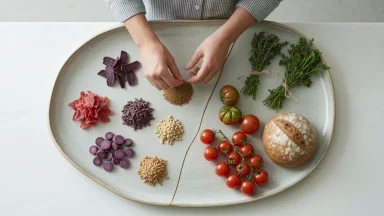
That first sip of morning coffee often comes with a side of headlines, a daily ritual of scrolling through news feeds before our feet even hit the floor. We absorb updates on global politics, economic shifts, and cultural debates almost by osmosis. Yet, this constant stream of information can feel less like enlightenment and more like a tidal wave, leaving us feeling overwhelmed and anxious. Are we actually becoming more informed, or are we just drowning in a 24/7 cycle of noise that leaves us disconnected from the world right outside our door?
This feeling of being simultaneously over-informed and under-connected highlights a key, often overlooked, choice we make every day: where to direct our attention. The media landscape is vast, presenting a stark contrast between the sweeping narratives of national news and the hyperlocal stories that shape our communities. One tells us about decisions made in the nation’s capital that will ripple outwards, while the other reports on the new stop sign on the corner that immediately changes our daily commute. Choosing between them isn’t the point; understanding their distinct roles and impacts is.
So, how do we move from being passive consumers to active curators of our information diet? This guide is designed to be your roadmap. We will dissect the unique strengths and weaknesses of both local and national news, exploring why each is necessary for a complete picture of the world. We’ll provide a practical framework for balancing these perspectives, helping you craft a personalized news habit that empowers you with clarity rather than burdening you with anxiety. It’s time to take control of your news feed and build a worldview that is both broad in scope and deeply rooted in your own reality.
The Daily Brew: Understanding News Sources
Just like that first cup of coffee, many of us have a daily news habit that helps start the day. We scroll through headlines on our phones or catch a morning show while making breakfast, absorbing information almost automatically. But how often do we stop to think about where that information is coming from? Understanding your news sources is the first step toward becoming a more informed and balanced reader.
Think of the media landscape like a giant grocery store. You have local, farm-to-table produce (your city newspaper), big national brands (major news networks), and international specialty items (global press agencies). Each offers a different perspective and level of detail. Learning how to navigate this complex world is primary, and our guide to trustworthy information can help you get started.
The key, according to experts, is to seek a varied diet. Dr. Elena Vance, a media literacy researcher at The Annenberg School for Communication, explains, “Understanding the origin of a news story is as basic as knowing the ingredients in your food. It determines its quality, its flavor, and its effect on you.” With a recent report from the Reuters Institute showing that trust in news has fallen to just 32% in the United States, vetting your sources has never been more important. It makes you wonder, are we consuming information junk food without even realizing it?
Ultimately, the goal is to build a well-rounded worldview.
This isn’t about becoming a political analyst overnight—far from it. It’s about taking a more mindful approach to news consumption so that you feel empowered, not overwhelmed. By consciously choosing your sources, you can better understand both the major events shaping the country and the local stories affecting your own community, setting a clearer tone for the rest of your day.
Your Neighborhood Narratives: The Power of Local News
While national headlines often shout about global events and federal politics, the stories that frequently have the most direct impact on our lives are whispered from the pages of a local newspaper or the broadcast of a neighborhood station. These narratives cover the things that shape your immediate world: the proposed rezoning on your street, the new coffee shop opening downtown, or why your morning commute was suddenly diverted. This is the realm of local journalism.
The underrated factor here is trust. A Pew Research Center study found that local news is viewed with less skepticism than national sources, with 71% of Americans expressing confidence in their local outlets. Why? Because the reporters are often your neighbors, and the stories have verifiable, real-world consequences you can see outside your window. It’s one thing to read about economic policy; it’s another to learn that a local factory is hiring 200 people, a fact that could change your family’s future.
This is where news stops being an abstract concept and becomes a practical tool.
Connecting with Your Community
Engaging with local news is like learning the secret routes on your daily commute—it gives you an inside track. When you know that a new farmers’ market is opening on Saturdays, it can completely reshape your approach to quick meal prep for the week. Understanding the school board’s debate over a new curriculum empowers you at parent-teacher meetings. This shared knowledge base is what transforms a collection of houses into a connected community.
These stories build a collective identity. They celebrate local heroes, mourn shared losses, and provide a common ground for discussion—even when neighbors disagree. You start to recognize the names and faces, understanding the intricate web of relationships and history that makes your town unique. It’s a powerful feeling, knowing the story behind the story of the place you call home and being able to find unbelievable facts about your own area.
Pros and Cons: Local News at a Glance
Of course, no source of information is perfect. A mindful approach to news means understanding the strengths and weaknesses of each type. Before you tailor your daily news experience, consider the trade-offs of focusing locally.
Pros of Local News
- High Relevance: The information directly affects your daily life, from traffic and weather to local taxes and school events.
- Community Building: It fosters a sense of shared identity and encourages civic engagement by creating a public forum for local issues.
- Accountability: Local reporters are often the only ones holding municipal leaders, school boards, and police departments directly accountable to the public they serve.
Cons of Local News
- Resource Constraints: Local outlets often operate on shoe-string budgets, which can limit the depth of investigative reporting compared to national organizations.
- Limited Scope: A hyper-focus on local events can leave you uninformed about broader national and international issues that also have a significant, if indirect, impact.
- Potential for Bias: In smaller communities, close relationships between reporters, sources, and subjects can sometimes compromise objectivity, although this is a challenge journalists actively work to mitigate.
Balancing these pros and cons is the key. The real challenge isn’t choosing one over the other, but figuring out how to blend your neighborhood narratives with the larger stories shaping our world.
Understanding the origin of a news story is as basic as knowing the ingredients in your food. It determines its quality, its flavor, and its effect on you.
— Dr. Elena Vance, The Annenberg School for Communication
| Feature | Local News | National News |
|---|---|---|
| Scope | City/town-specific issues: schools, local politics, community events, traffic. | Country-wide issues: federal legislation, economic trends, major social movements. |
| Direct Impact | High and immediate. Affects daily life, commute, property taxes, and local businesses. | Often indirect or delayed. Shapes the broader context in which local events occur. |
| Trust Factor | Generally higher. Reporters are often community members; stories are easily verifiable. | Varies widely. Often viewed with more skepticism due to political polarization. |
| Primary Goal | To foster community connection, hold local officials accountable, and provide practical information. | To provide context for major events, explain broad trends, and foster national identity. |
| Weakness | Limited resources can lead to less investigative depth; potential for a narrow worldview. | Can feel abstract and disconnected from daily reality; may overlook nuanced local impact. |
The Broader Canvas: National News in Perspective
While local stories provide the details of our daily lives, national news offers the big-picture context. Think of it like cooking: local news is the specific, fresh ingredient you just bought at the market, while national news is the overall recipe that explains how that ingredient fits into the larger meal. Understanding economic trends or shifts in the political landscape helps us make sense of the world beyond our zip code.
This broader view is surprisingly important for our day-to-day. A federal infrastructure bill might seem distant, but it could explain the road construction on your commute next summer. Likewise, a national report on supply chain issues can shed light on why your favorite coffee beans suddenly cost 15% more. These connections aren’t always obvious, which is why a healthy dose of national headlines is part of a balanced information diet. Developing a mindful approach to news consumption helps you see these links without feeling overwhelmed.
People still recognize this need for a wider perspective. A recent study from the Pew Research Center revealed that nearly 57% of adults follow national news very or fairly closely, seeking information that helps them understand major events. What’s the real impact of a decision made hundreds of miles away? Often, it’s more significant than we first assume. Staying informed on this level provides the necessary backdrop for everything else — it’s a bit like needing a map before you can plan a route, a key part of our primary USA travel tips.
Ultimately, national news gives us the “why.” It equips us to be more informed citizens and consumers. Without it, we’re only seeing a small corner of the painting, missing the full story the artist intended to tell, making it difficult to find trustworthy information that is fully contextualized.
The real challenge isn’t choosing one over the other, but learning how to blend them into a coherent and useful part of your morning routine.
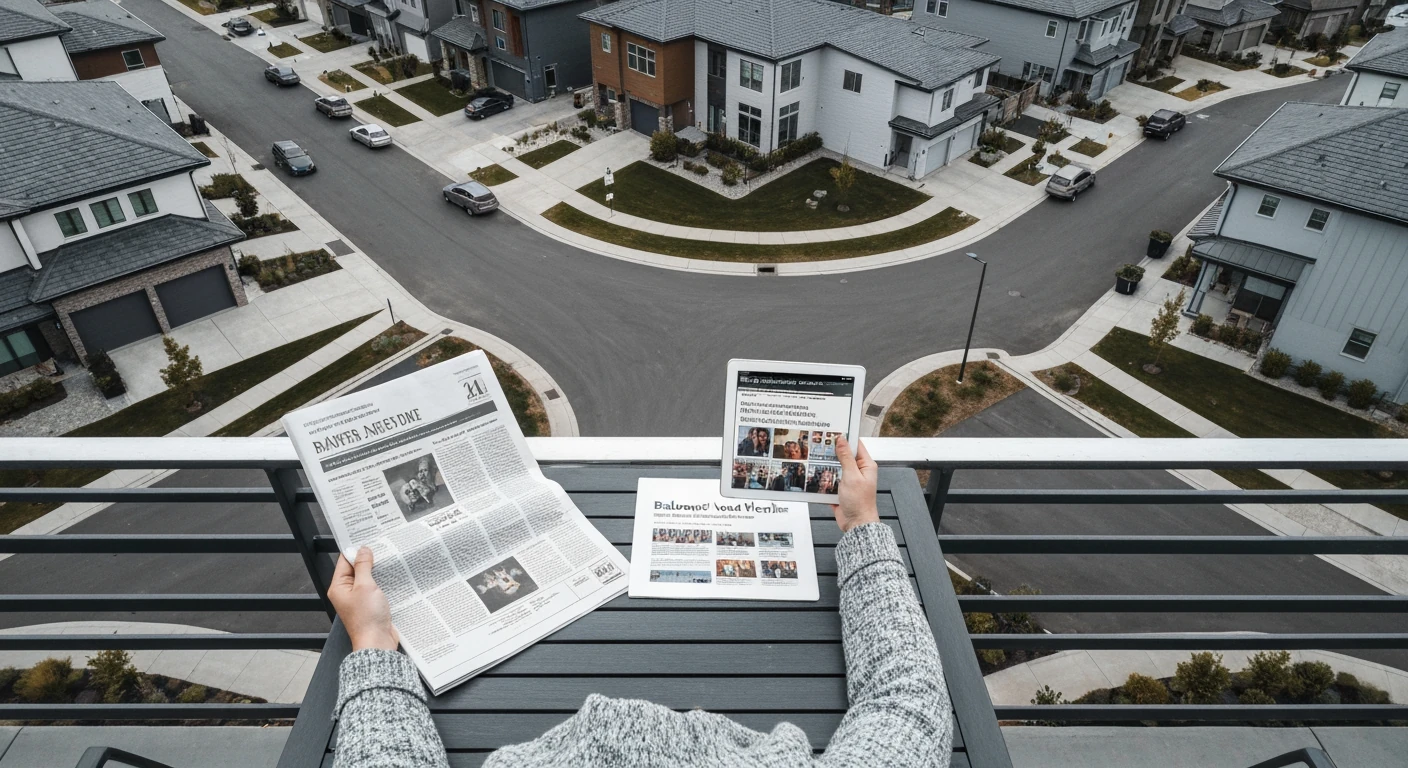
Crafting Your Information Diet: Balancing Perspectives
Just as you wouldn’t eat only dessert for every meal, a healthy information diet requires balance. Relying solely on sweeping national headlines can leave you disconnected from your immediate community, while an exclusive focus on local stories might obscure the larger forces shaping your town. The goal is to create a sustainable and nourishing flow of information. It’s about intentional consumption.
Think of it like planning your meals for the week. You need a mix of ingredients to get a full range of nutrients. This process isn’t about restriction; it’s about making conscious choices that leave you feeling informed and empowered, not overwhelmed. Some days might be heavier on national news, while others are perfect for catching up on city council meetings. The key is having a plan, much like the one you might use for quick meal prep at home.
A Recipe for Informed Reading
Building a balanced news habit starts with understanding what you’re consuming. Many people passively receive news from whatever algorithm serves it up, which can create an echo chamber. Actively curating your sources is the single most effective step toward better media literacy. It requires a little effort upfront but pays dividends in clarity.
The surprising part is how quickly your perspective can shift once you add different “flavors” to your news consumption. A national policy story feels different when you read a local report on how it affects your neighborhood school or a small business down the street. It grounds the abstract in reality.
Diversifying Your News Plate
Your first step is to intentionally select a variety of sources. Don’t just rely on one national paper or cable news channel. The aim is to see a story from multiple angles. A good starting point includes:
- One major national newspaper: For broad coverage of domestic and international events.
- Your local newspaper or website: For updates on city hall, community events, and neighborhood developments.
- A niche publication: One that covers a specific interest of yours, like technology, science, or the arts.
- An international news source: To understand how global events are perceived outside your own country.
By bringing these together, you can start to tailor a daily news experience that is uniquely yours. This proactive approach prevents algorithms from making all the choices for you.
Spotting the Biases
Every source has some form of bias, whether it’s intentional or not. Bias isn’t always a negative thing—a publication dedicated to environmentalism will naturally focus on those stories. The problem arises when you are unaware of the lens through which you are seeing the world. But how do you spot it?
Pay attention to language. Are adjectives loaded with emotion (e.g., “disastrous plan” vs. “new proposal”)? Does the headline accurately reflect the article’s content? According to research from the Nieman Foundation for Journalism at Harvard, readers who spend just 15 extra seconds evaluating a headline for emotional language are 45% less likely to share misinformation. It’s a small investment of time for a huge return in accuracy. For a deeper look, our guide to trustworthy information can help.
The Daily News Checklist
Feeling overwhelmed is a common side effect of our 24/7 news cycle. A simple checklist can help you engage with the news mindfully and critically, without getting swept away. Before you fully accept a story, run through these quick questions:
- Who is the author? Do they have expertise on this topic? A quick search can reveal their background and potential leanings.
- What are the sources? Does the article cite official reports, named experts, or firsthand accounts? Be wary of vague phrases like “sources say.”
- When was it published? An old story can be presented as new, which strips it of its original context. Always check the date.
- What’s the purpose? Is the article meant to inform, persuade, or entertain? Understanding the intent helps you evaluate its claims more effectively.
- How does it make me feel? If a story makes you intensely angry or fearful, pause. Strong emotional reactions can cloud judgment—a key principle in any mindful approach to news consumption.
This isn’t about becoming a cynical reader. Instead, it’s about becoming an active and discerning one, capable of building a worldview that is both broad and deeply rooted in your own community.
Beyond the Headlines: The Personal Impact of Your News Choices
The choices you make about your news consumption are about more than just staying informed; they actively shape your day. Think of it like the ingredients you choose for breakfast. A steady diet of stressful, sensational headlines can leave you feeling anxious and overwhelmed, much like starting your day with pure sugar. It’s a temporary rush followed by a crash.
A study from the University of California, Irvine, found that repeated exposure to negative news, even for just a few minutes, can significantly increase personal anxiety levels. What most people miss is how this slow-drip of negativity colors their entire outlook. It can make personal challenges seem larger and the world feel more hostile than it actually is. Are you starting to see your daily news feed as a mood-setter?
Cultivating a Positive Outlook
Intentionally balancing your news diet can profoundly impact your well-being. This doesn’t mean ignoring important national events, but rather consciously curating your information stream. By supplementing major headlines with stories of local progress, community achievements, or even just some positive news, you create a more balanced mental picture. This is a core component of many successful simple morning hacks for a brighter day that people swear by.
It changes your internal monologue. Instead of focusing solely on large-scale problems you can’t influence, you see evidence of solutions and cooperation all around you. You might start your day reading about a new community garden instead of a distant political conflict. This small shift provides a necessary dose of hope and perspective — a reminder that good things are happening everywhere, all the time. Sometimes, the best antidote is a dose of pure fun, like diving into some unbelievable everyday facts to cleanse the palate.
This is a powerful change.
Becoming an Engaged Citizen
A surprising side effect of focusing more on local news is that it often makes you a more informed citizen, not a less one. While national news informs you about broad issues, local news presents problems on a scale where you can actually participate in the solution. It transforms you from a passive spectator into an active participant in your own community.
Consider the case of Maria in Austin, Texas. After reading in her local online paper about the city animal shelter’s struggle with overcrowding, she was moved to act. She started by volunteering for two hours every other Saturday and ended up organizing a neighborhood donation drive for pet food and supplies. She later admitted that while she felt helpless reading about global crises, the local story gave her a clear, tangible way to make a difference. This is the heart of a mindful approach to news consumption; it connects information directly to action.
Your news habit, isn’t just a passive activity. It’s the first step in deciding where you’ll put your energy and how you’ll contribute to the world right outside your front door.
Your One-Week News Audit
Rather than simply resolving to ‘do better,’ what if you treated your news consumption like a science experiment for one week? The real challenge isn’t just knowing the difference between local and national news, but understanding how each one personally affects your mood, conversations, and perception of the world. For the next seven days, keep a simple journal. At the end of each day, jot down what news you consumed and one word describing how it made you feel. Was it ‘anxious,’ ’empowered,’ ‘angry,’ ‘connected,’ or ‘informed’?
At the end of the week, look at your notes. Do you see a pattern? The goal isn’t to eliminate all negative feelings—some news is rightfully upsetting—but to see if your information diet is balanced. If the scale is tipped too far one way, the next step becomes clear: make one small, intentional change. Perhaps it’s subscribing to a local newsletter or swapping 10 minutes of cable news for a walk around your neighborhood. The most profound shift in your worldview might not come from the headlines you read, but from the simple act of noticing their effect on you.
Frequently Asked Questions
Why is local news often overlooked?
Local news is often overlooked because national and international stories tend to have larger budgets, more dramatic presentation, and are amplified by social media algorithms that favor widespread conflict or celebrity. The quieter, more nuanced stories about city council meetings or school board policies struggle to compete for our limited attention against these louder, more sensational headlines.
How can I find trustworthy local news sources?
Start by looking for non-profit news organizations, local public media stations (like NPR or PBS affiliates), and university-led journalism projects in your area. Also, check if a publication has a clearly stated ethics policy and correction standards on its website. A commitment to transparency and correcting mistakes is a strong indicator of a trustworthy source.
Is it possible to be over-informed by news?
Yes, this is a common phenomenon known as ‘information overload’ or ‘infobesity.’ Consuming too much news, especially on a 24/7 cycle, can lead to increased anxiety, decision fatigue, and a feeling of powerlessness. A healthy news diet prioritizes quality and relevance over sheer quantity, allowing you to stay informed without becoming overwhelmed.
What’s the difference between national and international news?
National news focuses on events, politics, and issues happening within your own country’s borders. International news, or world news, covers events happening in other countries or the relationships between two or more countries. While national news might cover a new federal law, international news would cover a trade agreement between your country and another.
How does news consumption affect mental health?
Studies suggest a strong correlation between high consumption of negative news and increased rates of anxiety, stress, and even depression. The constant exposure to crises and conflict, a practice often called ‘doomscrolling,’ can create a skewed perception that the world is more dangerous and hostile than it is, impacting your overall well-being.