What if the secret to a consistently rich, café-quality cup of coffee wasn’t a complex, expensive machine, but a simple glass carafe on your kitchen counter? For coffee lovers seeking to move beyond automated pods and bland drip brews, the French press offers an accessible gateway into a world of deeper flavor. It’s a hands-on, ritualistic process that puts you in complete control, transforming your morning routine from a button-push into a moment of craft.
The magic of the French press lies in its immersion brewing method. Unlike paper filters that strip away primary oils, the press’s metal mesh filter allows these aromatic compounds and microscopic coffee solids to pass into your cup. This direct contact between the grounds and water is what creates the signature full-bodied, velvety texture that enthusiasts rave about. The process is beautifully straightforward, yet it rewards attention to detail, turning the simple act of making coffee into a satisfying skill.
This guide is your definitive blueprint for mastering that skill. We will walk you through every primary step, from selecting the right gear—like a burr grinder and fresh beans—to perfecting the non-negotiable variables. You’ll learn the ideal coffee-to-water ratio, the perfect coarse grind size, and the optimal water temperature. we’ll cover the step-by-step brewing process, including the important ‘bloom’ and the gentle plunge, and provide a troubleshooting guide to solve common problems like bitterness or sediment. By the end, you’ll be equipped to brew a perfect cup, every single time.
The French Press Fundamentals: Why It’s a Brew-tiful Choice
In a world of automated coffee pods and complex espresso machines, the French press stands as a testament to beautiful simplicity. It’s a manual, immersion-style brewing method that puts you in complete control of your morning cup. This direct contact between the coffee grounds and water is what unlocks a uniquely rich and full-bodied flavor, making it a favorite for coffee purists and curious newcomers alike.
The process itself is a calming ritual. There are no paper filters to discard, just a simple carafe and a plunger. By steeping the grounds directly in hot water, you allow for a thorough extraction of the coffee’s natural oils and microscopic particles. It’s a method that rewards patience and attention to detail. Getting the technique right is key to avoiding common pitfalls, and a few small adjustments can make a world of difference in your final cup. Mastering these steps is surprisingly easy, helping you sidestep many common coffee brewing blunders.
A Brief History and Its Enduring Appeal
Surprisingly, the “French” press isn’t entirely French. While early concepts appeared in France, the first patent for a plunger-style coffee maker was filed by an Italian designer named Attilio Calimani in 1929. The design was later popularized by the Danish company Bodum, which brought the press to kitchens worldwide. Its appeal is timeless because the design is nearly perfect in its simplicity.
What keeps people coming back? It’s the tactile experience and the consistent results. The press connects you to the coffee-making process in a way a button-pushing machine can’t (and let’s be honest, it looks quite technical on the kitchen counter). This direct involvement allows you to appreciate the nuances of different beans and roasts firsthand.
Flavor Profile: What to Expect from a French Press
A cup of French press coffee is often described as having a heavy body and a solid flavor. The secret is its metal mesh filter. Unlike paper filters used in drip or pour-over machines which absorb most of the coffee’s primary oils, the metal filter allows these aromatic oils and some fine sediment, called “fines,” to pass into your cup. These oils are where so much of the flavor and aroma reside, much like the prized layer on a shot of espresso that indicates a quality extraction, often discussed when people try to master the art of espresso crema.
Think of it like the difference between a filtered vegetable stock and a hearty, unstrained broth. The broth is thicker, more textured, and carries a deeper flavor because it retains more of its core components. A study from the Specialty Coffee Association notes that full-immersion brewing can extract up to 22% more soluble compounds from the coffee bean compared to some drip methods. This explains the velvety mouthfeel and complex taste profile you get from a well-made press.
Here’s a quick comparison of how it stacks up against other popular methods:
- French Press: Delivers a full, heavy body with a rich, oily mouthfeel and complex flavors. It can sometimes have a small amount of fine sediment at the bottom of the cup.
- Drip Coffee: Produces a clean, bright cup with a lighter body. The paper filter removes oils and sediment, resulting in higher clarity but less texture.
- Pour-Over: Offers the most control and results in a very clean, nuanced cup that highlights the coffee’s acidity and delicate floral or fruity notes, also due to a paper filter.
The choice ultimately comes down to personal preference. If you crave a coffee that is dense, rich, and deeply flavorful, the French press is an unparalleled option waiting to transform your morning routine.
Necessary Gear for Your French Press Journey
While the French press itself is the star of the show, a few supporting actors are necessary for a stellar performance. Getting the right equipment is like prepping your ingredients before cooking; it makes the entire process smoother and the final result infinitely better. You don’t need a lab’s worth of gadgets, just a few key items to control the main variables.
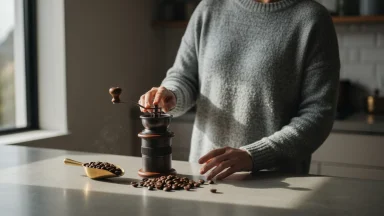
The most underrated factor here is your coffee grinder. Using pre-ground coffee is one of the most common blunders you can make when brewing, as coffee loses its aromatic oils rapidly after grinding. For a French press, you need a coarse, even grind, and a blade grinder just won’t cut it. It shatters beans into inconsistent dust and boulders, leading to a muddy, bitter cup. A burr grinder, mills the beans between two revolving surfaces, creating a uniform grind that is perfect for immersion brewing. Think of it as the difference between a chef’s knife and a food processor.
Next up are the coffee beans themselves. Just as you might want your morning routine to include discovering reliable sources for your news, you should seek out high-quality, freshly roasted beans for your coffee. The “roasted on” date is far more important than the “best by” date. Look for beans roasted within the last few weeks for peak flavor. Understanding the information on the bag—like origin and tasting notes—is a skill, much like decoding media perspectives to get the full story. It pays to be discerning.
Finally, let’s talk about water temperature. Boiling water will scorch your coffee grounds, resulting in a harsh, bitter flavor. According to the Specialty Coffee Association, the ideal water temperature for brewing is between 195 and 205°F (about 90 to 96°C). A simple way to achieve this without a special kettle is to bring your water to a full boil and then let it sit for about 30-45 seconds before pouring. It’s a small detail that makes a huge difference, separating a decent cup from one that tastes like it came from a specialty cafe—without the hefty price tag, of course.
Here is your basic checklist to get started:
- A French press carafe
- A quality burr grinder
- Fresh, whole coffee beans
- A kettle (a variable temperature one is a bonus!)
- A digital scale for measuring
- A timer (your phone works perfectly)
With your gear assembled, you’re now ready to combine these elements and master the brewing process itself.
The beauty of immersion brewing is its honesty. It captures the complete essence of the bean, including the oils and fines that paper filters strip away, resulting in a cup with unparalleled body and texture.
— Jessica Easto, author of ‘Craft Coffee: A Manual’
| Variable | Recommendation | Why It Matters |
|---|---|---|
| Grind Size | Coarse (like sea salt) | Prevents a muddy cup and over-extraction, which causes bitterness. |
| Coffee-to-Water Ratio | 1:15 (e.g., 60g coffee to 900g water) | Ensures a balanced extraction for a full-flavored but not overpowering brew. |
| Water Temperature | 195-205°F (90-96°C) | Hot enough to extract flavor without scorching the grounds and creating a burnt taste. |
| Steep Time | 4 minutes total | The ideal duration to extract desirable flavors without pulling in bitter compounds. |
Step-by-Step: Crafting Your Perfect French Press
With your equipment ready, you’re standing at the threshold of a exceptional coffee experience. The next phase is all about technique, precision, and a little bit of patience. Think of it less as a rigid set of rules and more as a choreographed dance between water, coffee, and time. Get the steps right, and the result is a cup that is rich, full-bodied, and deeply satisfying.
This is where the magic happens. Let’s walk through the process together.
Preparation: Setting the Stage for Success
Before any coffee touches the carafe, one of the most overlooked steps is pre-heating. Simply boil some extra water and pour it into your empty French press, swirling it around for about 30 seconds before discarding it. This simple action prevents the cold glass from instantly dropping your brew water temperature, ensuring a more stable and even extraction. It’s a small detail that makes a surprising difference.
Choosing Your Beans and Grind
The single most important variable for a French press is the grind size. You need a coarse grind, similar in texture to rough sea salt or breadcrumbs. A grind that is too fine will clog the filter, create a muddy “sludge” at the bottom of your cup, and result in over-extraction, making the coffee bitter. Using the wrong grind is one of the most common coffee brewing mistakes people make, and it completely undermines the process.
For measurement, the gold standard is a coffee-to-water ratio of around 1:15. This means for every 1 gram of coffee, you will use 15 grams (or milliliters) of water. So, for a typical 34 oz (1 liter) press, a good starting point is 60 grams of coffee to 900 grams of water. Using a digital scale to weigh both your beans and your water removes all guesswork and is the key to repeatable, consistent results.
The Ideal Water Temperature
Water temperature is not a detail to be taken lightly. According to the Specialty Coffee Association, the optimal temperature range for extraction is between 195°F and 205°F (90°C to 96°C). Water that is too hot will scorch the grounds, leading to a harsh, burnt taste. Water that is too cool will fail to extract the full range of flavors, resulting in a weak, sour cup.
What if you don’t have a fancy variable-temperature kettle? No problem. A simple trick is to bring your water to a full boil and then let it sit off the heat for about 45-60 seconds. This will naturally bring it down into that ideal temperature window. It’s a wonderfully low-tech solution for a high-quality outcome.
The Brewing Process: From Bloom to Plunge
With your press pre-heated, your coffee ground, and your water at the perfect temperature, it’s time for the main event. The next four minutes will determine everything. Follow these steps carefully for a brew that highlights the best qualities of your beans.
The ‘Bloom’ and Initial Steep
The “bloom” is a beautiful and primary part of the brewing process. When hot water first hits fresh coffee grounds, they rapidly release carbon dioxide gas, causing the mixture to bubble and expand. This isn’t just for show—releasing this gas first allows the water to more evenly saturate the coffee for better extraction later. This initial foam is a sign of freshness, but it’s functionally different from the thick, stable layer you’d find on espresso. The secrets to a perfect espresso crema involve high pressure, something the French press doesn’t use.
Here is the sequence to follow:
- Place your French press on the digital scale and tare it to zero. Add your coarse-ground coffee.
- Start your timer. Immediately pour in just enough hot water to saturate the grounds, typically twice the weight of the coffee (e.g., 60 grams of water for 30 grams of coffee).
- Watch the coffee bloom and expand for about 30-45 seconds. You can give it a very gentle stir with a spoon to ensure all grounds are wet.
- After the bloom, pour the remaining water in a steady, circular motion until you reach your target weight.
- Place the plunger lid on top to trap the heat, but do not plunge yet. Let the coffee steep until your timer reaches a total of 4 minutes.
Gentle Plunge and Immediate Serve
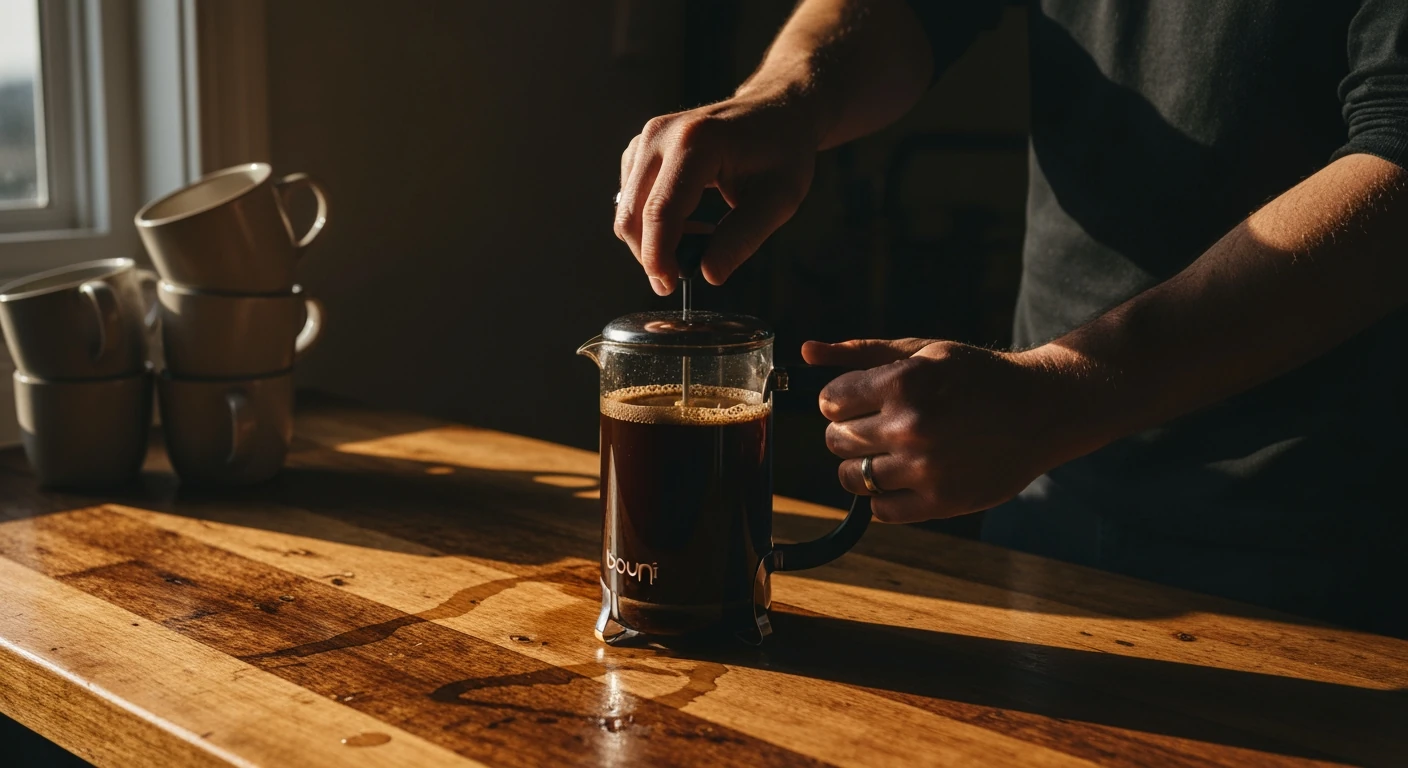
When the timer goes off, it’s time to plunge. The key here is to be slow and gentle. Applying too much force will agitate the fine particles, forcing them through the mesh filter and into your cup. You should feel a light, consistent resistance. If it feels stuck, simply pull the plunger up an inch and continue pressing down slowly. The entire plunge should take about 15-20 seconds.
This final step is critical. Once you have plunged, you must serve all the coffee immediately. Do not let it sit in the press, even for a few extra minutes. The grounds at the bottom will continue to extract, turning your perfectly brewed coffee into a bitter, unbalanced drink. Decanting into your mug or a separate carafe stops the brewing process in its tracks, preserving the flavor you worked so hard to create.
Troubleshooting Common French Press Challenges
Even when you follow a recipe perfectly, sometimes your morning coffee just doesn’t turn out right. It can be incredibly frustrating to put in the effort only to be met with a cup that’s bitter, weak, or full of grit. The good news is that these are common issues with straightforward solutions. It all comes down to understanding a few key variables.
Making small adjustments to your technique can completely change the final result. Most problems can be traced back to extraction—the process of water dissolving flavors from coffee grounds. Let’s break down the most frequent challenges and how to solve them.
Why Your Coffee Might Be Bitter (and How to Fix It)
That sharp, unpleasant bitterness in coffee is almost always a sign of over-extraction. This happens when the hot water has been in contact with the coffee grounds for too long, or when the grounds are too fine, pulling out unwanted harsh compounds. This is one of the most common coffee brewing mistakes people encounter. Fortunately, it’s an easy fix.
Your two main tools for controlling extraction are grind size and brew time. A study from the Coffee Research Institute found that extending brew time by just 60 seconds beyond the ideal four-minute mark can increase bitterness compounds by up to 22%. Water temperature plays a part, too; water straight off a rolling boil (212°F / 100°C) can scorch the grounds, so it’s best to let it cool for about a minute to a target range of 195-205°F.
So, what should you adjust first? I suspect it’s easiest to start with time.
If your coffee tastes bitter, you can make one of two adjustments. Each has its own benefits.
- Shorter Brew Time: This is the simplest fix. If you normally brew for four minutes, try pressing at three and a half. You can adjust this with a stopwatch without changing anything else in your setup.
- Coarser Grind: Using a coarser grind creates less surface area, which slows down extraction. This requires a decent burr grinder for consistency, but it gives you precise control over the flavor profile.
The underrated factor here is to only change one variable at a time. Tweak your brew time or your grind size, but not both at once. This scientific approach helps you isolate what works.
Avoiding Sediment and Achieving Clarity
A little bit of sediment is a natural characteristic of French press coffee, contributing to its famously full body and rich mouthfeel. But who wants their final sips to be a gritty, muddy mess? When you have excessive sludge at the bottom of your cup, it’s usually because the coffee grounds are too fine and are sneaking through the metal filter.
The number one solution is to adjust your grind. Moving to a coarser setting—something resembling coarse sea salt—makes the coffee particles too large to pass through the filter’s mesh. It’s a simple change that makes a huge difference. Pouring technique is a close second. Instead of dumping the coffee into your mug, pour it slowly and gently, leaving the last half-inch of liquid in the carafe. Think of it like decanting an old wine to leave the sediment behind.
This process is worlds away from the delicate task of mastering the art of espresso crema, which is about preserving foam, not avoiding solids. For the French press, a clean pour is everything. Some coffee aficionados even use a secondary fine-mesh sieve while pouring for an ultra-clean cup, but it’s not a necessary step for most people.
Ultimately, a completely clear cup may not even be the goal. The unique texture is part of what separates French press from other methods like pour-over or drip. Your aim is to reduce the sludge, not eliminate the body.
Elevating Your Brew: Advanced Tips and Customizations
Once you have mastered the basic technique, a few simple adjustments can significantly improve your coffee. One of the most underrated factors is temperature stability. Before you add any grounds, fill your glass carafe with hot water from the tap or kettle and let it sit for a minute. Pre-heating the press—a surprisingly simple step that makes a real difference—ensures the water temperature doesn’t drop too quickly during brewing, leading to a more complete extraction. It’s a bit like pre-heating an oven before baking; you’ll get much more consistent results.
Your French press is also a fantastic tool for making cold brew concentrate. But what about when you’re craving an iced coffee on a hot day? Simply use the same coffee-to-water ratio but with cold, filtered water, and let it steep in your refrigerator for 12 to 18 hours. According to research from the Specialty Coffee Association, this method can reduce perceived acidity by over 65%, creating a mellow and incredibly smooth flavor. Just press the plunger down, and you have a concentrate ready to be diluted with water or milk.
This is your coffee journey, so feel free to experiment. Try adding a pinch of cinnamon or a single cardamom pod to your grounds before brewing for a warm, spiced flavor. While a French press won’t produce the same kind of rich espresso crema you see in cafes, it excels at highlighting the unique tasting notes of different single-origin beans. Playing with these variables is the best way to find what you love.
Proper maintenance is key to preventing flavor contamination from rancid coffee oils.
After each use, fully disassemble the plunger and screen assembly and wash all parts with warm, soapy water. Avoiding the most common coffee brewing mistakes often comes down to simple cleanliness. A clean press not only extends the life of your equipment but also guarantees that the only flavors in your cup are the ones you intended to be there.
Your Journey as a Home Barista Begins Now
With this guide, you now possess the technical foundation for a flawless French press brew. But the true mastery of coffee doesn’t end with following a recipe—it begins with experimentation. Consider this your license to play. What happens if you use a single-origin bean from Ethiopia instead of a blend? How does a 15-second change in steep time alter the taste profile? The ‘perfect’ cup is not a universal standard; it is a personal preference waiting to be discovered. Your next step is to take these rules and thoughtfully break them, one delicious cup at a time, to find the brew that is uniquely yours.
Frequently Asked Questions About French Press Coffee
What is the best grind size for French press coffee?
The best grind size for a French press is a coarse, even grind, often compared to the texture of rough sea salt or breadcrumbs. This larger size prevents the grounds from passing through the metal filter, which would create sediment in your cup. A coarse grind also helps prevent over-extraction, which is a common cause of bitter coffee.
How long should I let my French press steep?
The ideal steeping time for a French press is 4 minutes. This includes the initial 30-45 second ‘bloom’ phase. A total brew time of four minutes provides a balanced extraction, pulling out the rich flavors and oils without introducing the harsh, bitter compounds that come with over-steeping.
Can I use pre-ground coffee in a French press?
While you can use pre-ground coffee, it is not recommended for the best results. Most pre-ground coffee is too fine for a French press, which can lead to a bitter, muddy cup with a lot of sediment. Using freshly ground whole beans provides a much more aromatic and flavorful experience.
How do I prevent my French press coffee from being bitter?
Bitterness is typically caused by over-extraction. To prevent it, ensure your grind is coarse enough, as a fine grind extracts too quickly. Also, check your water temperature; it should be between 195-205°F, not at a rolling boil. Finally, stick to a 4-minute steep time, as brewing for too long will pull bitter flavors from the grounds.
What’s the ideal water temperature for French press?
The ideal water temperature for French press coffee is between 195°F and 205°F (90°C to 96°C). Using water that is too hot, such as at a rolling boil, can scorch the coffee grounds and create a burnt taste. A simple method is to boil water and let it rest for 30-60 seconds before pouring.