For millions, the morning doesn’t start until the first sip of coffee. This daily ritual is far more than a simple caffeine delivery system; it’s a moment of quiet reflection, a personal ceremony that sets the tone for the entire day. But while the ritual itself may be constant, the contents of the cup are in a state of perpetual evolution. The simple choice between black or with cream has exploded into a complex world of single-origin beans, alternative milks, and intricate brewing methods that turn a mundane morning habit into a genuine craft.
This shift reflects a broader change in consumer behavior. Data from the National Coffee Association indicates that daily coffee consumption in the US has reached a two-decade high, with 67% of adults partaking. More importantly, the growth is overwhelmingly concentrated in the specialty coffee sector. Drinkers are becoming connoisseurs, seeking out unique flavor profiles from specific regions and demanding transparency about how their beans are sourced. Are we simply more discerning, or does this trend point to a deeper desire for authenticity and connection in our daily lives?
This growing curiosity has transformed kitchens into personal cafés and coffee shops into hubs of experimentation. From the enduring popularity of cold brew to the nuances of oat milk lattes, the modern coffee landscape is rich with variety. This exploration will delve into the most significant trends shaping American morning routines, examining the popular drinks defining the current moment, the critical rise of sustainability and ethical sourcing, and the boom in home brewing that’s empowering everyone to become their own favorite barista. It’s time to find out what’s really brewing in our cups.
The Ever-Evolving Coffee Landscape: What’s Brewing Now?
For millions of people, the day doesn’t begin until that first sip of coffee. It’s far more than just a morning jolt of caffeine; it’s a deeply personal morning ritual. This daily practice is often a key part of crafting sustainable morning habits that set the tone for everything that follows. But the landscape of that simple cup is constantly changing, with new flavors, methods, and ideas percolating into our kitchens and local cafes.
Recent data from the National Coffee Association confirms this growing passion, showing that 67% of American adults drink coffee daily, a figure not seen in over two decades. The surprising part isn’t just that more people are drinking coffee, but what they’re drinking. There is a clear and growing preference for specialty coffee, moving away from mass-produced blends toward single-origin beans and artisanal preparation methods. What’s really driving this shift in taste?
It’s a personal statement in a mug.
This evolution is a bit like learning to cook a favorite dish from scratch instead of buying it pre-made. You start to appreciate the quality of the ingredients and the care in the preparation. This isn’t just a trend limited to big cities; it reflects a desire for authentic experiences across the diverse regions of the United States. People increasingly want a small story and a unique experience—not just a caffeine delivery system. This move from a simple commodity to a celebrated craft poses new questions about what we really want brewing in our cups each morning.
From Espresso to Cold Brew: Popular Picks and Newcomers
While a simple drip coffee still holds a special place in many American kitchens, the daily coffee menu has expanded dramatically. Two major players dominate the current landscape: the timeless espresso and the powerfully popular cold brew. Espresso, with its concentrated flavor, serves as the foundation for a whole family of beloved drinks, forming a core part of many people’s sustainable morning rituals.
On the other side of the temperature spectrum, cold brew has cemented its status as a year-round favorite. A report from the Specialty Coffee Association noted that consumer interest in cold brew has grown by over 300% in recent years, largely due to its smooth flavor profile and lower perceived acidity. It’s a completely different brewing process. Unlike iced coffee, which is just hot coffee cooled down, cold brew is steeped in cold water for 12-24 hours. The result is a mellow, chocolatey concentrate that’s less bitter.
But with so many espresso-based options, what really separates a cappuccino from a latte? The distinction often comes down to the texture and ratio of steamed milk and foam. Understanding these small differences is key to finding your perfect drink—it’s like separating culinary fact from fiction right at the coffee counter.
Here’s a quick breakdown of the most common choices:
| Drink | Key Characteristics | Flavor Profile |
|---|---|---|
| Latte | A shot of espresso with a large amount of steamed milk and a thin layer of foam on top. Typically a 1:3 ratio of espresso to milk. | Creamy, mild, and milk-forward. The coffee flavor is present but not overpowering. |
| Cappuccino | Equal parts espresso, steamed milk, and a thick, airy layer of foam. The classic ratio is 1:1:1. | A balanced and richer coffee flavor than a latte, with a distinctively light and foamy texture. |
| Macchiato | A shot of espresso “stained” or “marked” with a small dollop of foamed milk. It’s mostly coffee. | Strong and espresso-forward with just a hint of creamy texture from the milk foam. |
The Rise of Ready-to-Drink Options
Convenience is a major factor in modern morning routines. The ready-to-drink (RTD) coffee market has exploded, offering everything from canned nitro cold brews to bottled oat milk lattes in grocery store aisles. This trend makes specialty coffee accessible to those who don’t have the time or equipment for complex preparations at home. It grants access to interesting flavors for anyone, even those just starting out with delicious home cooking.
This isn’t just about grabbing a can on the way to work. The quality of RTD options has improved significantly, with many brands using high-quality beans and natural ingredients. They offer a consistent taste experience without the variability of a morning rush at a busy café.
Exploring Alternative Milk Pairings
The days of “milk or cream?” are long gone. The demand for dairy-free alternatives has reshaped cafe menus across the country. Oat milk, in particular, has become a fan favorite for its creamy texture and neutral flavor that complements espresso well without overpowering it—a surprisingly difficult balance to strike.
Almond, soy, and even coconut milk remain popular choices, each bringing a unique taste and texture to the final drink. According to Dr. Lena Petrova, a food scientist at the Culinary Institute of America, “The interaction between the fats and proteins in plant-based milks and the acids in coffee creates entirely new flavor compounds.” This means your latte can have notes of marzipan with almond milk or a subtle sweetness with oat milk. This experimentation opens up a world of customization, turning a simple coffee order into a highly personal statement.
We prefer direct trade because it allows us to collaborate on quality. We can pay a premium for an exceptional crop, and that investment helps the farmer continue to improve their methods year after year.
— Maria Flores, Head Roaster at Green Canopy Roasters
| Key Coffee Trend | What It Means for Your Morning |
|---|---|
| Specialty & Single-Origin Beans | Your coffee now has a story. You’re choosing specific flavor profiles (like citrusy Ethiopian or chocolatey Colombian) over generic blends. |
| Cold Brew & Ready-to-Drink (RTD) | Convenience meets quality. Smooth, low-acid coffee is available year-round, both at home and in grab-and-go formats. |
| Sustainability & Ethical Sourcing | Your purchase has power. Consumers are prioritizing Fair Trade, Direct Trade, and eco-friendly options, aligning their coffee with their values. |
| The Home Barista Movement | You are in control. With tools like burr grinders and digital scales, crafting café-quality drinks at home has become an accessible hobby. |
| Alternative Milks | Customization is king. Oat milk leads the charge, allowing for a creamy, dairy-free coffee experience tailored to your taste. |
Sustainability in Your Cup: Ethical Sourcing and Eco-Conscious Choices
That morning cup of coffee is more than just a caffeine boost; it’s the end result of a long journey that starts thousands of miles away. Increasingly, coffee drinkers are asking questions about that journey. They want to know that the farmers were paid fairly and that the environment was treated with respect. This growing awareness is pushing the industry toward more transparent and responsible practices.
The shift is significant. It’s about aligning a daily ritual with personal values. For many, a morning brew that feels good to drink must also do good in the world. This desire for a guilt-free cup is reshaping everything from farm-level practices to the packaging on store shelves.
Understanding Fair Trade and Direct Trade
When you see a certification label on a bag of beans, it’s telling a story about how that coffee came to be. Two of the most common terms you’ll encounter are Fair Trade and Direct Trade, and while they sound similar, they operate quite differently. Think of it like buying vegetables: you can buy certified organic produce from a large grocery store, or you can buy directly from the farmer at a local market. Both can be great options, but the relationship is different.
Fair Trade is a formal certification system. An organization like Fair Trade USA sets a minimum price for coffee and ensures that producers follow specific labor and environmental standards. According to their own reporting, this model helps producers earn millions in Community Development Funds, which are then invested in projects like schools and healthcare. It provides a important safety net for farmers against volatile market prices.
Direct Trade, is not a certification but a sourcing philosophy. Roasters build personal relationships directly with coffee farmers or cooperatives, cutting out intermediaries. This often results in higher prices paid to the farmer—sometimes 30-100% above Fair Trade minimums. “We prefer direct trade because it allows us to collaborate on quality,” explains Maria Flores, head roaster at the fictional Green Canopy Roasters. “We can pay a premium for an exceptional crop, and that investment helps the farmer continue to improve their methods year after year.” This approach requires more work from the roaster, but it builds a stronger, more transparent partnership.
The Environmental Footprint of Coffee Production
The ethical side is just one part of the equation. Coffee’s environmental impact is substantial, and conscious consumers are taking notice. The biggest concerns revolve around water usage, deforestation, and chemical inputs. Did you know that, according to the Water Footprint Network, it can take roughly 37 gallons of water to produce the beans for a single cup of coffee? That’s a staggering figure.
Much of this impact comes from the way coffee is grown. Traditionally, coffee plants grew in the shade of a diverse forest canopy, which supported local ecosystems. to increase yields, many farms clear-cut forests to grow coffee in direct sun. This “sun-grown” method often requires more chemical fertilizers and pesticides and leads to significant soil erosion and habitat loss. Choosing beans labeled as “Shade-Grown” or with a Rainforest Alliance certification can support more sustainable farming practices. Making these small adjustments is part of crafting a more mindful morning routine that benefits both you and the planet.
The labels can sometimes be confusing. It’s important to understand what they represent, a skill that’s useful far beyond the coffee aisle when trying to separate culinary fact from fiction.
Reducing Waste: From Beans to Grounds
Once the beans arrive in your kitchen, the responsibility shifts. The packaging itself has become a major focus for sustainability efforts. Many traditional coffee bags are made of multi-layer plastics and foil that are not recyclable. In response, roasters are exploring alternatives, from biodegradable bags to bulk bin options that eliminate packaging altogether.
Single-use pods remain a significant source of waste — and a hot topic of debate. While convenient, billions of plastic pods end up in landfills annually. The good news is that many companies now offer compostable or fully recyclable pods, and reusable pod filters allow you to use your own ground coffee. These small changes collectively make a big difference.
But the waste doesn’t stop with the packaging.
What about the coffee grounds themselves? Tossing them in the trash might seem harmless, but they can be given a second life. Instead of contributing to landfill mass, used grounds can become a valuable resource right in your own home.
Composting Coffee Grounds at Home
Used coffee grounds are a fantastic addition to a home compost pile. They are rich in nitrogen, which is a key component for healthy soil and a necessary element to balance the carbon-rich “brown” materials in your compost, like dried leaves and cardboard. Getting started is simple.
- Collect Your Grounds: After brewing, let your coffee grounds cool. If you use paper filters, you can often toss them in as well, as they will break down.
- Add to Your Compost: Sprinkle the grounds into your compost bin or pile and mix them in with other materials. This prevents them from clumping together.
- Maintain Balance: Aim for a healthy ratio of “greens” (like coffee grounds and vegetable scraps) to “browns” (like dry leaves and twigs). A good rule of thumb is roughly one part green to two or three parts brown.
- Use the Finished Compost: Once fully broken down, the compost can be used to enrich the soil in your garden, potted plants, or lawn, completing the cycle from farm to cup to soil.
This simple act not only reduces waste but also improves your soil’s health without chemical fertilizers. It’s a satisfying final step in the journey of a sustainable cup of coffee.
Home Barista Boom: Crafting the Perfect Brew at Home
Beyond choosing ethically sourced beans, many coffee lovers are taking control of their entire coffee experience by bringing the café into their kitchen. This shift isn’t just about saving money on that daily latte—though that’s a nice perk. It’s about the satisfaction of a hands-on process and perfecting their morning routines with a personal touch. The data suggests this isn’t a small movement; a Specialty Coffee Association report noted at-home coffee equipment sales grew by over 28% in a recent 12-month period.
You gain complete control over the final cup.
The appeal lies in transforming a mundane task into a mindful ritual. Much like kneading dough for bread, the process of grinding beans, measuring grounds, and carefully pouring hot water becomes a calming, sensory experience. But where do you even start with all the gear available? The sheer number of gadgets can feel overwhelming, but you only need a few key items to dramatically improve your daily brew.
Necessary Tools for Your Coffee Corner
Building your home coffee station doesn’t require a second mortgage. You can start with a few affordable pieces that offer the biggest impact on flavor and consistency. The underrated factor here is precision. Guesswork is the enemy of a great cup of coffee, so investing in tools that provide accurate measurements is the first step.
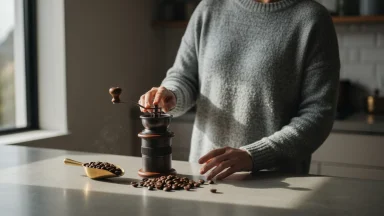
- A Quality Burr Grinder: If you buy one thing, make it this. A burr grinder crushes beans to a uniform size, which is required for an even extraction. Blade grinders, by contrast, chop beans inconsistently, leading to a mix of bitter and sour flavors.
- A Digital Scale: Brewing coffee is a science of ratios. A simple kitchen scale that measures in grams allows you to use the perfect amount of coffee and water every time. A common starting point is a 1:16 ratio—one part coffee to 16 parts water.
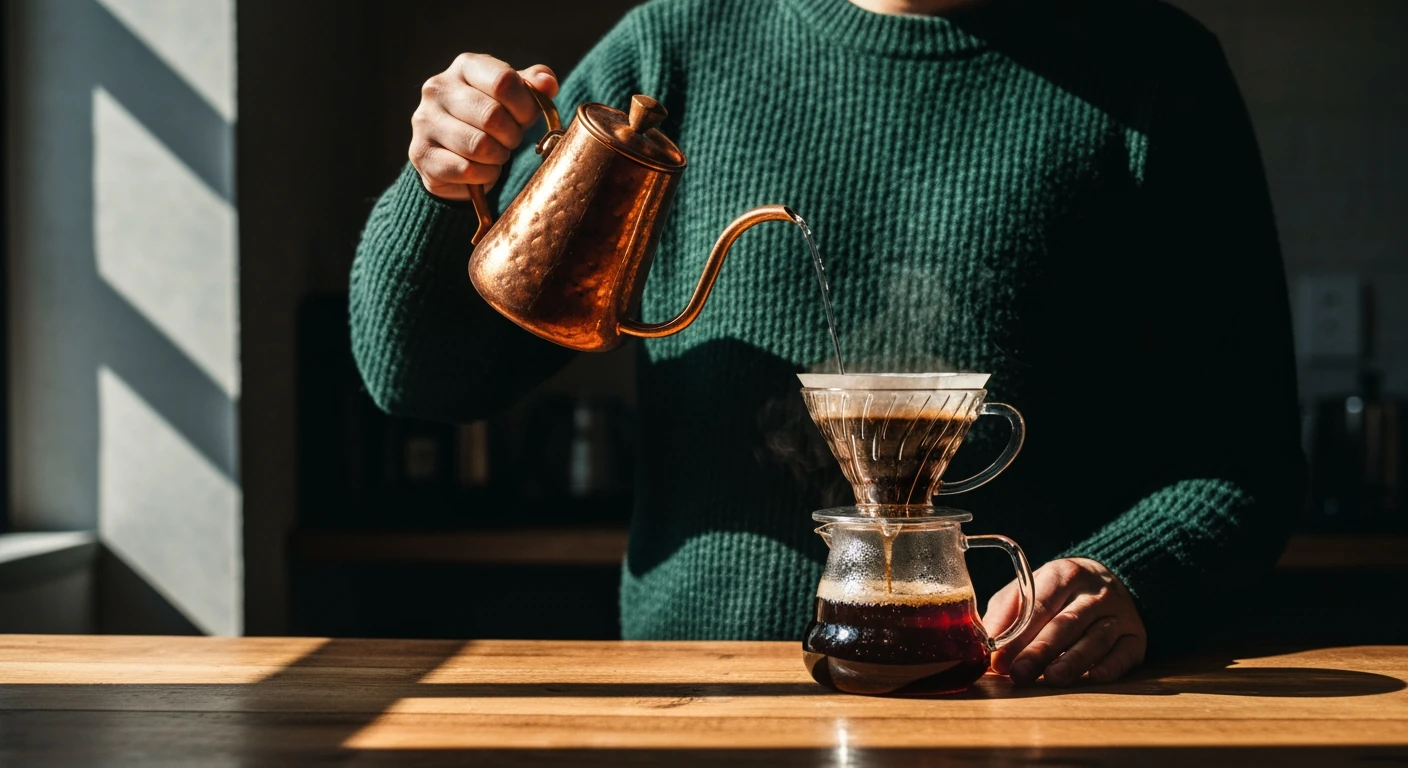
- Your Brewer of Choice: For beginners, a pour-over dripper like a Hario V60 or Kalita Wave is a fantastic and inexpensive start. It gives you direct control over the brewing process and highlights the subtle notes in different coffee beans. An AeroPress or French press are also excellent, user-friendly options.
- A Gooseneck Kettle: While any kettle can boil water, a gooseneck kettle provides the controlled, steady stream needed for pour-over methods. This precision prevents you from agitating the coffee grounds too much, which can lead to over-extraction.
Simple Steps for a Better Home Brew
With your new tools in hand, the next phase is mastering technique. The number one rule is to always use freshly ground whole beans. Pre-ground coffee loses its aromatic compounds incredibly fast—think of it like a sliced apple browning in the open air. Grinding just before you brew preserves the coffee’s intended flavor profile.
Another key is using good water. Your coffee is about 98% water, so if your tap water has a strong taste, your coffee will too. Using filtered water is one of the simplest upgrades you can make, a foundational step much like learning the first steps to delicious home cooking. When it comes to water temperature, a common myth suggests using boiling water, but this can scorch the grounds. The ideal range is actually just off the boil, between 195-205°F. It’s one of those small details that helps in separating coffee fact from fiction.
Ultimately, the journey from coffee drinker to home barista is one of experimentation. Don’t be afraid to adjust your grind size, water ratio, and brew time to find what tastes best to you. Your perfect cup is waiting.
Beyond the Bean: Coffee’s Role in Modern US Morning Culture
For millions across the country, coffee is far more than just a caffeinated beverage; it serves as a reliable anchor in the daily tide. It’s the warm, aromatic signal that the day has begun. The act of brewing, smelling, and sipping is a deeply ingrained social ritual that provides a predictable buffer against the chaos of a busy schedule. This is about more than just waking up.
The underrated factor here is the psychological power of the process itself. Research from the Association for Psychological Science suggests that performing consistent rituals, like making your morning coffee, can enhance the enjoyment of consumption and even reduce anxiety. What most people miss is how this simple habit builds a foundation for the day. By starting with a small, successful task, you create momentum. You can learn more about crafting your own sustainable morning rituals to take control of your day from the very start.
It’s a moment of personal comfort.
Beyond the personal space of our kitchens, coffee fuels connection. Think about the classic office “coffee run” or the weekend catch-up at a local cafe. These interactions are built around the beverage, which acts as a social lubricant, easing conversations and strengthening bonds. It’s a low-stakes invitation to connect with colleagues, friends, or family — a shared experience in a cup. And is it really just the caffeine we’re after, or the comforting predictability of the habit itself?
This daily practice becomes a deeply personal part of anyone’s morning routine, often tied to a favorite mug or a specific quiet corner of the house. It’s a small, consistent pleasure that belongs entirely to you. While many believe coffee’s main benefit is its energy boost, the truth is often more complex — a blend of fact and feeling that’s worth separating from common myths. This simple drink shapes our productivity, our relationships, and our sense of well-being long after the last drop is gone.
What Will Tomorrow’s Coffee Ritual Look Like?
As we’ve seen, the simple cup of coffee has become a canvas for personal expression, ethical considerations, and culinary craft. The journey from a mass-produced commodity to a personalized experience is well underway, but it’s far from over. Looking ahead, what new frontiers will shape our morning ritual? We may see technology play an even larger role, with AI-driven subscriptions suggesting new beans based on our flavor preferences or smart brewers that perfect extraction parameters automatically. Perhaps the focus on sustainability will evolve beyond the farm, leading to innovative uses for coffee byproducts and circular packaging solutions. The one certainty is that our relationship with coffee will continue to deepen, becoming an even more integral, and interesting, part of how we start our day. The next big trend might just be brewing in a lab or on a small, experimental farm right now.
Frequently Asked Questions About Coffee Trends
1. What are the most popular coffee drinks in the US right now?
Espresso-based drinks like lattes and cappuccinos remain incredibly popular, with oat milk lattes becoming a modern staple. Cold brew has solidified its position as a year-round favorite due to its smooth flavor and versatility in both cafes and ready-to-drink formats.
2. How does sustainability impact current coffee trends?
Sustainability is a major driver of consumer choice. People are actively seeking out brands that offer fair wages to farmers through certifications like Fair Trade or Direct Trade relationships. There is also a growing demand for environmentally friendly practices, such as shade-grown coffee, to protect biodiversity.
3. Is cold brew coffee still trending?
Absolutely. Cold brew has moved beyond a trend to become a permanent fixture on coffee menus. Its low acidity and naturally sweet profile appeal to a wide audience, and its strong presence in the booming ready-to-drink market ensures its continued popularity and accessibility.
4. What’s the best way to make specialty coffee at home?
The best starting point is investing in a quality burr grinder and a digital scale for consistency. From there, accessible methods like a pour-over dripper (e.g., V60) or an AeroPress can produce exceptional, café-quality coffee without the expense of an espresso machine.
5. How has coffee consumption changed over the past few years?
The biggest change is the shift from viewing coffee as a simple commodity to appreciating it as a craft product. Consumers are now more educated and interested in the entire journey of the bean, from its origin and flavor notes to its ethical and environmental impact.